معرفی
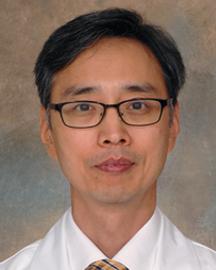
Christian Hong, PhD, is an Associate Professor in the Department of Molecular & Cellular Physiology at the University of Cincinnati. His research focuses on the molecular mechanisms of circadian rhythms and their functional roles in cell cycle control. He uses interdisciplinary approaches combining mathematical modeling, genetics, and molecular biology, primarily using Neurospora crassa as a model organism. He joined UC in 2010 and has held significant grants from the National Institutes of Health, Defense Advanced Research Projects Agency, and others.
Education:
- PhD in Mathematical Modeling, Virginia Tech (2003)
- MS in Mathematical Modeling, Virginia Tech (1999)
- BS in Biology, Virginia Tech (1997)
Research Interests:
Dr. Hong investigates how circadian rhythms regulate cell cycle progression and DNA damage repair. His lab uses bioluminescence assays and mathematical simulations to study circadian networks in Neurospora crassa and intestinal organoids. Key topics include circadian-glucose interactions, clock-cell cycle coupling, and the role of circadian misregulation in diseases like cancer and sleep disorders. Recent work explores gut microbiota's influence on circadian rhythms and intestinal epithelial biology.
Grants & Awards:
- $1.8M DARPA grant (2012–2015): Network dynamics of circadian rhythms and metabolism
- $379K NIH grant (2018): Gastrointestinal circadian rhythms
- $208K NCI grant (2018): Roles of circadian rhythms in tumor development
- Recipient of the 2008 Kronauer Award for biomathematical modeling
Labs/Teams:
His lab collaborates with interdisciplinary groups on circadian systems biology, including the Searle Scholars Program and UC’s Center for Computational Medicine. Key tools include microfluidic devices and confocal microscopy for real-time circadian tracking.