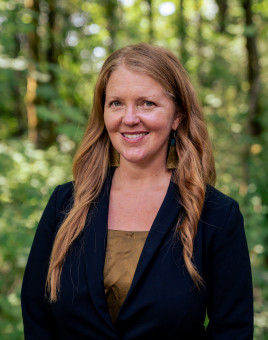
معرفی
Chris Wold is a Professor of Law at Lewis & Clark Law School, part of Lewis & Clark College, where he has taught since 1994. He founded the International Environmental Law Project, providing students with practical experience in international environmental law while focusing on teaching international and environmental law courses.
His educational background includes:
- BA cum laude, St. Olaf College (1986)
- JD, Northwestern School of Law of Lewis & Clark College (1990)
Professor Wold's research spans international environmental law, public international law, climate change, fisheries management, and ocean/coastal law. His work critically examines treaty implementation, species conservation mechanisms, and the interplay between trade policies and environmental protection through frameworks like CITES and the WTO. He emphasizes practical legal solutions for transboundary environmental challenges.
Analysis of his 2010-2015 publications reveals concentrated expertise in climate change mitigation strategies, fisheries governance, and institutional responses to biodiversity loss. His scholarship consistently bridges theoretical legal analysis with actionable policy recommendations, particularly regarding small island states' climate vulnerabilities and trade-environment synergies.
Scientific recognition:
- Bernard F. O’Rourke Award for outstanding student writing on natural resources (1990)
As an educator, Professor Wold mentors students through the International Environmental Law Project while maintaining active engagement with global governance. He has served as legal advisor to the Convention on Migratory Species (2010, 2014, 2017 meetings), represented Luxembourg and the UK at the International Whaling Commission, and advised Bulgaria, Ukraine, and Mauritius on environmental law alignment. His grant-funded work supports technical assistance to governments and NGOs on WTO, CITES, and fisheries commission matters.
He directs the International Environmental Law Project, a student-run initiative that partners with international organizations to draft legal instruments, conduct treaty analyses, and develop conservation strategies—providing unparalleled experiential learning in global environmental governance.