معرفی
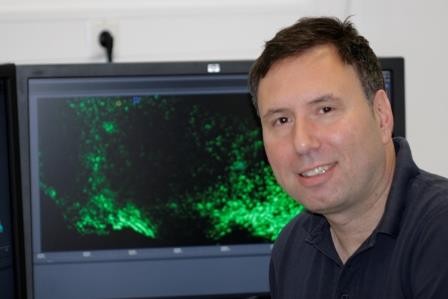
Dr. Chris Scott serves as Associate Head of School for Anatomy & Physiology and Food Sciences and as a Senior Lecturer in Physiology at Charles Sturt University's School of Dentistry and Medical Sciences. With expertise in neuroendocrinology, he directs research on the brain control of reproductive hormones using diverse animal models.
- B ScAgr (Hons) from Sydney University (1988)
- PhD from Monash University (1993)
- Postdoctoral Research Fellow at University of Illinois
- Peter Doherty Fellow of NH&MRC
Dr. Scott's research centers on neuroendocrinology, particularly the interaction between the nervous and endocrine systems in controlling reproduction. His laboratory investigates kisspeptin and RF-amide related peptide 3 (RFRP3), which play fundamental roles in regulating gonadotrophin releasing hormone (GnRH) secretion. Recent work has expanded into physiology education methodology and the neuroprotective effects of olive biophenols on Alzheimer's disease.
His publication record shows consistent productivity across neuroendocrinology, with recent publications spanning equine, bovine, and ovine reproductive physiology, physiology education consensus building, and nutraceutical neuroscience. His most impactful work examines how kisspeptin and RFRP3 integrate environmental and internal signals to regulate reproductive function.
- Citation from Australian Learning & Teaching Council (2010) for engaging large classes of professional students
Dr. Scott teaches human anatomy & physiology and pathophysiology across multiple health-related programs, primarily focusing on foundational first-year instruction. His teaching combines subject passion with student-centered approaches, utilizing e-technologies to create active learning environments. He has trained numerous research students throughout his career and leads the Anatomy & Physiology research team at CSU's Gulbali Research Institute.
His laboratory continues to advance understanding of reproductive neuroendocrinology while expanding into the therapeutic potential of olive biophenols for neurodegenerative conditions, reflecting his commitment to translating basic science into practical applications.