معرفی
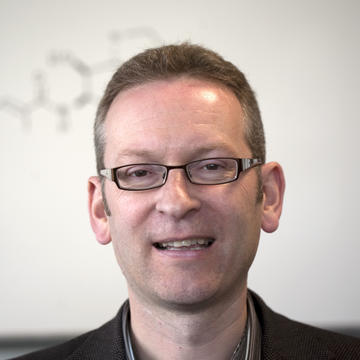
Professor Chris Braddock is a Professor of Organic Chemistry in the Department of Chemistry within the Faculty of Natural Sciences at Imperial College London. He is based at the Molecular Sciences Research Hub (MSRH) at White City Campus, where he leads the Braddock Group as a prominent researcher in stereoselective organic synthesis. His research spans natural product synthesis, novel methodology development, and catalytic methods, with particular focus on halogenated marine natural products and sustainable catalytic processes.
Braddock completed his undergraduate studies in Chemistry at St Peter's College, Oxford, graduating with first class honours in 1992. He continued at Oxford to pursue his DPhil under the supervision of John Brown, FRS, which he completed in January 1996. His academic career at Imperial College began immediately after his doctorate as a Fixed-Term Lecturer working in Professor Tony Barrett's laboratories. He was appointed as a Lecturer in the newly created Synthesis section of the Department of Chemistry in October 1998, promoted to Senior Lecturer in 2005, to Reader in 2008, and to Professor of Organic Chemistry in 2015.
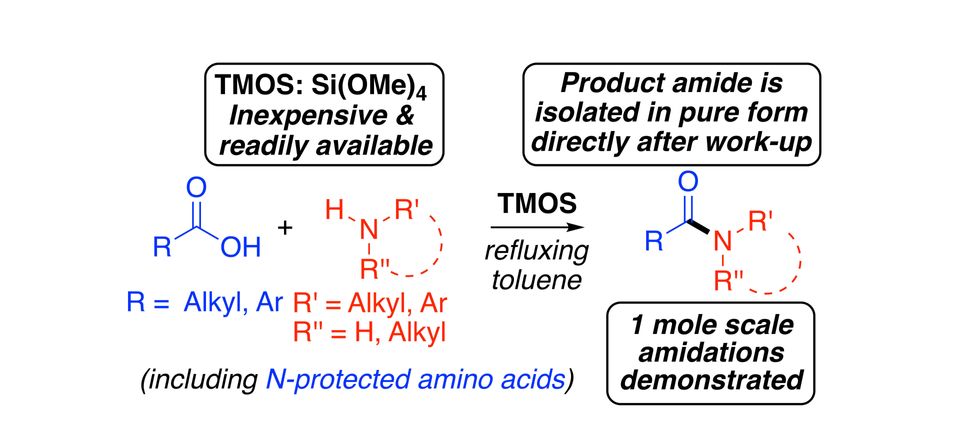
His research interests center on stereoselective organic synthesis with three main interconnected themes: natural product synthesis (particularly halogenated marine natural products from Laurencia species), novel methodology development (including organocatalysis and silicon-based reagents), and catalytic methods (especially olefin metathesis, copper-catalyzed Ullmann reactions, and sustainable catalysis using recovered metals). His group has made significant contributions to the synthesis of complex marine natural products like obtusallenes and polysiphenol, developed innovative methodologies such as silicon-based direct amidation and relay cross metathesis for terpenoid construction, and pioneered sustainable approaches using recovered gold and palladium from electronic waste in catalysis.
Analysis of his recent publications reveals a strong trajectory toward sustainable chemistry, with increasing focus on waste-to-resource catalysis, improved amidation methodologies using silicon reagents, and sophisticated natural product syntheses that often incorporate computational insights. His work bridges traditional organic synthesis with modern sustainable chemistry principles, demonstrating a commitment to both fundamental chemical understanding and practical environmental considerations.
Professor Braddock's research has resulted in numerous high-impact publications in leading chemistry journals including Journal of Organic Chemistry, Organic Letters, and Chemical Communications. His 2018 paper on tetramethylorthosilicate (TMOS) as a reagent for direct amidation was one of the top five 'most read' articles in Organic Letters for that year and was featured in a virtual issue as the most downloaded article from the UK. It was later recognized as one of the '25 Most-Read Organic Letters' in the Silver Anniversary editorial.
As head of the Braddock Group, he has mentored numerous PhD students and postdoctoral researchers, many of whom have gone on to successful careers in academia and industry. His research is supported by various funding sources, with recent work focusing on sustainable catalysis, direct amidation methodologies, and complex natural product synthesis. The group maintains strong collaborative relationships with other researchers at Imperial, including Dr. Rob Davies for copper-catalyzed Ullmann reactions and Dr. James Wilton-Ely for sustainable metal catalysis.
The Braddock Group operates from state-of-the-art synthetic laboratories at the Molecular Sciences Research Hub (MSRH) at White City Campus, which provides a modern research environment for synthetic organic chemistry. The group is part of the Department of Chemistry's Synthesis and Catalysis research theme and contributes to the Chemical Biology and Healthcare theme through its natural product synthesis work.