معرفی
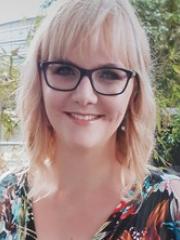
Dr Cheneal Puljevic is a Senior Research Fellow at the School of Public Health, University of Queensland, and an ARC DECRA Fellow at the NHMRC Centre of Research Excellence on Achieving the Tobacco Endgame. She is also affiliated with the Centre for Health Services Research and serves as the Honours Program Director for the Bachelor of Health Sciences. Her research spans multiple institutions and collaborations, including the Global Drug Survey and The Loop Australia.
- PhD, Griffith Criminology Institute, Griffith University (2018)
- Bachelor of Psychology (Honours), University of Cape Town (2011)
Her research focuses on substance use harm reduction, tobacco control, and public health interventions. She specializes in smoking cessation among marginalized populations, illicit tobacco use, drug checking, and alcohol-fuelled violence. Her work combines qualitative, quantitative, and mixed-methods approaches to evaluate policies and design harm reduction services.
Her recent publications (2024–2025) reflect a strong trend in harm reduction innovation, particularly in drug checking and anabolic steroid safety, alongside continued focus on tobacco control and behavioral interventions for substance use. She frequently employs systematic reviews, qualitative studies, and global survey data to inform public health policy.
Her scientific awards highlight her excellence in early-career research:
- ARC DECRA Fellow
- School of Public Health Top-Performing Level C (2024)
- School of Public Health Rising Star (2023)
- School of Public Health Top-Performing Level B (2022)
- APSAD Early Career Award (2020)
- UQ Early Career Researcher Grant (2019)
Dr Puljevic actively supervises students and contributes to academic leadership as an Associate Editor for the International Journal of Drug Policy and Deputy Editor for Drug and Alcohol Review. She leads research teams in the Global Substance Use and Mental Health unit and collaborates on major projects such as QUANTEM and the Global Drug Survey. Her work bridges research, policy, and community engagement to improve health outcomes for vulnerable populations.