معرفی
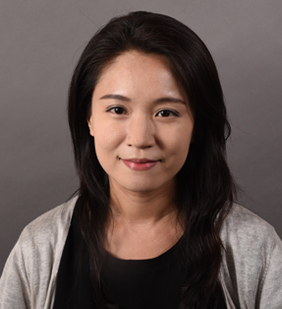
Chang-Won Choi serves as an Assistant Professor of Integrated Marketing Communications at the School of Journalism and New Media, University of Mississippi, with his office located in Farley 133 and contact email cchoi@olemiss.edu. His dual international academic profile bridges South Korean and U.S. institutions, emphasizing practical industry integration with scholarly research.
Education:
- Ph.D. in Mass Communication, Hankuk University of Foreign Studies (2010)
- Ph.D. in Mass Communication, University of South Carolina-Columbia (2022)
- M.A. in Philosophy, Hankuk University of Foreign Studies (2005)
His research centers on viral advertising dynamics, specifically emotional intensity and psychological mediators driving online video ad sharing. He investigates corporate social responsibility (CSR) campaigns through the lens of company-cause fit and perceived social distance, while pioneering computational methods like supervised machine learning for analyzing digital advertising effectiveness. This interdisciplinary approach connects mass communication theory with data science applications in marketing.
Publication trends reveal consistent focus on consumer responses to CSR and viral content, with recurring themes of emotional empowerment, cause-related messaging, and personality-driven sharing behaviors. His work targets industry-relevant outcomes such as purchase intentions and campaign optimization through digital analytics.
No scientific awards or honors are documented in the source material.
Dr. Choi’s teaching portfolio includes Account Planning (IMC 304), Integrated Marketing Communications (IMC 455), Content Marketing (IMC 512), and Strategic Communication Planning (IMC 553). His decade-long industry tenure as an account planner and big-data analyst at Innocean Worldwide (Hyundai Motor Group’s agency) involved major clients including Hyundai, Kia, Netflix Korea, and Google Korea, followed by brand management at SK Telecom. This practitioner background informs his research methodology and curriculum design.
While his computational advertising research implies data-focused work, no dedicated lab, team, or collaborative research group is specified in the provided text. His scholarly output centers on journal publications rather than institutional lab structures.