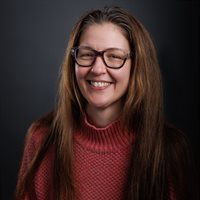
Carrie Friese
استاد · Medical Sociology
London School of Economics and Political Science (LSE)معرفی
Carrie Friese is a Professor in the Department of Sociology at the London School of Economics and Political Science (LSE), serving as Doctoral Programme Director. She specializes in Medical Sociology, Science and Technology Studies, and Animal Studies, with a focus on qualitative methodologies like Situational Analysis. Her research explores the intersections of human and non-human actors in biomedical settings, laboratory animal ethics, and the sociological implications of cloning and endangered species preservation. Dr. Friese has pioneered Situational Analysis alongside Adele Clarke and Rachel Washburn, emphasizing relational and mixed-methods approaches.
Her educational background and career trajectory are not explicitly detailed in the text, but her extensive publications and research collaborations indicate advanced academic training in sociology and science studies. Key projects include a Wellcome Trust-funded study on laboratory animals and a Leverhulme Fellowship supporting her monograph on lab animal humanitarianism.
Research interests include the ethics of care in translational medicine, the politics of invisibility in animal science, and the role of non-human actors in public health. Recent work involves co-leading an ESRC-funded project on mixed-methods data infrastructure for understanding social change impacts on individual lives. Friese teaches courses on the sociology of health, technology, and qualitative research methods.
Her articles critically analyze topics like 'shadow bodies' of lab mice, the moral frameworks governing animal experimentation, and digital methods in situational analysis. She co-authored influential texts such as Situational Analysis: grounded theory after the interpretive turn and has contributed to debates on cloning, conservation ethics, and the future of endangered species.
Though no specific awards are listed, her academic leadership roles and prolific publication record reflect significant scholarly recognition. Her work bridges sociology, science studies, and ethics, with implications for policy and practice in biomedical research and conservation biology.