معرفی
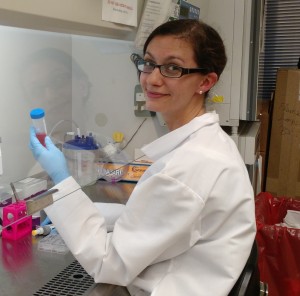
Dr. Caitlin Howell is an Associate Professor in the Department of Chemical and Biological Engineering at the University of Maine's Maine College of Engineering and Computing. She is also affiliated with the Graduate School of Biomedical Science and Engineering. Her research spans the intersection of biology, engineering, and materials science, with a focus on developing bio-inspired solutions to real-world problems.
Dr. Howell's educational background includes:
- B.S. in Biology from the University of Maine (2006)
- M.S. in Biology from the University of Maine (2008)
- Ph.D. in Physical Chemistry from the University of Heidelberg, Germany (2011)
- Postdoctoral training at the Wyss Institute for Biologically Inspired Engineering, Harvard University (2015)
Her research focuses on understanding and controlling biological systems through surface interactions, taking inspiration from natural systems like sharks and pitcher plants. Dr. Howell's work has significant applications in medicine (reducing clot formation and preventing infections), industry (mitigating fouling and clogging), and developing sustainable self-cleaning materials. Her lab investigates controlled bacterial attachment, roll-to-roll sensors and diagnostics, mycelial materials, and sustainable interfaces for plastic replacement.
Dr. Howell leads the Howell Biointerface Lab, which integrates researchers of all experience levels - undergraduate, graduate, and post-graduate - in an environment focused on high-quality science with real-world impact. Her research group includes PhD students, MS students, and undergraduate researchers from various engineering disciplines.
Her recent publications demonstrate a strong focus on liquid-infused surfaces, biofilm control, and sustainable materials development. Her work bridges fundamental understanding of biological surface interactions with practical applications across multiple industries.
Dr. Howell is actively involved in mentoring students and advancing research in biointerface science, with numerous publications and research projects including EAGER: Collaborative Research on Detection and Analysis of Airborne Coronavirus with Bioinspired Membranes.