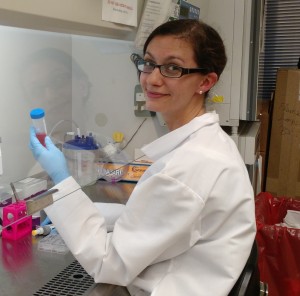
معرفی
Larry L. Howell is a Professor and Associate Academic Vice President for Research and Graduate Studies in the Department of Mechanical Engineering at Brigham Young University's College of Engineering. He holds a B.S. from BYU and M.S./Ph.D. from Purdue University. Prior to joining BYU in 1994, he worked as a visiting professor at Purdue, FEA consultant, and engineer on the YF-22 prototype fighter jet.
Education:
- PhD in Mechanical Engineering, Purdue University (1993)
- MS in Mechanical Engineering, Purdue University (1991)
- BS in Mechanical Engineering, Brigham Young University (1987)
- Minor in Mathematics
- Licensed Professional Engineer (Utah)
His research focuses on compliant mechanisms with applications spanning origami-inspired systems, space deployables, MEMS, and medical devices. He pioneered fundamental design principles for mechanisms that gain motion from flexible elements rather than traditional joints. His work enables compact spacecraft arrays, minimally invasive surgical tools, and novel metamaterials through geometric transformations and smart material integration.
Analysis of Dr. Howell's recent publications reveals strong emphasis on origami-based engineering solutions for aerospace applications, compliant mechanism optimization, and medical device innovation. Key trends include deployable space structures using origami principles, thickness-accommodation techniques, and biologically compatible mechanisms using resorbable materials. Interdisciplinary collaborations characterize much of this work, bridging mechanical design with materials science and biomedical engineering.
Scientific Awards and Honors:
- ASME Machine Design Award (2014)
- Mechanism & Robotics Award (2009)
- NSF CAREER Award (1996-2000)
- Karl G. Maeser Distinguished Lecturer (BYU's highest faculty award)
- 20+ best paper awards from ASME/IEEE conferences
- Purdue Outstanding Mechanical Engineer Alumni Award
Dr. Howell leads the Compliant Mechanisms Research group and has advised over 50 graduate students. He has secured continuous research funding including NSF grants and industry partnerships. His lab develops deployable systems for space applications, medical devices for spinal and chest wall correction, and origami-inspired mechanisms. He co-edits the Handbook of Compliant Mechanisms and authored the foundational textbook Compliant Mechanisms.