معرفی
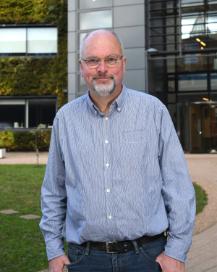
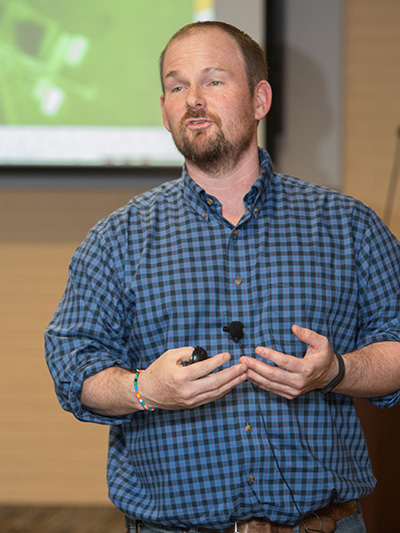
Bryan A. Oakley serves as Professor and Department Chair of Environmental Earth Science at Eastern Connecticut State University, holding a Ph.D. in Geosciences from the University of Rhode Island. As a broadly trained Quaternary geoscientist, he leads interdisciplinary research bridging geological, ecological, and engineering perspectives.
His educational background includes:
- Ph.D. in Geosciences, University of Rhode Island
Dr. Oakley's research centers on applied coastal, glacial, and marine geology across the northeastern United States. He investigates seafloor habitats, shoreline dynamics across temporal scales from single storms to centuries, and deglacial processes. His work integrates field data collection with interdisciplinary collaboration involving benthic ecologists, soil scientists, and coastal engineers to address pressing environmental challenges including sea level rise, coastal erosion, and habitat mapping. This approach yields practical applications for community vulnerability assessments and resource management.
Analysis of his publication record reveals dominant themes in coastal hazard assessment (particularly sea level rise impacts and shoreline change modeling) and Quaternary geology (focusing on Laurentide Ice Sheet deglaciation and isostatic rebound effects in New England). His methodological innovations include geospatial database development for coastal bluff monitoring and multi-proxy approaches to reconstructing paleoenvironments.
No scientific awards are documented in the provided materials, though his Napatree Point research gained public visibility through feature on 'Exploration Awesome Planet'.
Student mentorship represents a cornerstone of his academic practice. He actively involves undergraduates in field research, guiding them through data collection, analysis, and conference presentation. His advising philosophy emphasizes hands-on experience and interdisciplinary skill development, with student projects frequently contributing to larger research initiatives. He encourages students to pursue diverse fieldwork opportunities and cross-disciplinary collaboration as career foundations.
His research operations involve collaborative networks with coastal planners, biologists, soil scientists, and engineers, enabling comprehensive approaches to complex environmental systems. These partnerships facilitate community-engaged projects like the EES 456 course's work with local nonprofits on storm vulnerability assessments.