معرفی
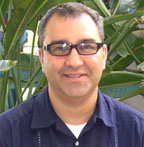
Brian Tuohy serves as an Assistant Professor of Bioethics at Temple University's Lewis Katz School of Medicine and holds Affiliate Faculty status in the Department of Sociology. He concurrently acts as Co-Director of Education for the Center for Urban Bioethics and is a 2024-2025 Public Policy Lab Fellow, focusing on immigrant health policy analysis across U.S. regions.
Tuohy's academic foundation spans sociology, religion, and public health, with extensive postdoctoral training in health disparities research. His educational journey reflects interdisciplinary expertise bridging social sciences and medical ethics.
- PhD, Sociology, University of Chicago, Chicago, IL
- MSt, The Study of Religion, University of Oxford
- BA, Religion and Psychology, University of Rochester
- Postdoctoral Fellow, University of Wisconsin, School of Medicine and Public Health, Madison, WI
- Postdoctoral Fellow, University of California, Fielding School of Public Health, Los Angeles, CA
His research centers on legal status as a master social determinant of health, employing ethnographic methods to investigate how immigration policy shapes healthcare access for undocumented populations. Current work examines prenatal experiences of undocumented individuals through a bioethics lens, while his book project "Mexican Chicago: Between Belonging and Exclusion" analyzes citizenship's impact on health identity through five years of fieldwork.
Tuohy's scholarly contributions span leading journals including Social Science & Medicine and The American Journal of Bioethics, with thematic focus on medical sociology, health equity, and community-engaged research methodologies. His work consistently connects immigration status to systemic healthcare barriers.
- LKSOM Educational Excellence Award-Graduate/Non-MD Professional Program Teaching (2024)
- Public Policy Lab Fellowship at Temple University (2024–2025)
As an educator, Tuohy develops curricula integrating social determinants of health into medical training, emphasizing doctor-patient communication and ethical practice for future clinicians. His mentorship focuses on preparing health professionals to address structural inequities in urban healthcare settings.
The Center for Urban Bioethics serves as his primary research hub, where he examines ethical dilemmas in resource-limited urban healthcare through community partnerships. His Public Policy Lab Fellowship extends this work into comparative analysis of state-level immigrant health policies.