معرفی
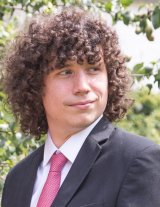
Boris Hespeels is an academic researcher affiliated with the University of Namur, specifically the Research Unit in Environmental and Evolutionary Biology within the Institute of Life-Earth-Environment. He holds the academic rank of Researcher and has been actively involved in leading and co-leading multiple research projects focusing on radiation biology, evolutionary genetics, and the survival mechanisms of bdelloid rotifers in extreme environments.
Education: Boris Hespeels earned a Master's degree in Biochemistry and Molecular and Cellular Biology in 2009 and a Doctor of Sciences (PhD) in 2016, both from the University of Namur. His PhD thesis, supervised by K. Van Doninck, explored desiccation-induced genetic exchanges and resistance mechanisms in bdelloid rotifers.
Research Interests: His work centers on understanding how organisms, particularly bdelloid rotifers, adapt to extreme conditions such as ionizing radiation, cosmic rays, and desiccation. Key areas include radiation resistance, genomic stability in asexual species, and ancestral evolutionary traits. His projects often involve collaborations with space agencies and institutions to simulate extraterrestrial environments.
Recent Articles: His research highlights include studies on the radioresistance of black garden ants, the impact of cosmic radiation on rotifers aboard the ISS, and the ancestral roots of desiccation resistance. These studies contribute to broader questions about survival mechanisms in space and evolutionary biology.
Awards: No specific awards are explicitly mentioned, though his work has garnered attention through media coverage and citations (e.g., 534 citations).
Grants/Advising: As PI or co-PI, he led projects like RISE-EXPOSE (2023), RISE-2021, and RISE 2016-2018, focusing on radiation biology and extremophile organisms. He has advised students in thesis work, including his own doctoral and master’s research.
Labs/Teams: Collaborates with teams at the Namur Research Institute for Life Sciences, involving researchers in genetics, radiation biology, and space science. His work integrates experimental and computational approaches to study extremophile organisms.