معرفی
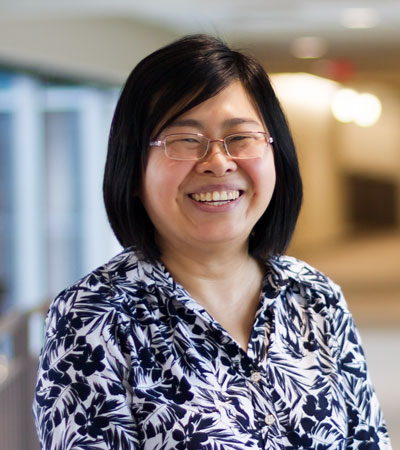
Dr. Bo Wang serves as an Assistant Professor in the Joint Department of Biomedical Engineering between Marquette University and Medical College of Wisconsin, where he directs the Tissue Regenerative Engineering Laboratory (TRE Lab). His research bridges engineering principles with medical applications to address critical healthcare challenges in tissue regeneration.
Dr. Wang received his D.D.S. and M.S. in Maxillofacial Surgery from Dalian Medical University in China, followed by a Ph.D. in Biomedical Engineering from Mississippi State University, and completed postdoctoral training at Northwestern University's Feinberg School of Medicine. His educational background uniquely positions him at the intersection of clinical dentistry, surgical applications, and engineering solutions.
His primary research interests focus on stem cell engineering, hard tissue engineering and 3D bioprinting, and cardiovascular tissue engineering, with particular emphasis on developing novel biomaterials and tissue engineering approaches. Recent publications reveal a strong trend toward utilizing amniotic membrane derivatives, bone-derived nanoparticles, and vascular graft development, demonstrating his commitment to translating laboratory discoveries into clinically relevant solutions for cardiac, vascular, and orthopedic applications.
Dr. Wang has secured significant research funding from major organizations including the National Institutes of Health, National Science Foundation, and Advancing a Healthier Wisconsin Endowment. His current projects include developing compliant small-diameter vascular grafts using human amniotic membrane, tissue-engineered vascular grafts using porcine artery, and innovative approaches for cleft palate repair and hepatic differentiation enhancement.
As Director of the Tissue Regenerative Engineering Laboratory, Dr. Wang leads a multidisciplinary team focused on biomaterial development, tissue scaffold fabrication, stem cell differentiation, and preclinical testing of regenerative medicine solutions. His work has particular relevance for addressing the critical shortage of transplantable tissues and organs through engineered alternatives.