معرفی
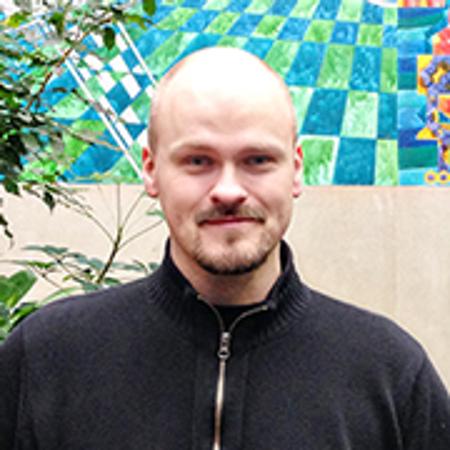
Bijaya Acharya is a Neutrino Theory Network Fellow at Oak Ridge National Laboratory (ORNL), where he conducts research in the Theoretical and Computational Physics Group within the Physics Division's Fundamental Nuclear and Particle Physics Section. His work bridges nuclear theory, computational physics, and data science to advance predictive modeling in nuclear systems.
Dr. Acharya earned his Ph.D. in Physics and Astronomy from Ohio University in 2015, followed by postdoctoral research appointments at the University of Tennessee, Knoxville, and the University of Mainz in Germany. His academic trajectory reflects deep specialization in theoretical nuclear physics with international collaboration experience.
His research focuses on nuclear theory, predictive modeling, uncertainty quantification, nuclear astrophysics, and machine-learning applications. He develops computational frameworks for ab initio nuclear structure calculations, particularly using chiral effective field theory and coupled-cluster methods, to model electroweak processes in nuclei. This work addresses critical challenges in neutrino physics, stellar nucleosynthesis, and nuclear reaction rates.
Analysis of his 15 most recent publications reveals a strong trend toward integrating machine learning with nuclear theory to enhance uncertainty quantification and anomaly detection in electroweak processes. His research spans nuclear structure (e.g., 40Ca, 48Ca), few-body systems (deuteron, 11Li), and astrophysical applications (solar fusion), demonstrating interdisciplinary innovation at the intersection of physics and computational science.
Dr. Acharya has received these notable scientific awards:
- Neutrino Theory Network Fellowship (inaugural recipient)
- 2022 Few Body Systems Award for Young Professionals
Funded by the competitive Neutrino Theory Network Fellowship, his research leverages ORNL's high-performance computing resources for large-scale nuclear simulations. He collaborates with national laboratories and academic institutions on projects related to neutrino-nucleus interactions, nuclear astrophysics, and fundamental symmetries, contributing to major initiatives like the NSAC long-range plan. His grant portfolio emphasizes theoretical development with practical applications in nuclear energy and astrophysics.
As a core member of ORNL's Theoretical and Computational Physics Group, he contributes to cutting-edge research in nuclear theory while mentoring early-career scientists. The group's work focuses on advancing ab initio methods for nuclear structure and reactions, with strong ties to experimental programs at facilities like the Spallation Neutron Source.