معرفی
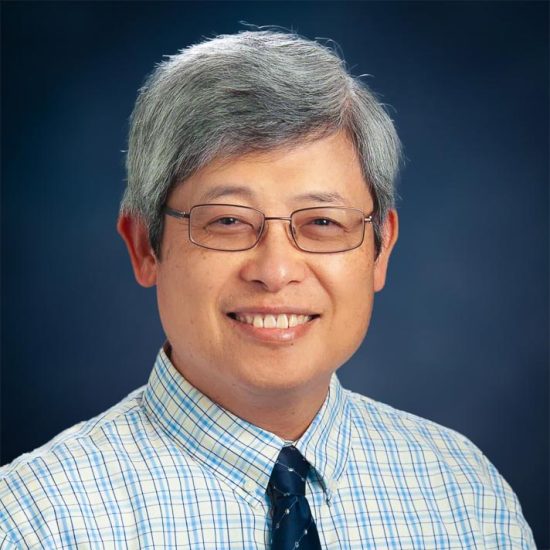
Ben Jang serves as Regents Professor and Professor in the Department of Chemistry at East Texas A&M University, where he has maintained continuous academic appointments since 2001. He currently directs multiple National Science Foundation programs including REU, TUES, S-STEM, and Noyce projects, and previously led the Chemistry Department as Head from 2007-2014.
His academic credentials include:
- Post.Doc. in Heterogeneous Catalysis and Process Engineering from Research Triangle Institute International
- D.Sc. in Applied Chemistry from University of Texas at Arlington
- B.S. in Chemistry from National Taiwan University
Dr. Jang's research centers on catalytic solutions for environmental and energy challenges, with signature work in algae-to-bio-oil conversion systems that simultaneously address wastewater treatment and renewable fuel production. His laboratory develops advanced catalysts for air pollutant remediation using waste-derived materials, supported by specialized training modules in Thermogravimetric Analysis, Hydrothermal Liquefaction, and Gas Chromatography-Mass Spectrometry.
Publication analysis reveals consistent focus on heterogeneous catalysis for environmental applications, particularly volatile organic compound oxidation and sustainable catalyst synthesis methods. His work demonstrates strong interdisciplinary connections between chemical engineering, materials science, and environmental remediation.
Professional recognition includes:
- Faculty Development Leave Award (2006-2007) from East Texas A&M University
As an educator, Dr. Jang emphasizes personalized mentorship in small-class settings, particularly in thermodynamics instruction. His NSF-funded programs provide extensive undergraduate research opportunities and teacher training through REU and Noyce initiatives, reflecting commitment to STEM education pipeline development.
Current laboratory operations focus on bio-oil conversion systems and advanced catalyst characterization using plasma-assisted synthesis techniques, with instrumentation including Thermogravimetric Analyzers and GC-MS systems for comprehensive reaction analysis.