معرفی
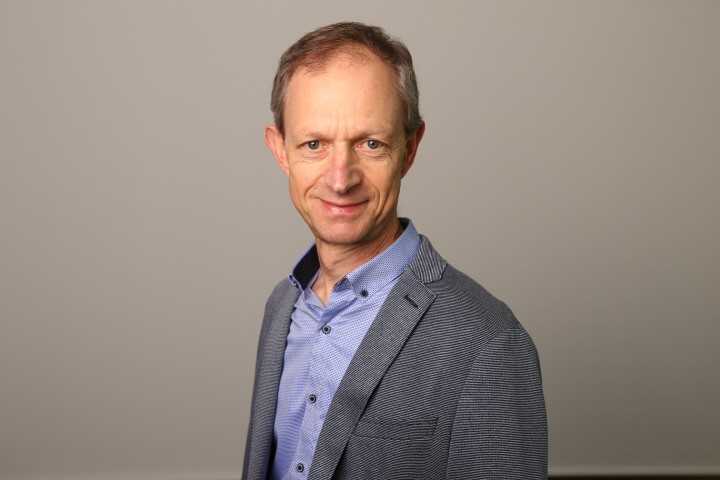
Anthony Dupont is a Senior Lecturer and Vice Dean for Research at KU Leuven's Faculty of Theology and Religious Studies, where he leads the Center for the Study of Augustine, Augustinianism and Jansenism and serves as Program Director of the Doctoral Committee for Theology and Religious Studies. His academic work centers on early Christian thought with particular emphasis on Augustine of Hippo's theology, sermons, and letters.
Dupont's research interests span Augustine studies, Manichaeism, the Pelagian controversy, early Christian rhetoric, and Late Antique theology. His scholarly approach combines historical analysis with philosophical and theological inquiry, focusing on how Augustine engaged with contemporary religious movements and philosophical traditions. He examines Augustine's use of sensory imagination, rhetorical strategies, and biblical interpretation in shaping Christian thought during a critical period of religious development.
His recent publications reveal a consistent focus on Augustine's intellectual engagement with Manichaeism, his theological development through correspondence and preaching, and the reception of his works throughout history. Dupont's work demonstrates how Augustine's thought remains relevant for contemporary theological and philosophical discussions, particularly regarding human nature, sin, grace, and the relationship between faith and reason.
Dupont actively promotes international scholarly collaboration, having delivered invited lectures at prestigious institutions including Minzu University, Tsinghua University, Renmin University, and Peking University in Beijing. His leadership extends to multiple research projects funded through KU Leuven, examining topics such as Augustine's anti-Manichaean rhetoric, sensory imagination in Late Latin antiquity, and early witnesses to the reception of the Pelagian controversy.
As head of the Center for the Study of Augustine, Augustinianism and Jansenism, Dupont oversees a vital hub for interdisciplinary research on Augustine's legacy and its historical development through Jansenism. His membership in LECTIO – KU Leuven Institute for the Study of the Transmission of Texts, Ideas and Images further demonstrates his commitment to understanding how theological concepts evolve across historical periods.