معرفی
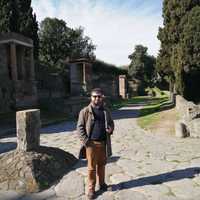
Gert Partoens is a full professor at the Faculty of Arts, KU Leuven, where he serves as head of the Institute for Classical Studies. He is a member of the Latin Literature Research Group and LECTIO – KU Leuven Institute for the Study of the Transmission of Texts, Ideas and Images in Antiquity, the Middle Ages and the Renaissance. Additionally, he participates in university governance as a member (ZAP) of both the Faculty Council of Arts and the Artesraad.
Professor Partoens' research focuses on Latin literature, particularly patristic and medieval texts with a specialization in Augustine studies, textual transmission, and manuscript analysis. His expertise spans:
- Early Christian theology and literature
- Manuscript studies and textual criticism
- Reception history of classical and patristic authors
- Medieval exegesis, particularly of Pauline epistles
- Canon formation in late antiquity
His recent scholarly output demonstrates consistent engagement with Augustine's reception, particularly examining how medieval scholars interpreted and transmitted his works. Partoens has produced numerous critical editions, including volumes in the prestigious Corpus Christianorum series, and has increasingly focused on sermon corpora and homiliary collections. His methodological approach combines textual criticism with reception history to trace how classical and patristic texts were understood across different historical periods.
Professor Partoens is actively involved in multiple research projects extending through 2027, including studies on canon formation mechanisms, early witnesses to semi-Pelagianism, and the transmission of Pomerius' De vita contemplativa. His work often involves international collaboration, particularly with institutions like SISMEL in Bologna, and contributes significantly to our understanding of how texts traveled and were transformed throughout the medieval period.
As an educator, Partoens teaches courses on early Christian and medieval Latin language and literature, classical Latin, textual criticism, and edition techniques, training the next generation of scholars in philological methods and classical reception studies.