معرفی
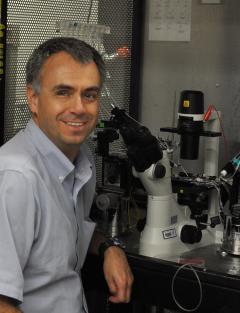
Professor Andrew Moorhouse serves as Professor of Physiology and Horizons Professor of Medical Sciences (Education Focused) at the School of Medical Sciences within the Faculty of Medicine and Health at the University of Sydney. His dual appointment reflects his significant contributions to both neuroscience research and physiology education. With an active research program spanning over two decades, Professor Moorhouse maintains strong international collaborations, particularly with Japanese research institutions as evidenced by his extensive publication record.
Professor Moorhouse's research interests center on cellular and molecular neuroscience with particular emphasis on microglia-neuron interactions, ion channel physiology, and neural plasticity mechanisms. His work investigates how microglia modulate synaptic function, how astrocytes influence pain pathways, and the role of chloride transporters like KCC2 in neural circuit function. More recently, he has made substantial contributions to physiology education reform in Australia, leading multiple projects to establish consensus on core physiological concepts through the Delphi method.
Analysis of his publication trends reveals a clear evolution from fundamental neuroscience research toward integrated approaches combining cellular mechanisms with systems-level physiology and educational frameworks. While his earlier work (2003-2015) focused primarily on ion channel biophysics and receptor physiology, his recent publications (2019-2024) demonstrate expanding interests in neural circuit function, pain mechanisms, and physiology education. His research consistently appears in high-impact journals including Nature Communications, Science Advances, and Journal of Neuroscience.
Professor Moorhouse has been actively involved in physiology education reform in Australia, contributing to multiple collaborative papers on core concepts in physiology education. His work with Australian colleagues has systematically unpacked and validated fundamental physiological concepts including homeostasis, integration, cell-cell communication, and the structure-function relationship across various physiological systems.
His research program demonstrates significant collaborative activity with both Australian and international colleagues, particularly from Japan. While specific grant information isn't provided in the available text, his extensive publication record across multiple high-impact journals suggests sustained research funding. Professor Moorhouse appears to work within a neuroscience research group focusing on glial cell function, neural plasticity, and pain mechanisms, with strong connections to both Australian physiology education networks and Japanese neuroscience laboratories.