معرفی
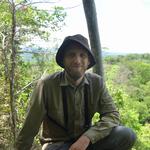
Professor Amanda Korstjens is a Professor of Behavioural Ecology at Bournemouth University's School of Life and Environmental Sciences. With over two decades of research experience, she has established herself as a leading expert in primatology and conservation biology, particularly focusing on tropical ecosystems and primate behavior. Her work bridges ecology, climate science, and conservation practice, with significant contributions to understanding how environmental changes impact primate populations across Africa and Southeast Asia.
Her academic journey began with a PhD in Biology from Utrecht University (2001), where her dissertation focused on primate social systems in Taï National Park. This foundational work established her expertise in primate behavioral ecology and laid the groundwork for her subsequent research on red colobus monkeys and their mating systems.
Professor Korstjens' research spans multiple critical areas in primatology and conservation science. She leads the LEAP (Landscape Ecology and Primatology) research program, which investigates how forest structure and disturbance affect primate distribution and behavior. Her work examines how climate change and human activities influence primate populations, with particular focus on red colobus monkeys and gibbons. She has pioneered the use of drone technology and microclimate measurements to understand how forest structure influences primate habitat use and responses to environmental change. Her research has significant implications for conservation strategies in the face of global climate change.
Analysis of Professor Korstjens' recent publications reveals a strong interdisciplinary approach that integrates primatology with climate science and landscape ecology. Her work increasingly incorporates advanced technologies like UAVs (drones) and LiDAR for 3D forest mapping, combined with microclimate measurements to understand habitat quality at fine scales. There's a clear progression toward research with direct conservation applications, particularly through her work with the LEAP program in Sumatra, which examines how microclimate variations within forests create refuges for primates facing climate change.
- Associate Editor for Animal Behaviour (2017-2019)
- Editorial Board for Primates (2015-present)
- Invited Primate Species Specialist Group member of the IUCN Species Survival Committee (2017-2020)
- Topical Editor for Primate Biology - Copernicus Publications (2014-present)
Professor Korstjens actively mentors the next generation of researchers, having supervised numerous PhD students including Emma Hankinson, Alexandria Young, Aralisa Citalli SHEDDEN-GONZALEZ, Helen Slater, Christopher Marsh, Kelly van Leeuwen, Lindsay Biermann, and Monika Knul. She has secured significant research funding from organizations including the Leverhulme Trust, People's Trust for Endangered Species, and the Primate Society of Great Britain. Her current research focuses on understanding how forest degradation affects primate populations in Sumatra and how microclimate variations can serve as refuges for primates facing climate change.
She leads the LEAP (Landscape Ecology and Primatology) research program, an interdisciplinary initiative investigating the role of forest structure and disturbance on animal distribution and behavior in Sumatra, Indonesia. This program involves collaboration with researchers from multiple institutions including Liverpool John Moores University and the Sumatran Orangutan Conservation Programme. The LEAP program combines field observations with advanced remote sensing technologies to understand how primates respond to environmental changes, with direct applications for conservation planning.