معرفی
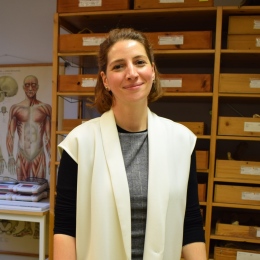
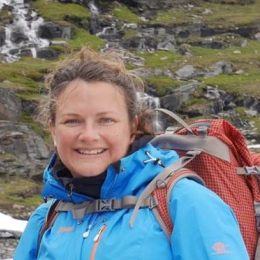
Alison Klevnäs is a Researcher at the Department of Archaeology and Classical Studies within Stockholm University's Faculty of Humanities. Affiliated since 2012, she progressed from postdoctoral researcher to fixed-term senior lecturer before assuming her current research position. She earned her Docentur (Habilitation) in 2021 and serves as Principal Investigator for multiple research projects.
Her educational background includes an undergraduate Archaeology degree from the University of Cambridge, an MA in Viking and Early Medieval Studies from Uppsala University, and a 2010 PhD from Cambridge focusing on Merovingian-period grave disturbance in northern and western Europe. Her doctoral research was published as a monograph in 2013.
Klevnäs specializes in early medieval mortuary practices with particular expertise in Viking Age burials and grave disturbance phenomena across Europe. Her research demonstrates how communities from the late sixth century AD adopted practices of re-entering graves and removing selected objects, challenging traditional interpretations of such activities as mere grave robbery. She is a founder member of the Archaeothanatology Working Group and has developed methodologies for identifying post-burial disturbance.
Her publication record reveals consistent focus on mortuary archaeology across temporal and geographical contexts, with increasing attention to memory practices and the social significance of grave reopening. Recent works synthesize evidence from Transylvania to England, highlighting shared mortuary treatments across early medieval Europe.
From 2018-2022, Klevnäs served as editor of Current Swedish Archaeology, Sweden's leading peer-reviewed archaeological journal. She has supervised 16 MA dissertations and currently co-supervises four PhD candidates. Her grant leadership includes a 2018-2021 Swedish Research Council project on early medieval interactions with the dead and a 2023-2024 Marcus and Amalia Wallenberg Foundation project on Gotlandic churchyard burials.
Klevnäs has coordinated interdisciplinary doctoral themes including 'Materiality and the Human' (2017-2019) and 'Digital Humanities' (2020-2021), designed courses across humanities disciplines, and taught Viking Age studies, theory courses, and field excavation methods at undergraduate and graduate levels.