معرفی
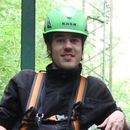
Alexandra Weigelt is a Professor and Senior Researcher at Leipzig University's Institute of Biology, where she has been conducting research since October 2009. With 278 publications and over 21,944 citations, her work has significantly advanced understanding of plant ecology, biodiversity, and ecosystem functioning. She co-leads the Christian Wirth & Alex Weigelt Lab, focusing on experimental approaches to biodiversity-ecosystem functioning relationships.
Dr. Weigelt's research spans multiple ecological domains with particular emphasis on plant-soil interactions and grassland ecosystems. Her work integrates aboveground and belowground perspectives, examining how plant traits—especially root traits—influence ecosystem processes. She has made seminal contributions to the development of the root economics space framework, which explains how fine-root functional traits relate to plant resource acquisition strategies and ecosystem functioning. Her research also explores how biodiversity mediates ecosystem responses to climate change and extreme events.
Analysis of Dr. Weigelt's recent publications reveals a strong trend toward integrating trait-based approaches with ecosystem functioning research. Her work increasingly examines how plant diversity influences multiple ecosystem functions simultaneously through both aboveground and belowground mechanisms. Notably, her research demonstrates that root traits often explain ecosystem properties better than traditional aboveground traits, highlighting the critical importance of considering belowground processes in ecological studies. The growing emphasis on temporal dynamics in biodiversity experiments represents another significant trend in her recent work.
Dr. Weigelt leads an active research group within Leipzig University's Institute of Biology, conducting long-term experiments including work with the Jena Experiment platform. Her laboratory employs innovative methodologies such as terrestrial laser scanning to measure canopy structure and advanced molecular techniques to study root-soil interactions. The lab maintains extensive international collaborations across Europe, contributing to major ecological networks and meta-analyses that shape the field of biodiversity science.