معرفی
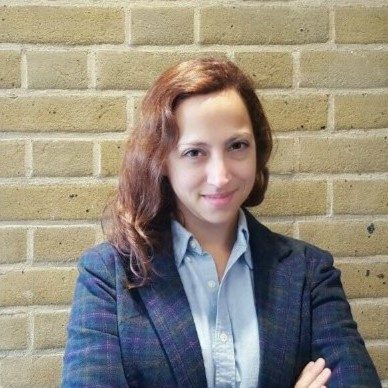
Professor Alexandra Brintrup is a leading academic in digital manufacturing and supply chain systems. She is Professor in Digital Manufacturing at the University of Cambridge's Department of Engineering and leads the Supply Chain AI Lab. She is also External Faculty at the Complexity Science Hub Vienna and leads Digital Manufacturing research at the Alan Turing Institute. Additionally, she is a Fellow of Darwin College, Cambridge.
Her research focuses on understanding supply chains as complex adaptive systems. She pioneered empirical studies on large-scale supply networks, characterizing their resilience and emergent behaviors through data-driven and AI-based methods. Her work includes developing algorithms to predict supply chain dependencies and disruptions, using multi-agent systems and nature-inspired optimization techniques. She actively collaborates with industrial partners such as Boeing, Rolls-Royce, Jaguar Land Rover, Suzuki, and Procter & Gamble.
Her recent publications highlight trends in supply chain science, particularly in modeling firm-level networks and informing policy. The 2024 policy brief The Need for a Better Map of the Global Supply Network, co-authored with leading complexity scientists, underscores the importance of systemic mapping for economic resilience and policy design.
She advises policy development through her membership in the All-Party Parliamentary Groups on Artificial Intelligence and Data Analytics, contributing to national and European strategies on supply chain risk and economic performance.
She has advised multiple scientific committees and government bodies over the past decade, translating complex research into actionable insights. Her work bridges academia, industry, and public policy, with ongoing projects in autonomous decision-making and scalable optimization in distributed supply networks.
She is involved in major interdisciplinary initiatives, including the Interdisciplinary Workshop on Firm-Level Supply Networks hosted by the Complexity Science Hub, reflecting her leadership in advancing supply chain science as a cross-cutting discipline.