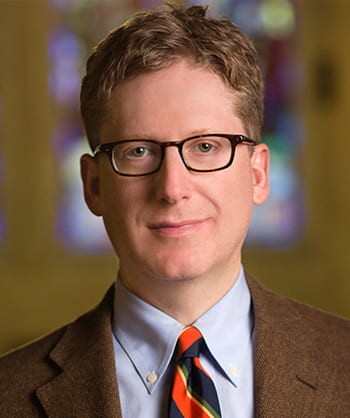
Alexander I. Orwin
استادیار · Medieval Islamic Political Philosophy
Louisiana State Universityمعرفی
Alexander I. Orwin serves as an Assistant Professor in the Department of Political Science at Louisiana State University, where he specializes in medieval Islamic political philosophy and its intersections with classical and modern traditions. His research centers on the reception of Plato's Republic within Islamic intellectual history, particularly through Averroes' commentary, while teaching foundational and advanced courses spanning political theory from antiquity to contemporary debates.
Education
- Ph.D. in Political Science, University of Chicago (2015)
Research Focus
Orwin's scholarship explores how classical Greek political thought was transformed within medieval Islamic contexts, examining figures like Averroes and Alfarabi through comparative lenses that bridge ancient philosophy, Islamic theology, and modern political challenges. His current book project analyzes Plato's Republic in the Islamic Context, revealing how Islamic philosophers reinterpreted Platonic concepts of governance, music, and divine law to address their own sociopolitical realities. This work demonstrates his signature approach of tracing philosophical lineages across cultural boundaries while engaging with contemporary issues like secularism and religious pluralism.
Publication Trends
His recent publications (2022-2024) reveal three dominant threads: first, technical analysis of Averroes' exegesis of Plato's Republic covering music's political role, ruler qualifications, and divine law tensions; second, Leo Strauss' influence on interpreting Islamic philosophy through esoteric writing and religious heterodoxy; and third, urgent engagement with modern political crises like Islam in Europe through Houellebecq's fiction. These strands collectively showcase his method of using historical texts to illuminate present-day philosophical dilemmas.
Teaching Philosophy
Orwin teaches courses including POLI 2060 (Introduction to Political Theory), POLI 4081/4082 (History of Political Theory), and specialized seminars on literature-race dynamics and Bible-Quran comparisons. He emphasizes disciplined close reading of primary texts to help students navigate complex philosophical arguments, aiming to cultivate deep engagement with foundational works across cultural traditions while maintaining rigorous analytical standards in classroom discourse.