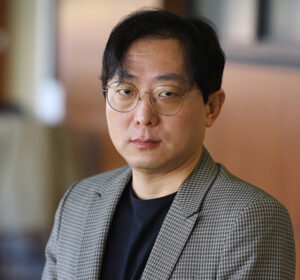
Alexander Hartwell
استادیار · Electrochemical Energy Systems
Western New England Universityمعرفی
Alexander Hartwell serves as an Assistant Professor in the Department of Mechanical Engineering at Western New England University, where he leads the Electrochemical Energy Systems (EES) Laboratory. His work focuses on hands-on investigations of electrochemical energy conversion systems, novel manufacturing practices, and operational methodologies for sustainable energy solutions.
Hartwell's educational background includes:
- Ph.D. in Mechanical and Aerospace Engineering from Syracuse University
- M.S. in Mechanical and Aerospace Engineering from Syracuse University
- B.S. in Nanoscale Engineering from SUNY Polytechnic Institute
- B.S. in Applied Mathematics from SUNY Polytechnic Institute
His research centers on solid oxide fuel and electrolyzer cells, investigating material selection, manufacturing, cell architecture, and system integration to optimize performance for renewable energy complementation. In advanced ceramic manufacturing, he addresses adoption barriers through additive manufacturing, self-shaping, and biomaterial molding techniques for aerospace, electronics, and energy applications. His self-shaping research explores fundamental non-Euclidean plate behavior across material mediums to solve engineering challenges.
Hartwell's publication record (2019-2023) reveals consistent focus on tubular solid oxide fuel cell geometries, novel ceramic manufacturing techniques, and energy system integration. Key trends include self-shaping methodologies for ceramic composites, bilayer shrinkage assembly processes, and practical applications in combined heat/power systems for residential and automotive sectors.
No scientific awards were documented in the provided materials.
While specific graduate students and grant details aren't listed, Hartwell's EES Laboratory leadership suggests active undergraduate mentorship and potential external funding for his energy conversion and advanced manufacturing projects. His teaching of ENGR 103 demonstrates commitment to foundational engineering education through design projects covering computer-aided visualization, ethical decision making, and team-based problem solving.
The Electrochemical Energy Systems (EES) Laboratory serves as the operational hub for Hartwell's research, conducting experimental work on electrochemical device development, ceramic composite manufacturing, and self-shaping applications. Current projects emphasize hands-on development of novel energy conversion systems and manufacturing techniques for practical implementation in renewable energy infrastructure.