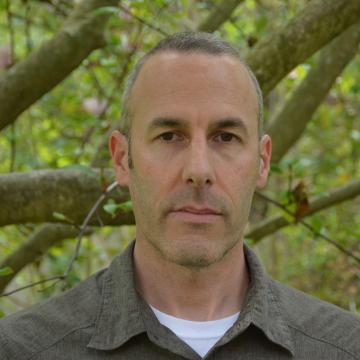
Alejandro Garcia Lozano
استادیار · Small-scale Fisheries
John Jay College of Criminal Justiceمعرفی
Alejandro Garcia Lozano is an Assistant Professor of Anthropology and Environmental Justice at John Jay College of Criminal Justice, City University of New York (CUNY), specializing in human-environment relations and natural resource politics. Their interdisciplinary work bridges environmental anthropology, political ecology, and labor justice within ocean governance systems.
Education
- PhD in Marine Science and Conservation, Duke University
- M.S. in Environmental Studies, Florida International University
- B.S. in Psychobiology, Florida Atlantic University
Research Focus
Dr. Garcia Lozano investigates social dynamics in small-scale fisheries through lenses of collective action, labor justice, and cooperative governance. Their scholarship examines how fishing communities navigate climate change adaptation, marine policy frameworks, and ecological restoration while confronting power asymmetries in resource governance. Key contributions analyze affective dimensions of cooperative politics, decent work challenges in global fisheries, and narrative construction in environmental governance.
Scholarly Trends
Recent publications reveal consistent focus on Mexican fishing cooperatives and global fisheries labor systems, merging anthropological fieldwork with political ecology. Work demonstrates interdisciplinary synthesis across marine policy, commons theory, and labor studies, emphasizing social justice in ocean governance. Recurring themes include multi-scalar governance tensions, historical analysis of resource conflicts, and decolonial perspectives on indigenous fishing practices.
Professional Engagement
Affiliated with John Jay's Environmental Justice Minor, Dr. Garcia Lozano previously led multi-institutional research at the Nippon Foundation Ocean Nexus Center (Arizona State University/Conservation International). They contribute to academic communities through the International Association for the Study of the Commons, Society for Applied Anthropology, and American Association of Geographers.