معرفی
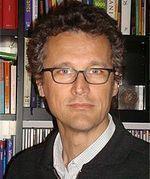
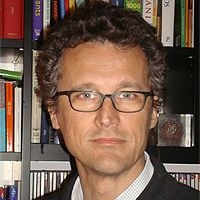
Aldo Geuna is a Full Professor at the Department of Cultures, Politics and Society at the University of Torino and a Fellow of the Collegio Carlo Alberto. He previously served as Full Professor at the Department of Economics and Statistics Cognetti de Martiis (2008-2020) and has held academic positions at SPRU, University of Sussex (1998-2008), where he advanced from Lecturer to Senior Lecturer. His international experience includes Senior Research Fellowships at RSCAS-European University Institute and research positions at BETA-Strasbourg and MERIT-Maastricht.
His educational background includes a PhD in Economics from Maastricht University (1993-1998), following Master's degrees in Technology Policy and Innovation Management from MERIT (1992-1993), Economics from University of Torino (1991-1992), and Management Engineering from Politecnico di Milano (1984-1991).
Geuna's research focuses on:
- Economics of Science
- Economics of Innovation
- Science and Technology Policy
- Political Economy of Science and Technology
- ICT and Internet Economics
- Economic Growth and Development Economics
His work centers on the socio-economic analysis of university research behavior and its links to innovation and economic growth. His recent publications reveal a strong emphasis on university-industry collaboration, research assessment methodologies, academic mobility, and the economic impact of technological advancements across multiple disciplines.
Key recognitions include:
- Included in the list of Top Italian Scientists of VIA-Academy
- CIFAR Fellow
- Member of Editorial Boards for Research Policy, Journal of Technology Transfer, Italian Economic Journal, and others
Geuna has coordinated numerous research projects funded by the European Commission, UK Research Councils, and Italian Ministry, including the current HPC/AI Transformative Impact on Science project. He has supervised PhD students and served on defense committees at institutions worldwide, while also advising governmental bodies and non-profit organizations across multiple countries including the OECD, National Academies (US), and EU.