معرفی
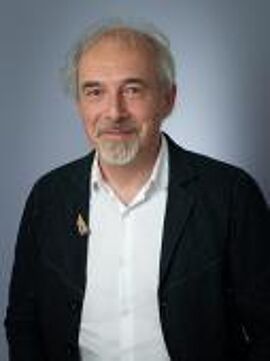
Albert Cath is an Assistant Professor at The American University of Paris, specializing in management and organizational behavior with over 30 years of experience as an independent researcher and advisor. He teaches graduate and undergraduate courses in international business, leadership, strategy, and global sustainability management. His research focuses on complex systems, social complexity theory, and participatory approaches to problem-solving. He also holds part-time teaching roles at iArts in Maastricht and supervises research master theses at NSO-CNA Leadership Academy in Amsterdam.
Education: Medicine (BSc, University of Amsterdam), Organizational Studies (MSc, Erasmus University Rotterdam), and a PhD in Humanistic Studies (2018) from the University of Humanistic Studies. His work bridges science and policy through boundary organizations, emphasizing sustainability in domains like water management, healthcare, and climate change.
Research Interests: Albert's work centers on navigating complexity in organizational and societal contexts. He advocates for methodologies that embrace complexity rather than reduce it, emphasizing stakeholder participation, reflexive practices, and 'self-eco-organization.' His theoretical frameworks address issues like climate change adaptation, sustainable development, and interdisciplinary collaboration.
Publications: He has authored/co-authored numerous books and papers on topics ranging from water management to critical pedagogy, including Solace in Complexity (2018) and contributions to Science, Technology, & Human Values (2011). His work often explores practical applications of theory in public and private sector contexts.
Consulting & Grants: While specific grants are not detailed, his extensive consulting spans workshops for public/private sectors and impactful projects with institutions like the Ministry of Infrastructure and Environment. His practice emphasizes actionable solutions for complex societal challenges.
Labs/Teams: Engaged in collaborative initiatives at the intersection of science, policy, and management, particularly through boundary organizations and interdisciplinary teams.