معرفی
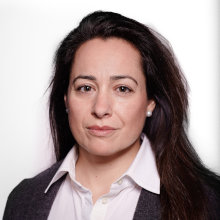
Dr. Adriana Cruz Rubio is a Researcher at Heidelberg University’s Institute of Translation and Interpreting and the Heidelberg Center for Ibero-American Studies (HCIAS). Her work bridges research, teaching, and institutional coordination since 2013. As part of the Communication and Cognition research group, her research focuses on experimental pragmatics and communication, with a specialization in medical translation. She coordinates digital teaching initiatives and international programs, including double-degree collaborations with Universidad de Salamanca and Pontificia Universidad Católica de Chile. Her doctoral fellowship from the German National Academic Foundation (2014–2017) underscores her scholarly contributions. Adriana’s teaching emphasizes experimental pragmatics and specialized translation, complemented by leadership in virtual academic exchanges and intercultural collaboration projects.
Research Interests: Adriana’s work explores experimental pragmatics, discourse processing, and cognitive aspects of language. Her studies often employ eye-tracking technology to analyze how speakers process pragmatic scales, discourse markers, and anaphoric references. She investigates cross-linguistic differences (e.g., Spanish and German) in focus operators like incluso and sogar, contributing to theories of information structure and cognitive processing.
Key Contributions: Adriana has co-authored books and chapters on discourse marking, experimental pragmatics, and cognitive linguistics. Her recent work includes studies on the processing of Spanish discourse particles and their implications for clinical linguistics. She actively collaborates on international projects, such as developing a manual of experimental tools for linguistic research (forthcoming with Routledge).
Professional Roles: Beyond academia, Adriana coordinates international study programs and advises on digital teaching strategies. She has organized workshops on eye-tracking methodology in Panama, Colombia, and Chile, promoting experimental linguistics across borders. Her interdisciplinary approach integrates translation studies, cognitive science, and intercultural communication, reflecting her dual focus on research and pedagogy.