معرفی
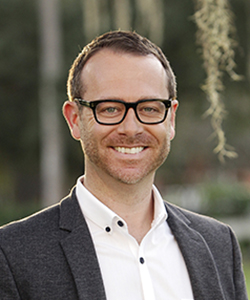
Professor Adrian Walsh holds the position of Professor in Philosophy and Political Theory at the University of New England (UNE), within the Faculty of Humanities, Arts, Social Sciences and Education and the School of Humanities, Arts, and Social Sciences. He has been at UNE since 1997, teaching courses such as Bioethics, Political Philosophy, and Social Philosophy. Additionally, he serves as a Guest Professor at the Financial Ethics Research Centre at the University of Gothenburg and an Associate Editor of the Journal of Applied Philosophy.
Walsh earned his BA(Hons) from Flinders University and a Ph.D. from the University of Melbourne. His research focuses on Applied Ethics, Political Philosophy, and the Philosophy of Economics, with particular attention to distributive justice, commodification, and interdisciplinary ethical boundaries. Notable works include Scientific Imperialism (2018), The Ethical Underpinnings of Climate Economics (2016), and The Morality of Money (2008). He is currently completing books on water justice and the role of empirical evidence in political philosophy.
His recent publications explore topics such as medieval usury debates, ethical implications of military human enhancement, and the commodification of water. Walsh’s work often bridges philosophy with practical issues in economics, politics, and environmental ethics. He has held research fellowships at institutions like the University of St Andrews and the University of Helsinki. His research interests also extend to philosophical methodology and the ethical dimensions of contemporary issues like surveillance and big data in the digital age.
Award recognition is not explicitly detailed in the provided information, but his contributions to interdisciplinary ethics and applied philosophy are widely acknowledged. Walsh’s teaching responsibilities include coordinating courses on bioethics, critical social analysis, and philosophical methodologies. His work emphasizes ethical frameworks for addressing global challenges such as climate change, resource allocation, and the moral limits of markets.