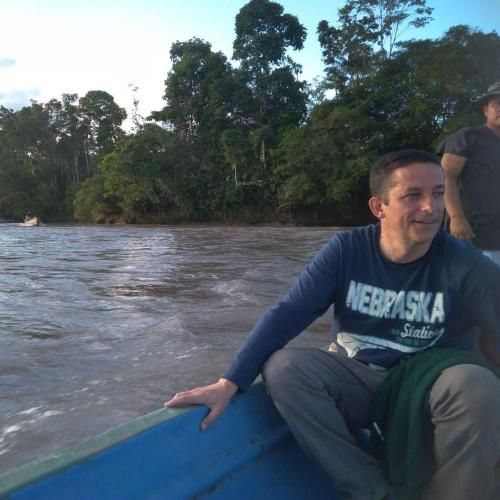
معرفی
Dr. Adrian Pinder is a researcher and Associate Director of BU Ecology at Bournemouth University, Faculty of Science and Technology. He is actively engaged in freshwater ecology and fish conservation research, with a strong focus on endangered species such as European eel and mahseer. His work integrates field studies, molecular techniques, and policy-relevant assessments.
- PhD in Mahseer Conservation (Bournemouth University, 2019/2020)
- Chartered Environmentalist in Fisheries (CIEEM, 2013)
Dr. Pinder's research centers on freshwater fish ecology, conservation biology, and sustainable fisheries management. He investigates the impacts of human activities on aquatic ecosystems, including angling, invasive species, and habitat degradation. His work often employs stable isotope analysis, eDNA, and population monitoring to assess fish health and ecosystem dynamics.
The recent publications highlight a consistent focus on conservation of endangered freshwater fish, particularly Anguilla anguilla and Tor spp. Themes include migration phenology, non-lethal monitoring, trophic ecology, and the impacts of global crises like the COVID-19 pandemic on fisheries. His collaborative work spans the UK, India, and Southeast Asia, emphasizing transboundary conservation challenges.
Dr. Pinder is a member of several professional bodies:
- Fisheries Society of the British Isles
- Institute of Fisheries Management
- IUCN Freshwater Fish Specialist Group
- Mahseer Trust (Director of Research)
He has secured research grants, including one from Natural England on blanket bog restoration, and leads impactful research projects. His work bridges science and policy, with public engagement through media appearances (BBC) and reports for governmental and non-governmental organizations. He is involved in advising on conservation strategies and monitoring programs, particularly in UK rivers and Indian freshwater systems.
Dr. Pinder is affiliated with research teams including BU Ecology and has collaborated on projects related to Poole Harbour, the River Teme, and the Severn Estuary. His leadership in the Mahseer Trust and involvement in IUCN Red List assessments highlight his role in shaping conservation priorities for iconic freshwater species.