معرفی
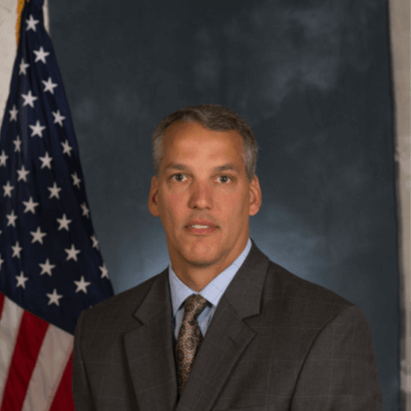
Adam M. Bossler is a Professor in the Department of Criminal Justice & Criminology at Georgia Southern University and an active member of the International Interdisciplinary Research Consortium on Cybercrime (IIRCC) and European Society of Criminology's Working Group on Cybercrime. His research bridges theoretical criminology with practical cybercrime response strategies, influencing both academic discourse and law enforcement practice.
His educational foundation includes:
- Ph.D. in Criminology and Criminal Justice, University of Missouri (2006)
- M.S. in Criminal Justice, Illinois State University (2000)
- B.S. in Justice Systems, Truman State University (1998)
Professor Bossler's research centers on applying classical criminological theories to digital contexts, with particular focus on cybercrime offending pathways, victimization patterns, and law enforcement capacity. His work examines how neutralization techniques facilitate cyber attacks, how formal/informal sanctions deter online offending, and how police agencies develop cybercrime response capabilities. This scholarship integrates social learning theory, deterrence frameworks, and self-control concepts within technology-mediated environments.
Recent publications (2020-2025) reveal increasing international collaboration, particularly with UK agencies, and methodological diversification combining survey research with computational modeling. Key thematic clusters include police cyber-capacity assessment, cross-jurisdictional cyber legislation analysis, and experimental studies of sanctioning effects in college populations.
His scholarly recognition includes:
- 2017 Academy of Criminal Justice Sciences International Section Outstanding Book Award for 'Cybercrime in Progress'
Funded research demonstrates sustained external support from premier agencies including the National Science Foundation (two major grants), United Kingdom Home Office, and Department of Justice. These projects—such as 'Mapping the Costs of Cybercrime' and 'Modeling Cyber Criminal Dynamics'—provide substantial resources for graduate student involvement, international data collection, and translational research impacting police training protocols. Current work emphasizes comparative analyses of cybercrime policing across national contexts and technological evolution of offending techniques.
Though not leading a formal named laboratory, Professor Bossler's collaborative network through IIRCC and European working groups creates a dynamic research ecosystem. His three authoritative books and extensive journal publications establish him as a leading voice in cybercrime scholarship, with research directly informing UN Sustainable Development Goal 16 on justice institutions.