معرفی
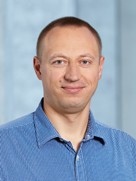
Dr. Adam Hugh Clark is a tenure track scientist at the Paul Scherrer Institute (PSI) in Switzerland, specializing in advanced spectroscopic techniques and heterogeneous catalysis. He holds a Bachelor's degree in Physics from the University of Nottingham, and a Master's and PhD in Molecular Modelling and Materials Science from University College London. At PSI, he focuses on uncovering structure-activity relationships in catalytic materials using time-resolved X-ray absorption spectroscopy (XAS).
Education
- B.Sc. in Physics, University of Nottingham
- M.Sc. and PhD in Molecular Modelling and Materials Science, University College London
Research Interests
Clark’s research centers on heterogeneous catalysis, particularly ceria-based materials for semi-hydrogenation and perovskite oxides for oxygen evolution reactions (OER). He develops and applies highly time-resolved XAS and modulation-excitation spectroscopy to study dynamic material properties during reactions. His work bridges materials science and operando XAS, with applications in electrochemistry and sustainable chemical processes. Recent projects include platinum single-atom catalysts for vinyl chloride production and LaFe0.8Ni0.8O3 perovskites for redox studies.
Publications & Software Development
His 2025 publications span quantum simulation, MOF synthesis, and high-energy particle physics collaborations. Earlier works (2019–2020) introduced ProQEXAFS, a Python-based software for rapid QEXAFS data processing. He also advanced fluorescence-detected XAS for low-concentration samples and contributed to understanding Fe-doped Co perovskites in OER.
Institutional Roles
Clark manages the SuperXAS beamline at the Swiss Light Source and leads software development for quick-scanning XAS analysis. Since 2025, he has served on the ChemCatChem early career advisory board, promoting interdisciplinary catalysis research.
Labs & Collaborations
He works within the Operando Spectroscopy group at PSI, collaborating with institutions like CERN and ETH Zürich on projects involving density functional theory (DFT), synchrotron techniques, and advanced detector systems (e.g., CMS). His affiliations include the Particle Physics LTP and Advanced Spectroscopy and X-ray Sources LSX laboratories at PSI.