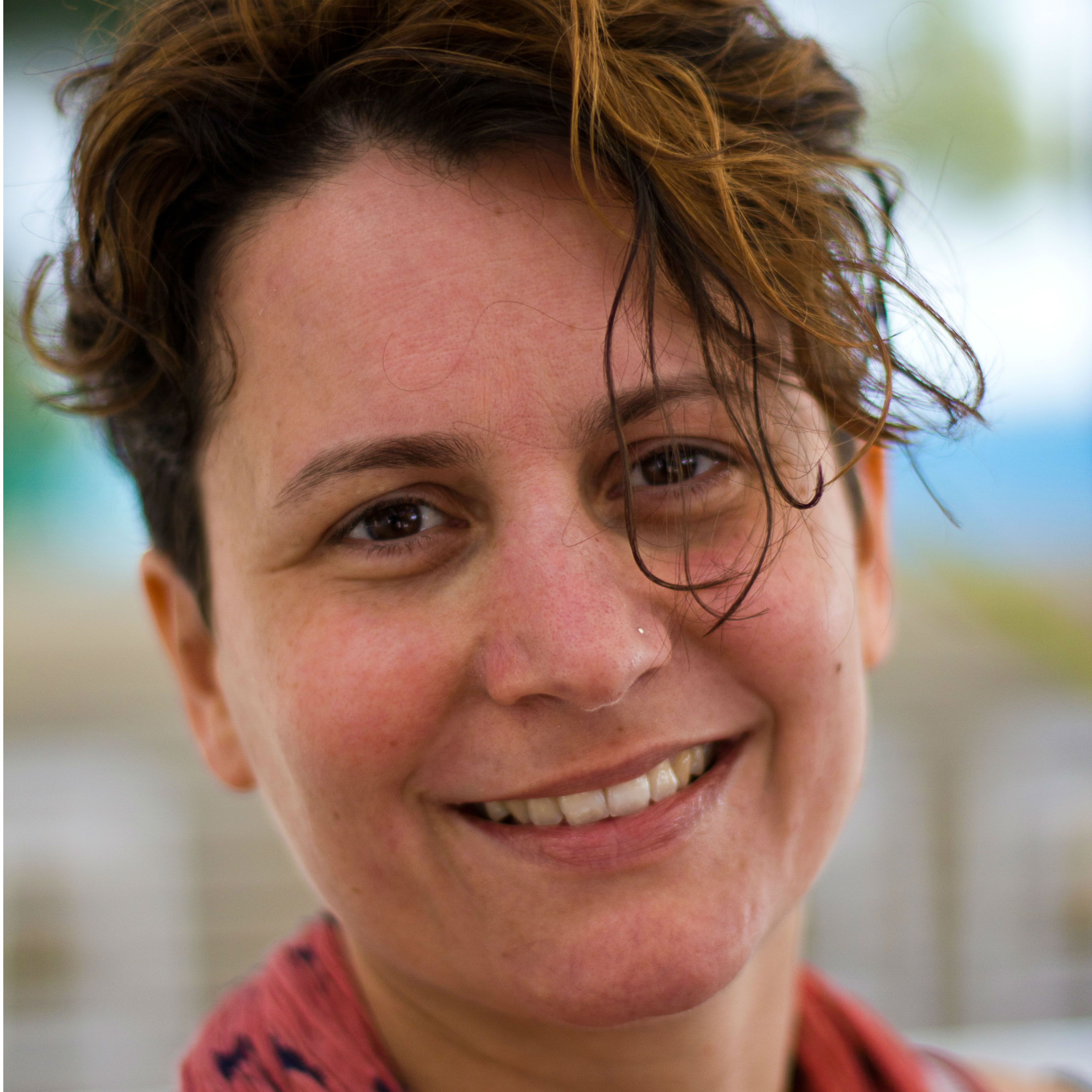
Dr. Frances Smith is an Associate Professor in Film Studies at the University of Sussex's School of Media, Arts and Humanities. She holds a PhD in Film and Television Studies from the University of Warwick (2013), an MA in Management from Durham University (2008), and a Master of Modern Languages in French/Italian from Manchester University (2007). Her research focuses on teen cinema, female authorship, Hollywood and European cinema, and gender studies, with current work on Céline Sciamma's Girlhood. She authored Rethinking the Hollywood Teen Movie (2017) and co-edited Refocus: The Films of John Hughes (2021). Teaching includes convening Analysing Film, American Teen Cinema, and Working with Film modules. She has taught Gender and Representation, British Cinema, and Study Skills. Her awards include Fellowship of the Higher Education Academy (2016). Active in PhD supervision focusing on teen cinema, female authorship, and gender in cinema. Publications span over 25 articles/chapters addressing topics like queer youth representation, transatlantic media comparisons, and directorial authorship in John Hughes and Amy Heckerling films. Research explores intersections of gender, space, and cultural identity in global popular cinema.
Wiebke von Carolsfeld serves as a Professor in Cinema at Concordia University, where she holds a primary academic appointment focused on film production and creative practice within the university's cinema program. Her research and creative practice spans directing, screenwriting, and editing across multiple cinematic formats including feature film, independent film, documentary, and shorts . She demonstrates particular expertise in narrative genres such as drama and comedy , with significant experience in international co-productions that facilitate cross-cultural collaborations. Her creative work extends beyond film into prose and novel writing , reflecting an interdisciplinary approach to storytelling. Professor von Carolsfeld maintains active engagement with the film community through her practice-based research and creative output, though specific advising relationships and grant activities are not detailed in available institutional documentation. She remains a current faculty member contributing to Concordia University's cinematic arts education mission.
William Boyd is an Honorary Fellow of Jesus College, Oxford, and an alumnus who earned a DPhil in English Literature there in 1975. Formerly a Lecturer in English Literature at St. Hilda’s College, Oxford (1980–83), he is renowned as an award-winning author and screenwriter. His works include novels like A Good Man in Africa and Any Human Heart , which have garnered accolades such as the Whitbread Award and BAFTA. Boyd’s screenwriting spans films like Chaplin and adaptations of his own novels, including the BAFTA-winning Any Human Heart (2010). Education : DPhil in English Literature, Jesus College, Oxford (1975). Boyd’s research interests center on creative writing, novel adaptation, and narrative techniques, blending literary excellence with cinematic storytelling. His screen credits include original films and adaptations of literary works, showcasing versatility across mediums. Awards span literature and film, including honorary doctorates from four Scottish universities and the CBE. Literary and cinematic themes in his work explore human psychology, historical contexts, and social dynamics, often with satirical or existential undertones. His contributions to both page and screen have solidified his international reputation.
Prof. Thomas Arslan is a filmmaker and screenwriter serving as a Professor for Narrative Film at the Institute for Time-Based Media of the Berlin University of the Arts since 2007. His work bridges narrative cinema and documentary practices, often exploring themes of migration, urban life, and cultural identity. Research Interests include: Narrative Film German-Turkish Cultural Contexts Social Realism in Cinema Documentary Storytelling Independent Film Production Historical Memory in Visual Media Filmography Trends : Spanning 1993–2013, his works focus on marginalized communities, historical displacement, and personal/family dynamics within urban settings. Selected subfields include German-Turkish Cinema , Social Observation , and Migration Narratives . Affiliation : Institute for Time-Based Media at UdK Berlin.
Hsiu-Chuang Deppman is a Professor of Chinese and Cinema and Media at Oberlin College, affiliated with the College of Arts and Sciences. She holds positions in both the East Asian Studies and Cinema and Media departments. Currently on leave for the 2024-25 academic year, her research focuses on film adaptation, Chinese cinema history, and comparative literature. She has published extensively, including books like Close-ups and Long Shots in Modern Chinese Cinemas (2021) and Adapted for the Screen (2010). Deppman earned her PhD (1999) and MA (1993) in Chinese Literature from the University of Wisconsin-Madison, and a BA (1990) from National Cheng-Kung University in Taiwan. Her research interests span: Adaptation Studies History of Chinese Cinema Documentary and Media Studies Contemporary Chinese Fiction Comparative Literature Awarded the 2016-2017 Excellence in Teaching Award, she has also received grants and fellowships including the Fulbright Research Grant, Taiwan National Science Council Grant, and Freeman Foundation Grant for Asian Studies, among others. In addition to her research, Deppman teaches courses such as Contemporary East Asian Cinema and Intermediate Chinese I . Her work has been supported by the GLCA/Mellon New Directions Initiative and the Chiu Scholarly Exchange Program for Taiwan Studies. Her current project involves writing a book on Jia Zhangke’s cinema of reflection, reflecting her ongoing engagement with modern Chinese cinematic narratives.
James Wicks serves as Professor of Media & Film Studies and Assistant Dean at Point Loma Nazarene University's School of Humanities, Arts, and Public Engagement. Teaching since 2009 and joining the Department of Communication Studies in 2021, he holds a Ph.D. in Film Studies with emphasis on Chinese Cinema from UC San Diego (2010). His academic career bridges administrative leadership with specialized instruction in narrative film, documentary production, and screenwriting. Dr. Wicks' educational background includes: Ph.D. in Film Studies (Cultural Studies section), University of California, San Diego, 2010 M.A., Oregon State University B.A., Oregon State University His research centers on Taiwan cinema history from the 1950s-1980s, exploring transnational representations, philosophical dimensions of martial arts films, and cultural identity. Additional interests include street culture in Hollywood, surf cinema history, and gender negotiation in early Taiwanese films. His methodological approach combines historical analysis with cultural studies frameworks. Publication trends reveal sustained focus on Taiwan cinema scholarship since 2010, with significant expansion into interdisciplinary urban studies (2019-2020) and contemporary director analyses (Ang Lee, Hou Hsiao-Hsien). His 2022-2016 output demonstrates consistent engagement with Cold War-era cinematic narratives while incorporating newer interests in ecological representation and punk cinema aesthetics. Notable recognitions include: Excellence in Teaching Award (PLNU, 2019) Two PLNU RASP grants for film preservation (2018-2019) Taiwan Ministry of Education research grant (2011) Chiang Ching-Kuo Foundation fellowship (2009-2010) As an active researcher, Dr. Wicks has secured substantial external funding for film preservation projects and maintains strong community engagement through the San Diego Asian Film Festival. His administrative role as Assistant Dean complements his scholarly work in media studies curriculum development. Through co-organization of the San Diego Asian Film Festival's Taiwan Showcase (2012) and UCSD Taiwan Film Festival (2009), he has built collaborative networks across academic and cultural institutions. His ongoing film reel preservation project demonstrates commitment to safeguarding historical cinematic materials.
Harri Ylönen serves as Associate Professor in the Department of Film at Aalto University, Finland, specializing in cinematic production with emphasis on editing techniques and narrative development across documentary and fiction genres. His research spans critical areas including: Film Editing Methodologies Documentary Storytelling Fiction Film Production Television Series Development Creative Media Industries Professor Ylönen's mentorship has yielded exceptional student outcomes, with supervised works achieving international recognition. His students' films—such as Siiri Vaara's documentary 'Where the Light Breaks into Shards' and Sameli Muurimäki's 'Lollipop'—secured official selections across major festivals including International Short Film Competition, New Nordic Films, and R&A Shorts competitions throughout 2023. Professional contributions include editorial roles on prominent Finnish productions like the 'Paratiisi' TV series franchise (2020-2024), 'Helsinki-syndrooma', and feature films including 'A Rare Grand Alignment' (2023), demonstrating consistent engagement with contemporary cinematic practices.
Panpan Yang is a Lecturer in Arts and Visual Cultures of Modern China at the School of Arts, SOAS University of London. She joined SOAS in 2021 after completing her joint PhD at the University of Chicago under the direction of Wu Hung, Tom Gunning, W. J. T. Mitchell, Judith Zeitlin, and Dana Polan. Her interdisciplinary work bridges art history, screen studies, East Asian studies, and digital humanities, with a focus on innovative methodologies in art historical writing. Dr. Yang earned a dual BA from Peking University, double majoring in art and philosophy, followed by an MA from Tisch School of the Arts at NYU, and a PhD from the University of Chicago. During her undergraduate studies, she served as president of the Society of Dream of the Red Chamber Studies, which informed her secondary academic interest in Redology and the visual material world of the novel Hong lou meng. Panpan Yang's research explores how minor discourses can deterritorialize the terrains of both art history and screen studies. Her work demonstrates a multimethodological approach attentive to archival research, material practices, close visual analysis, computer-aided vision, and cross-cultural theorization. She is particularly interested in Chinese animation history, calligraphic imagination in contemporary art, and the intersections between traditional Chinese art forms and new media. Her publications reveal a consistent focus on Chinese visual culture across multiple media forms, with particular attention to animation, film, and calligraphy. Yang's work demonstrates how traditional Chinese art forms engage with contemporary digital media, creating new hybrid forms that challenge disciplinary boundaries. Her research shows a trajectory from historical analysis of Chinese animation to contemporary explorations of calligraphy in digital contexts, revealing the ongoing relevance of traditional Chinese aesthetics in modern media. Dr. Yang has received several prestigious awards for her scholarly and creative work: China's National Young Screenwriter Award Domitor Essay Award Dean's Distinguished Dissertation Award Nomination Honourable Mention from the Association for Chinese Animation Studies As a Principal Investigator, Dr. Yang leads the AHRC-funded research project "Stroke by Stroke: Calligraphic imagination in contemporary Chinese art and emergent media" (2023-25) with Shane McCausland. She was also a collaborating partner on the NEH-funded "Media Ecology Project." Her research has received additional support from the Getty Foundation and the Sino-British Fellowship Trust. At SOAS, she works closely with faculty and graduate students interested in Chinese arts and cultures, art theory, cinematic arts, and digital art history. Dr. Yang is currently developing innovative research at the intersection of traditional Chinese calligraphy and contemporary digital media through her AHRC-funded project. This work explores how calligraphic imagination manifests in contemporary art and emergent media contexts, creating new pathways for understanding Chinese cultural heritage in the digital age.
Robert Schumann University of Music DüsseldorfGermany
Enrique Sánchez Lansch is a Professor of Media Dramaturgy at the Institute for Music and Media at Robert Schumann University of Düsseldorf, appointed in 2018. Born in Gijón, northern Spain, and raised in Cologne, he has established himself as a prominent documentary filmmaker with a strong focus on music-related subjects. His educational background includes studies in music with a focus on singing, Romance languages, philosophy, and German studies. He completed his master's thesis on adaptation of literature into music films. After gaining professional experience in fictional series production, he pursued further studies in film and screenwriting at Columbia University and UCLA. Sánchez Lansch's research and creative interests center on the intersection of music and visual media. His work explores how musical experiences can be effectively translated to film, examining the relationship between sound and image. He has particular expertise in documenting musical institutions, historical contexts of music, and the educational aspects of musical performance. His approach combines rigorous historical research with innovative visual storytelling techniques that respect the integrity of musical performance while creating compelling cinematic narratives. His filmography reveals a consistent focus on music documentaries that bridge cultural and historical contexts. Early works focused on major musical institutions and figures, while more recent projects have expanded to examine the relationship between music and broader social, political, and cultural phenomena. His films consistently demonstrate a sophisticated understanding of both musical content and cinematic storytelling. His notable awards include: German Film Award German Documentary Film Award Bavarian Film Award German Critics' Award German Kinogilde Award Franz Hofer Prize Best Documentary Film at Los Angeles Latino International Film Festival Best Documentary Film at SEMINCI Festival de Valladolid Diapason d'Or Emmy nomination for "A Celebration for Gershwin" Sánchez Lansch has served as a mentor to young filmmakers, notably curating and presenting music short films by young talents for the Beethovenfest Bonn from 2006 to 2013. His professional activities extend beyond filmmaking to include teaching at institutions such as the dffb (German Film and Television Academy Berlin) and his current professorship at Robert Schumann University. He is an active member of both the German Film Academy and the European Film Academy, contributing to the broader film community through these organizations. As Professor of Media Dramaturgy, Sánchez Lansch contributes to the academic framework of the Institute for Music and Media, bringing his extensive professional experience to bear on the education of future media creators. His work bridges the gap between academic study and professional practice in the field of music-related visual media.
Andrew Gilbert, PhD, is an Assistant Teaching Professor of Humanities, Game Studies, and Media at the University of Colorado, Boulder. His research bridges literary criticism, game design, and cultural analysis, notably exploring the intersection of board games like Pandemic with real-world global crises. His screenwriting has garnered recognition, including a semi-finalist placement in the Nicholl Fellowship for his script After this . Education: PhD in Comparative Literature. Professional Work: Co-founder of Helpful Goat Gaming LLC, creator of the live-play podcast Goats and Dragons , and collaborator with actor Dominic Monaghan on Dom and Dragons . His screenplays and films have been featured at festivals such as the Beverly Hills International Film Festival and the International Film Festival of India. Research emphasizes narrative structures in games and media, with a focus on how interactive storytelling reflects societal challenges. Awards include the Nicholl Fellowship nomination, highlighting his creative and analytical contributions.
Royal Holloway, University of LondonUnited Kingdom
Barry Langford is a Professor of Film Studies in the Department of Media Arts at Royal Holloway, University of London. He holds degrees from Queens’ College, Cambridge, and Columbia University. His research focuses on critical theory, Holocaust film representations, theories of mass culture, urban studies, postmodernism, and post-classical Hollywood cinema. He has authored major works including Film Genre: Hollywood and Beyond (2005) and Post-Classical Hollywood: Film Industry, Style and Ideology since 1945 (2010). Currently, he is preparing a study titled Darkness Visible on Holocaust film. Langford is also a professional screenwriter. His short film Torte Bluma (2005) won multiple awards, including Best Drama at the Los Angeles International Short Film Festival and Best Film at Palm Springs. He co-created the ITV drama series The Frankenstein Chronicles (2015). His work contributes to UN Sustainable Development Goals related to education and cultural preservation. His research interests span film genre evolution, Holocaust cinema’s ethical dimensions, and the intersection of cinema with urban and postmodern themes. He has presented at international conferences, including invited talks on 'Film Genre in the 21st Century' and 'Soundscapes of Holocaust Film'. Langford leads the Holocaust Research Institute’s academic initiatives and collaborates on projects like the Rothschild Foundation-funded 'Global Jewish Studies in/as Holocaust Studies' (2022–2026).
Dr. Eirini Konstantinidou is a Senior Lecturer in the Department of Literature Film and Theatre Studies at the University of Essex. Her research explores science fiction films focused on memory and technology, with practical application in her feature film 'Mnemophrenia' examining artificial memories. Her educational background includes a PhD in Film Studies from Brunel University and an MA from University College London. Her research interests span further education methodologies, professional practice in adult teaching, learner voice development, and neurodiversity studies. She has developed educational programs like the 'Interactive Writing System' for script development. Dr. Konstantinidou received the Festival Director's Commendation Award at the 44th Boston Science Fiction Film Festival for her feature film exploring virtual reality's impact on human identity.
Dr Bence Bardos is a Lecturer in Media Production & Digital Content Creation at City, University of London, affiliated with the School of Communication & Creativity and the Department of Media, Culture and Society. He holds a PhD and MA in Media and Film from the University of Kent and has previously taught at the University of Kent and Kodolányi János University in Budapest. His research centers on digital participatory cultures, focusing on remix culture, online memes, parody, transmedia storytelling, and the cultural meanings embedded in internet phenomena. He explores how digital communities reinterpret media through irony, humor, and transformation, particularly in fandoms like Shrek and horror forms such as creepypasta. His upcoming publications examine ironic Shrek fandom, the communicative role of the Pepe the Frog meme, and the nostalgic linkage between 2000s Cartoon Network and online horror. These works reflect a broader interest in how digital platforms reshape narrative, identity, and cultural memory. Dr Bardos is also an active media practitioner, with experience as a television editor, video producer, and filmmaker. His creative works have been recognized at international short film festivals. He is passionate about fiction filmmaking, microbudget cinema, and experimental or 'weird' films. PhD in Media Studies, University of Kent (2018–2023) MA in Film with Practice, University of Kent (2016–2017) BA in Film, University of Kent (2013–2016) He has delivered papers at the ECREA European Communication Conference and the Two Decades of Shrek Online Symposium. His interdisciplinary background bridges media theory, film practice, and digital culture, informing both his teaching and research.
Claudia Romanelli serves as Associate Professor of Italian and Italian Program Director within the Department of Modern Languages & Classics at the University of Alabama, where she also functions as Italian Undergraduate Advisor. Her office resides in BB Comer Hall 217 with contact details cromanelli@ua.edu and (205) 348-5059. Dr. Romanelli holds a PhD from the University of Wisconsin-Madison. Her research centers on Italian cinema within global contexts , screenplay authorship , collaborative creative processes , postcolonial narratives , and intermedia experimentation . As a generalist in Italian literature specializing in modern and contemporary periods, she currently develops a book manuscript analyzing Pier Paolo Pasolini and Federico Fellini's cinematic relationship. Her work bridges film studies, literary criticism, and cultural theory with particular attention to marginalized perspectives. Analysis of her 2009-2024 publications reveals sustained engagement with Pasolini's screenwriting contributions to Fellini's films, adaptations of literary works to cinema, and examinations of otherness in Italian cultural production. Key thematic threads include authorship models in collaborative filmmaking, postcolonial representations, and transnational co-production dynamics within European cinema. No scientific awards were documented in the source material. As Italian Undergraduate Advisor, Dr. Romanelli guides student academic trajectories. While departmental highlights mention French PhD students Olabayo Awodirepo, Mablka Lambon, and Diweng Mercy Dafong, her specific graduate advisees remain unspecified. No research grants or funded projects were referenced. No dedicated research laboratories or collaborative teams were identified in the provided information.
Maneesh Agrawala is the Forest Baskett Professor of Computer Science at Stanford University and Director of the Brown Institute for Media Innovation. His research spans computer graphics, human-computer interaction, and information visualization. Agrawala's lab develops computational tools for visual communication, investigating how design principles improve media effectiveness. Current projects include diffusion models for image and video generation, sketch-based interfaces, and visualization tools for scriptwriting. His team creates systems that enable new forms of content creation and analysis. His publications demonstrate consistent innovation in visual computing, with recent advances in controllable generative models, video understanding, and visualization design. Agrawala has received numerous honors including the MacArthur Fellowship and ACM Fellowship for his contributions to visual computing.