Dr. Samia Mahmood is a Senior Lecturer in Accounting and Finance at the University of Wolverhampton's Faculty of Arts, Business, and Social Sciences. She co-leads the Entrepreneurship and Small Business Management (ESBM) research cluster and serves as Postgraduate Research Tutor for Business and Law. Her research focuses on women's entrepreneurship, SME digitalization, and microfinance impact. PhD in Business (Birmingham City University) MBA in Finance (Institute of Business Administration, Lahore) Her work addresses gender dynamics in leadership, digital adoption disparities among SMEs, and microfinance's role in poverty reduction. Key projects include AI's impact on workforce participation and women's inclusion in manufacturing sectors. Investigating Disparities in SMEs Digitalisation (DBT-funded) Reshaping Labour Force Participation with AI (EU Horizon 2020) Women in Manufacturing Policy Group (UKRI grants) She actively contributes to academic governance as a member of ethics committees and research boards, while supervising PhD students on topics like family firm innovation and gender in academia. Her teaching spans financial management to entrepreneurial finance across postgraduate and undergraduate programs.
Prof. Dr. Oliver Musenberg is Professor for Pedagogy for Intellectual Disabilities at the Institute of Rehabilitation Sciences, Faculty of Humanities, Social Sciences, and Education at Humboldt University of Berlin. He serves as Director of the Pedagogy for People with Intellectual Disabilities department and heads the Special Education Archives at the HU Professional School of Education. His professional affiliations include membership in the International Standing Conference for the History of Education (ISCHE), German Society for Educational Science (DGfE), German Interdisciplinary Society for the Promotion of Research on People with Intellectual Disabilities (DIfGB), and German Association for Rehabilitation (DVfR). Dr. Musenberg's research primarily focuses on the history of education for people with intellectual disabilities, educational theory in the context of intellectual disability, Disability Studies/Disability History, and inclusive subject teaching, particularly historical learning. His work examines the iconography of mental disability, historical learning in intellectual development contexts, and education for students with severe disabilities in inclusive settings. He leads the current DFG/AHRC-funded project "Images and Imagination of Impairment and Disability in the 'Hans Würtz Collection'" (2022-2025), which analyzes historical representations of disability. His extensive publication record spans monographs, edited volumes, handbook contributions, and numerous journal articles addressing inclusive historical education, special education theory, and disability representation. His recent work shows a strong emphasis on visual culture and historical collections related to disability, particularly the Hans Würtz Collection. His research demonstrates interdisciplinary connections between educational theory, cultural studies, and disability history, with increasing attention to museum studies and exhibition design in recent years. Head of the Special Education Archives at the HU Professional School of Education Center for Inclusion Research (ZfiB) at Humboldt University Member of the Examination Board of the Institute of Rehabilitation Sciences Member of the Faculty Council of the Faculty of Cultural, Social and Educational Sciences Dr. Musenberg has secured significant research funding including from the German Research Foundation (DFG) and Arts and Humanities Research Council (AHRC). His projects include the Quality Offensive Funding Area (Quo F), Inclusive Teacher Education (iLeb 3.0 and 2.0), and Evaluation and Development of Quality in Day Care Centers (ELOQUENT), demonstrating his commitment to practical applications of inclusive education theory.
Dr. David Hall is a Senior Lecturer at the University of Portsmouth's Faculty of Business & Law, School of Organisations, Systems and People. He serves as Course Leader for the MSc Human Resource Management and MSc Global Human Resource Management (Distance Learning) programs. Biography: David brings 20+ years of industry experience from international companies and consulting to his teaching practice. Key Expertise: Work-Based Learning, Strategic People Management, Organizational Development Research Focus: Organizational influence on employee behavior, management interventions, and workplace learning His research outputs (24 total) cover organizational development, workplace learning, and HRM, with a notable book co-authored in 2013. He pioneered the Level 7 Senior Leader Degree Apprenticeship at Portsmouth and contributed to SDG-related work in poverty reduction and sustainable development.
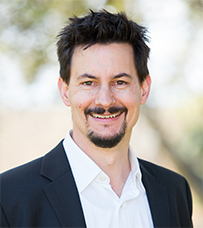
Ben Morrison is a researcher at Charles Sturt University , specializing in the intersection of psychology, artificial intelligence, and decision-making systems. His work focuses on human-computer interaction, virtual client simulations for professional training, and the ethical implications of algorithmic aids in workplaces. Research interests include: Cognitive load and information processing in AI systems Empathy in human-robot interaction User acceptance of decision support systems Enhancing psychology education through simulation technology Algorithmic performance in high-stakes environments Recent publications analyze: Virtual training tools for psychology graduates Human-AI collaboration dynamics Methodological constraints in experimental design Workplace technology adoption patterns Decision-making under algorithmic influence Scientific awards: Best Journal of Cognitive Engineering and Decision Making article (2016) Best Paper ACAP Conference (2019) Media contributions include analyses of AI disruption in psychology and worker health impacts of emerging technologies.
Anna Mårtensson is a Senior Lecturer at Mid Sweden University, affiliated with the Department of Communication, Quality Technology and Information Systems (KKI). Her research and teaching focus on Quality Management, Long-Term Thinking, Organizational Culture, and Sustainable Development, with a particular emphasis on educational and municipal contexts. University: Mid Sweden University Department: Department of Communication, Quality Technology and Information Systems (KKI) Academic Rank: Senior Lecturer Research Interests: Quality Management, Long-Term Thinking, Organizational Culture, Sustainable Development Her research explores how quality management practices can integrate sustainability and long-term strategic planning, especially in schools and public sector organizations. She has led projects like Student in Focus 100% , aiming to enhance quality work in Timrå’s schools, and studied systematic quality work in preschools and municipal companies. Recent publications (2023–2025) emphasize the interplay of digitalization, sustainability, and psychological safety in quality leadership. These works span journals like Total Quality Management and Business Excellence and conferences such as IAQUIS and QMOD, reflecting her interdisciplinary approach to public sector challenges. Anna collaborates with researchers like Karen Snyder and Per Ingelsson on projects bridging theory and practice, including reports for Östersund Municipality on sustainable governance and evaluations of municipal companies. Her teaching includes Quality Technology (basic level) and Quality Management (advanced level), translating research into academic training.
Eunae Cho is an Assistant Professor at the Department of Business Administration, College of Commerce, National ChengChi University . She holds a Ph.D. in Psychology from the University of South Florida (2010-2013) and has been affiliated with National ChengChi University since 2022. Her research focuses on work-family issues, occupational health and well-being, recovery from job stress, aging workforce dynamics, and cross-cultural psychology . She teaches courses in Organizational Behavior and Research Methods in Human Resource Management . Key research projects include: MOST 114-2025 : Work-Family Balance Efficacy in Dual-earner Couples (Principal Investigator) MOST 113-2024 : Effort-Reward Imbalance in Work-Family Context (Principal Investigator) MOST 111-2022 : Collective Efficacy in Work-Family-Caregiving Balance (Principal Investigator) Her work frequently applies longitudinal and cross-cultural methodologies. Scientific awards include: Wu Dayou Memorial Award (2023) , National Science and Technology Council She has published extensively on work-family boundary management, with recurring collaborations in Journal of Vocational Behavior , Journal of Occupational Health Psychology , and Human Resource Management Review . Her research portfolio spans dual-earner couples, pandemic impacts on work-family dynamics, and aging workforce stress mitigation strategies.
Professor Alex Haslam is a leading scholar in Social and Organizational Psychology at the University of Queensland, Australia. With a career spanning decades, he has made significant contributions to understanding group and identity processes across organizational, social, and clinical contexts. His work includes over 300 peer-reviewed articles and 15 books, such as The New Psychology of Leadership (2020) and The New Psychology of Health (2018). He serves as Associate Editor of The Leadership Quarterly and has held editorial leadership roles at the European Journal of Social Psychology . Education: Bachelor (Honours) from University of St Andrews (1990), PhD from Macquarie University (1997) His research spans four major impact areas: (1) A new psychology of leadership focusing on shared identity as a foundation for influence, (2) The glass cliff phenomenon examining gender dynamics in crisis leadership appointments, (3) The Social Cure framework for health-enhancing group membership, and (4) The BBC Prison Study reinterpreting tyranny through engaged followership rather than blind conformity. His work has been recognized with awards from the Australian Psychological Society, British Psychological Society, and the International Leadership Association. Recent publications (2025) demonstrate his ongoing influence in domains ranging from construction workers' mental health to emergency response team dynamics. His 5R Leadership Development Program has been adopted globally, and he remains actively engaged in mentoring through both formal supervision and collaborative research initiatives.
Alice Pawley serves as Associate Professor of Engineering Education at Purdue University's College of Engineering, with her office located in 1325 Armstrong Hall on the West Lafayette campus. Her work spans engineering education, diversity and inclusion, and social justice within engineering contexts, with particular focus on gender and race dynamics in the field. Dr. Pawley's research interests center on critical examinations of engineering education through feminist and critical race lenses. She investigates how engineering education structures marginalize students from underrepresented backgrounds, with specific attention to microaggressions, team dynamics, and institutional barriers. Her work explores engineering identity formation, sustainability in engineering education, and qualitative research methodologies that center minoritized voices. She advocates for transformative approaches that shift engineering education toward greater equity and inclusion. Her recent publications demonstrate consistent focus on identifying and addressing systemic inequities in engineering education. Research trends show increasing emphasis on antiracist frameworks, neurodiversity inclusion, and practical interventions for creating more supportive learning environments. Her work often employs qualitative methods to uncover nuanced experiences of minoritized students and faculty. Dr. Pawley leads the FREE (Feminist Research in Engineering Education) research group, mentoring graduate students including Canek Phillips, Kyle Jones, Corey Schimpf, Michele Yatchmeneff, Kacey Beddoes, Lindsey Nelson, and Marisol Mercado-Santiago. She co-founded the PEER Collaborative national workshop to support engineering education researchers through near-peer mentoring. Her commitment to student development is evident in her recommendation letter policy, which requires meaningful student-faculty interaction before writing letters of support. Her research team actively engages in projects examining mental health in engineering culture, distributed team models, and community-building for neurodivergent researchers. Dr. Pawley's work bridges theoretical frameworks with practical classroom applications, focusing on creating tangible changes in engineering education environments.
Joshua Barbour is a Professor in the Department of Communication at the University of Illinois Urbana-Champaign. He directs the Automation Policy and Research Organizing Network (APRON) Lab, founded in 2018, which focuses on data-intensive automated work systems and communication strategies. His research explores how institutional structures shape organizational communication and collaborative efforts, emphasizing macromorphic perspectives that bridge micro-level practices and macro-level frameworks. Barbour’s work spans health communication, risk management, and digital innovation, with a focus on communication design logics and institutional moorings. Education details are not explicitly listed, but his career demonstrates advanced academic qualifications in communication studies. His research interests include automation policy, organizational analytics, and conflict of interest frameworks in biomedical research. He has published extensively on topics like emergency communication infrastructure, temporal dominance in workplace cycles, and interdisciplinary collaboration in healthcare settings. Barbour’s APRON Lab collaborates across disciplines to address future-of-work challenges, particularly in healthcare and organizational resilience. His work emphasizes practical solutions for navigating regulatory constraints and fostering reliable communication systems in dynamic institutional environments. Grants and advising details are not explicitly mentioned, but his role as a professor and lab director suggests involvement in academic mentorship and funded research initiatives. The APRON Lab serves as a hub for interdisciplinary projects addressing automation and organizational communication challenges.
Margaret Luciano is an Associate Professor of Management & Organization at the Smeal College of Business, The Pennsylvania State University, and holds the BNY Mellon Faculty Fellowship. Previously, she served as an Associate Professor at Arizona State University’s W. P. Carey School of Business. Her expertise spans Team Dynamics, Multiteam Systems, Leadership, and Healthcare Management, with a focus on organizational behavior and complex system interactions. Dr. Luciano’s academic journey includes a Ph.D. in Management (Organizational Behavior) from the University of Connecticut (2015), an MBA in Leadership Research from Clark University (2010), and a BA in Psychology with a Management focus (2009). Her research emphasizes structural frameworks for multiteam coordination, virtual team collaboration, and healthcare leadership challenges. Her work investigates themes such as paradox management in virtual teams, surgical team performance dynamics, and institutional scaling of healthcare initiatives. Recent studies address intra-individual conflict in multiteam environments and the role of core/non-core roles in healthcare teams. Awarded the BNY Mellon Faculty Fellowship, her contributions bridge theoretical advancements in multiteam systems with practical applications in healthcare and emergency response leadership. Her publications explore topics ranging from computer-aided text analysis of team processes to adaptive leadership during task transitions in crises. While specific grant details and student advisees are not listed, her research portfolio highlights interdisciplinary collaboration and real-world organizational challenges. She actively engages with healthcare institutions like Emory Health System, demonstrating applied research impact.
Professor Daniel Aobdia holds the Ernst & Young Professorship of Accounting at the Smeal College of Business, Penn State. His prior roles include Assistant/Associate Professor at Northwestern Kellogg School and Senior Research Fellow at PCAOB’s Center for Economic Analysis. He advises scholarly journals including Journal of Accounting and Economics, The Accounting Review, and Auditing: A Journal of Practice & Theory. Education: Ph.D. & MBA, UCLA Anderson School of Management (2012, 2006) M.S., Management Science & Engineering, Stanford University (2002) B.S., École Polytechnique (France, 1999) Professional Background: Morgan Stanley Investment Banking (Los Angeles) Strategy Consultant, Mars & Company (Tokyo) His research explores auditing as a lens to examine economic phenomena: regulatory impacts, labor inputs (e.g., high-skilled immigration), information spillovers, and disclosure effects on markets. Recent work addresses audit quality drivers, auditor workload effects, and ESG integration in audits. He frequently examines institutional investor behavior, audit firm governance, and cross-border talent dynamics. Editorial roles include Associate Editor at Journal of Accounting and Economics and membership on five editorial boards. His work bridges academic rigor with practical implications for audit oversight, capital markets, and organizational strategy.
Kasper Edwards is Associate Professor at DTU's Department of Engineering Technology and Didactics, specializing in Strategy and Leadership Development. His research develops organizational interventions that enhance performance and employee wellbeing through longitudinal mixed-method approaches. Co-author of the Sigtuna Principles for organizational intervention design Chairs Nordic network for healthcare work environment/productivity research Editorial Board: Scandinavian Journal of Work Psychology Research spans hybrid work systems, AI integration in management, healthcare organization, and social capital. Recent publications analyze healthcare delivery models, hybrid work implementation, and participatory intervention design.
Wei He is a Professor at Indiana State University's Scott College of Business, specializing in Management Information Systems and Business Education. With a Ph.D. in Organization Studies from Boston College (2004), a Master's in Industrial Administration (Dalian University of Technology, 1989), and a Bachelor's in Psychology (Peking University, 1986), He's academic career spans over two decades. Ph.D., Boston College (2004) M.S., Dalian University of Technology (1989) B.S., Peking University (1986) Wei He's research focuses on Human Resource Management , Organizational Behavior , and International Business , examining workplace dynamics through lenses like psychological capital, identity discrepancies, and cross-cultural management. Their publications show a strong emphasis on employee innovation , constructive deviance , and HR trends , with recent works addressing AI integration in HR practices and environmental instability impacts. Scientific awards include the Faculty International Recognition Award (2013) and Excellence in Teaching Award (2010). He also received International Travel Grants for academic engagement (2004–2014) and Promising Scholarship (2010). As a faculty advisor and committee member across multiple university initiatives, He contributes to student success councils , China interest committees , and open education resource award selection . Their scholarship includes empirical studies on workplace anxiety , supervisor incivility , and employee psychological safety .
Simon Burgess is a Senior Lecturer at the UNE Business School, specializing in ethics, leadership, and policy evaluation. He holds a PhD from Monash University and has diverse qualifications in humanities and commerce. His career includes roles in community development, youth mental health services, and social policy design with the Cape York Institute. He has received teaching excellence awards from the UNE Business School in 2016 and 2021. Education: PhD, Monash University BA(Hons), Monash University BA, University of Melbourne BCom, University of Melbourne Research Interests: Focuses on ethical leadership, business ethics, reconciliation, and policy evaluation. His work integrates philosophical concepts like virtue ethics with contemporary challenges in governance and social policy. His publications span ethics, leadership in Chinese governance, and innovative approaches to policy evaluation. Key contributions include analysis of China’s Social Credit System, Confucian leadership under Xi Jinping, and the role of hope and resilience in policy frameworks. Dr. Burgess advises postgraduate students in business ethics, professional ethics, and ethical leadership. His external engagements include affiliations with the Australasian Association for Professional & Applied Ethics and the Australasian Business Ethics Network. His research also addresses workplace civility, social policy reform, and historical reconciliation processes. Collaborations include work with Noel Pearson on welfare reform in Cape York, emphasizing structural policy shifts toward self-determination.
Dr. Clair Reynolds Kueny serves as Associate Professor, Department Chair, and Graduate Program Director for the Master of Science in Industrial-Organizational Psychology within the Psychological Science Department at Missouri University of Science and Technology's College of Arts, Sciences, and Education. She joined as full-time faculty in August 2016 after completing her doctorate, and assumed program leadership in 2020 while teaching core graduate courses including Organizational Development and Ethics. Her educational foundation includes a Ph.D. and M.S. in Industrial-Organizational Psychology from Saint Louis University, complemented by dual B.S. degrees in Psychology and Political Science with Statistics minor from Truman State University. Dr. Kueny's research centers on employee discretionary behaviors, workplace stress, and person-environment fit , with specialized focus on healthcare applications in rural settings. She integrates Industrial-Organizational Psychology principles to improve healthcare professional experiences and radiation therapy delivery, while also examining safety culture in transportation industries. Her methodology frequently employs simulation modeling and cross-sectional surveys. Recent publications (2021-2025) reveal strong emphasis on rural healthcare innovation (particularly mobile radiation oncology systems), global health disparities in low-resource cancer care, and safety behavior analysis in transportation. Her work consistently bridges organizational psychology theory with practical healthcare implementation challenges. Her accolades include multiple university teaching awards, service recognitions, and Outstanding Reviewer honors from Group & Organization Management journal: 2022 Faculty Service Award 2021 Outstanding Contributions to Graduate Studies 2021 CASB Alumni Student Impact Award 2020 CASB Community Outreach Award 2019 Faculty Teaching Award 2020-2021 Outstanding Teaching Commendations 2020-2021 Outstanding Reviewer Awards As Graduate Program Director, Dr. Kueny oversees curriculum development for the MS I-O program while securing research funding for rural healthcare improvement initiatives. Her teaching portfolio spans undergraduate Industrial Psychology to graduate Ethics courses, with demonstrated excellence through repeated commendations. She actively contributes through R-NetWORC collaboration and GIOP Executive Team leadership, focusing on interdisciplinary applications of organizational psychology in healthcare systems improvement and community-engaged senior design projects.