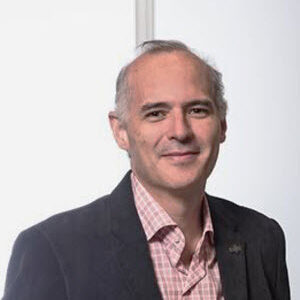
Gillen D’Arcy Wood is an environmental historian and Honorary Research Fellow currently teaching at the University of Illinois Urbana-Champaign, specializing in nineteenth-century ocean exploration with emphasis on Antarctic discovery and the HMS Challenger expedition. His research integrates environmental history with polar exploration studies, examining historical climate data through expeditions like James Clark Ross’s 1838-42 Antarctic voyage. Current work centers on HMS Challenger’s legacy, including development of a searchable species and temperature database funded by the Carnegie Foundation, bridging historical oceanography with modern climate science. Wood leads the "Challenger Expedition" website project (version 2.0), hosted by SAMS and scheduled for September 2024 launch at the Challenger Society meeting. An Australian native with Mull heritage, he actively translates historical exploration data into accessible digital resources for contemporary scientific analysis.
Philip Buckland is a Senior Lecturer in Environmental Archaeology at Umeå University's Department of Historical, Philosophical and Religious Studies, Faculty of Arts and Humanities. He serves as Vice Dean for Research and Postgraduate Education and previously directed The National Infrastructure for Archaeological Science (ArchLab) and Strategic Environmental Archaeology Database (SEAD). His work focuses on interdisciplinary research infrastructure, particularly in environmental archaeology, climate change, and human activity impacts on biodiversity. His research integrates fossil insect analysis (palaeoentomology) for reconstructing past environments and modern conservation policy, alongside FAIR data principles for open access. He co-developed the BugsCEP database and leads projects like Old Wood in a New Light (dendrochronology) and HerCul (climate adaptation of cultural heritage). Scientific Awards: Fellow, Royal Entomological Society Collaborative Infrastructures: Neotoma Paleoecology Database (Leadership Group) IPERION-HS (3rd Party) ESPADON (Strategic Orientation Committee) SweDigArch (National Infrastructure)
Rui Bordalo is a Researcher at the Research Center for Science and Technology of the Arts (CITAR) at Universidade Católica Portuguesa. His work focuses on material science applications in cultural heritage preservation, including sculpture analysis, metallurgical studies, and wood identification. He holds a PhD in a field related to heritage science. Research Projects: SCULPTMatters (2023-2029): Investigating modern sculpture production and public memory. CITAR (2020-2025): A multidisciplinary hub for art science research. HAC4CG (2021-2023): Linking climate change with urban heritage and citizen engagement. Research Themes: Metallurgical analysis of historical artifacts (copper alloys, silver religious items) Wood identification through chromatography and computer vision Non-destructive testing (infrared thermography, ultrasonic methods) Cement industry history and artistic applications Conservation of 19th-20th century sculptures and paintings Supervised Work: Thesis supervision on topics like 16th-century Portuguese silversmithing, 19th-century industrial foundries, and wood preservation in museum collections. Lab Affiliations: CITAR's heritage science facilities, including xylarium and materials analysis laboratories.
Radosław Auriga is a Lecturer in the Department of Mechanical Woodworking at Warsaw University of Life Sciences (SGGW). He contributes to academic and technical education in the field of wood processing and mechanical technologies related to woodworking industries. His research interests focus on advanced mechanical woodworking techniques, industrial automation in timber processing, and sustainable development in forest product manufacturing. These areas align closely with modern trends in eco-efficient production and digitalization of wood industry processes. The trends in his expected scholarly work likely center around innovations in wood machining, material optimization, and smart manufacturing systems tailored for renewable biomass-based materials, although specific publications are not listed in the available data. Scientific Awards: No awards listed in the available information. There is no public information available regarding student advisement, research grants, laboratory affiliations, or collaborative teams. Further details may be accessible through internal university resources or academic databases.
Gerald Koch is a Privatdozent (PD) and habilitated senior researcher at the Institute for Wood Research, part of the Thünen Institute in Hamburg-Bergedorf, Germany. His work bridges academic research with practical applications in wood science and conservation. His core research focuses on: Anatomical wood species identification and database development Impact of climate change on wood formation and properties Trade regulation for CITES-protected timber species Genetic reference data for origin determination of wood Durability analysis of wood products and alternatives to endangered timbers Dr. Koch leads critical projects including automated image recognition systems for wood identification, digitization of the scientific wood collection (xylothek), and climate adaptation studies for future wood use. His completed work spans tropical wood identification in paper products, nanotomography for wood structure analysis, and sustainability frameworks for small private forests in Vietnam.
Professor David Coomes leads the Forest Ecology and Conservation Research Group at the University of Cambridge's Department of Plant Sciences, where he serves as Director of the Conservation Research Institute. His work integrates cutting-edge remote sensing technologies with computational ecology to address global conservation challenges. His research focuses on biodiversity conservation through advanced applications of LiDAR, hyperspectral imaging, and machine learning algorithms. Key interests include mapping species distributions, quantifying carbon storage in forests, and evaluating climate change impacts on tropical ecosystems. The group develops nature-based solutions for landscape restoration, collaborating with organizations like RSPB, UK-CEH, and the world's largest pulp/paper company for native forest restoration in Brazil. Recent publications reveal strong emphasis on AI-driven conservation tools (notably TESSERA foundation model), REDD+ credit verification, and tropical forest resilience. His team's work spans from microclimate dynamics to planetary-scale carbon assessments, with significant contributions to the British Ecological Society's Nature-based Solutions report. Current projects include NERC CREATES Doctoral Landscape Award and large-scale restoration initiatives in the Atlantic Forest. Research funding and collaborations include: NERC-funded Centre for Landscape Regeneration TESSERA satellite imagery foundation model development Industrial partnership for Brazilian native forest restoration Global Wood Security Centre initiatives
Claude MH Demers, Full Professor at Laval University's School of Architecture, is a leading researcher in architectural ambiances with a focus on integrating natural light and biophilic principles in cold climate design. She co-founded the Physical Ambiance Research Group (GRAP) and holds affiliations with multiple research centers including CRAD, Hydro-Québec Institute EDS, and International Ambiances Network. Ph.D. in Architecture from University of Cambridge (1997) M.Arch. (1993) and B.Arch. (1988) from Université Laval Professional experience at Côté Glouberman Architects (1989-1991) and Jeff Falkanger Architects (1988) Her research bridges architectural ambiance theory with practical applications through grants exceeding $1M CAD, including projects like Biophilic Design in the Arctic and Smart Curtain Walls . She specializes in hybrid analog/digital light modeling, occupant well-being assessments, and climate-adaptive building solutions. Recent publications emphasize biophilic lighting frameworks for Arctic environments, 360° environmental visualization systems, and photobiological impacts of color configurations. Collaborative projects with Marc Hébert and Jean-François Lalonde explore melanopic light representations, immersive visualization tools, and adaptive facade strategies. 2024 ACSA-AIA TOP TEN COTE for Pinguatigaq 2022-2021 ACSA-AIA TOP TEN COTE for multiple projects 2016 Blue Award International for Wood Innovation 2015-2007 Durabilys, Autodesk-AIA, and OAQ recognitions As principal investigator for SSHRC Partnership Grants and Polar Knowledge Canada projects, she advances Arctic design methodologies while directing graduate studios on physical ambiances and carbon neutrality. Her work spans architectural research, teaching, and professional practice.
Mario Santana Quintero is a Professor at the Department of Civil and Environmental Engineering, Faculty of Engineering and Design, Carleton University. He serves as Director of the NSERC Heritage Engineering Program, Secretary-General of ICOMOS, Co-Editor of the Journal of Cultural Heritage Management and Sustainable Development , and holds visiting professorships at the University of Leuven and University of Parma. His research focuses on digital workflows for heritage conservation, including 3D building digitalization, sustainability simulation, and rehabilitation strategies. He emphasizes integrating BIM, GIS, and ethics in heritage documentation, with outcomes supporting adaptive reuse, maintenance, and post-destruction records. Digital Advancement Workflows for 3D Building Recording Building Sustainability Simulation and Energy Retrofit Condition Assessment and Rehabilitation of Historic Structures Heritage Ethics and Documentation Standards His recent publications highlight applications of non-destructive techniques, hygrothermal modeling, HBIM for decorated surfaces, and ethical frameworks in heritage conservation. Awards include the 2019 Getty Conservation Institute Scholar and a Doctorate Honoris Causa from Universite de Liege.
Yi Qian is the Fred Siller Professorship holder and Professor of Marketing and Behavioural Science at the Sauder School of Business, University of British Columbia. He specializes in intellectual property economics, counterfeiting impact analysis, brand management, innovation strategies, and marketing analytics. Education: Yi Qian holds a BA, MA, and Ph.D. from Harvard University, with a focus on economics and marketing disciplines. Research focuses on understanding how counterfeiting affects markets and brands, leveraging advanced econometric techniques to address endogeneity issues in marketing data. Key areas include intellectual property rights implications for developing countries, healthcare utilization patterns, and the strategic use of blockchain for IP management. His work combines theoretical rigor with practical applications such as analyzing biosimilar drug impacts and virtual tour effectiveness in real estate. Methodologically, he is known for innovative approaches like copula-based endogeneity correction and Bayesian models for nonignorable missing data. Recent work explores the intersection of consumer behavior, technology adoption, and sustainability in materials science. Labs/Teams: While specific lab affiliations aren't listed, his research collaborations span interdisciplinary teams in marketing, economics, and public health domains.
Markus Holopainen is a Professor at the University of Helsinki's Department of Forest Sciences, affiliated with the Faculty of Agriculture and Forestry. He holds a Docent title and serves as supervisor for doctoral programs in Interdisciplinary Environmental Sciences and Sustainable Use of Renewable Natural Resources. His research focuses on geoinformatics, 3D/4D data applications in forestry, precision forestry, and laser scanning technologies. Key roles include heading the Bachelor's Programme in Forest Sciences and leading the Laboratory of Forest Resources Management and Geo-Information Science within the Centre of Excellence in Laser Scanning Research (CoE-LaSR). Education: MSc in Forest Sciences (1993), MSc in Technology (1995), PhD in Forest Sciences (1998), Dr.Tech from Aalto University (2011). Research Interests : Utilization of 3D/4D data for forest mapping, inventory, and management; precision forestry; laser scanning applications in biodiversity and biomass assessment; 3D GIS and remote sensing in urban forestry. Active in projects like MULTIRISK (digital risk management tools) and Forest2Factory (wood quality optimization). Grants & Activities : Managed projects include Advanced Laser Scanning for Enhanced Wood Quality Mapping (2025–2026), MULTIRISK (2023–2025), and InterEarth RESET (2023–2028). Supervised 4 doctoral theses and contributed to over 284 publications. Labs/Teams : Forest Health Group, Forest Ecology and Management Laboratory, and CoE-LaSR. Collaborations span Finnish universities and international institutions.
Dr. Caroline Arbuckle MacLeod is an Assistant Professor at St. Thomas More College , University of Saskatchewan . Her research focuses on Ancient Egyptian Archaeology , with specialized interests in Woodworking Practices , Coffin Construction , and Digital Games in Archaeology Education . She teaches courses on Egyptology, Near Eastern Archaeology, and the Archaeology of Wood . Education : Ph.D. from UCLA, M.Phil. from Oxford, and First Class B.A. from UBC Research Projects : Examines carpenter priests in coffin creation, coffin reuse patterns, and the Database of Religious History as a pedagogical tool Publications include studies on coffin production, digital gaming in education, and gender dynamics in Egyptian archaeology Her recent articles analyze coffin construction timelines, digitization of historical narratives, and material economy in ancient Egypt. She serves on the Editorial Board of the Database of Religious History.
Timothy A. Wood is an Associate Professor of Civil and Environmental Engineering at The Citadel - The Military College of South Carolina, part of the School of Engineering. He joined The Citadel faculty in August 2016 and teaches courses in Statics, Dynamics, and Geotechnical Engineering. His academic journey includes a Ph.D. in Civil Engineering from Texas Tech University (2015), an M.S. in Civil Engineering (2009), and a B.S. in Engineering Physics and Structures (2006), where he graduated Summa Cum Laude with Honors. Ph.D. Civil Engineering, Texas Tech University, 2015 M.S. Civil Engineering, Texas Tech University, 2009 B.S. Engineering Physics and Structures, Texas Tech University, 2006 (Summa Cum Laude with Honors) Dr. Wood's research expertise spans Structural Engineering, Geotechnical Engineering, and Engineering Education. His technical research focuses on structural evaluation of buried bridges and culverts, with specific emphasis on soil-structure interaction, pullout resistance in mechanically stabilized earth retaining walls, and database implementation for structural/geotechnical data. He is known for his innovative approach to engineering education, incorporating classical educational models and emphasizing reading and self-directed learning. His extensive publication record demonstrates a dual focus on civil engineering research (particularly culvert and bridge structural evaluation) and innovative engineering education methodologies. Dr. Wood has developed unique teaching approaches including dual-submission homework methods, metacognitive strategies, and the integration of classical educational principles into engineering coursework. His scholarly work bridges traditional engineering disciplines with modern pedagogical techniques, creating a significant contribution to both civil engineering practice and engineering education. Dr. Wood is actively engaged in both research and teaching, with numerous publications spanning structural engineering analysis and innovative educational approaches. His work reflects a commitment to advancing civil engineering knowledge while simultaneously improving how engineering is taught and understood.
Lena Liepe is a Professor of Art and Visual Studies at Linnaeus University, affiliated with the Faculty of Arts and Humanities and the Department of Music and Art. She specializes in Nordic medieval art, visual culture, and the historiography of medieval art history. Her research focuses on methodological approaches to medieval artifacts, the public display of ecclesiastical heritage, and the role of relics in medieval Nordic spirituality. Key projects include the six-year research program 'At the End of the World' (2023–2028), exploring apocalyptic imagery, and a digital humanities project mapping medieval saints’ cults. She is also involved in the Centre for Applied Heritage and Medeltidsforum Linné. Her work bridges art history with material culture, emphasizing interdisciplinary and transdisciplinary methods. Liepe has authored monographs on topics such as medieval wood sculpture, stone churches, and relic use. Her awards include the Wallquistpriset (2020) and Gad Rausings pris (2019). She actively contributes to academic networks like ICMA and serves on editorial boards, including the journal Iconographisk Post . Her teaching includes Western art history courses and supervision of student projects. Current research interests include spatiality of sacred spaces and renewing art historical methodologies through world art history paradigms.
Prof. Peter Wood is Professor of Computer Science at Birkbeck, University of London's School of Computing and Mathematical Sciences. He serves as Postgraduate Education Lead and holds administrative responsibilities within the department. A member of the ACM since 1981, his career includes positions at King's College London and University of Cape Town. Research focuses on fundamental database technologies including query languages for graph-structured data, ontology-mediated query optimization, and semantic web path query processing. Current investigations examine uncertainty-aware query optimization and efficient ontological reasoning frameworks. Publications demonstrate sustained contributions to database theory with recent expansion into cultural analytics and semantic web applications. Research consistently addresses computational efficiency in knowledge representation systems. Teaching includes Advanced Data Management and Internet/Web Technologies modules. Supervised doctoral research spans query optimization, data analytics, and semantic web technologies. Administrative leadership includes coordinating research initiatives through Birkbeck Institute for Data Analytics and Birkbeck Knowledge Lab.
Dr. Hillary Nunn is a Professor of English at the University of Akron, affiliated with the Buchtel College of Arts and Sciences. She serves as Coordinator of the Graduate Certificate in Literature and Advisor of the Literary Guild. Her research focuses on intersections between Renaissance literary culture and domestic medical texts, with a particular interest in early modern recipe collections and their cultural contexts. PhD in English from Michigan State University Her research interests span Renaissance literature, medical history, domestic practices, and digital humanities. Notable projects include investigating household mobility in recipe manuscripts and exploring networks in early modern recipe books. She has received grants from institutions like the Consortium for History of Science and the University of Akron's Faculty Research Grants. In 2020-2021, she was a Research Fellow at the Consortium for History of Science, Technology and Medicine. Her work has been published in journals such as Journal of Early Modern Cultural Studies and Early Modern Women , and she authored the book Staging Anatomies: Dissection and Tragedy in the Early Stuart Era (2005). Grants: Over a dozen grants including the Buchtel College Seed Grant (2013) and Wood Institute Research Grant (2010) Her teaching spans courses like Shakespearean Drama, Digital Humanities, and Literary Criticism. She actively engages in interdisciplinary research, bridging literary studies with historical and scientific contexts.