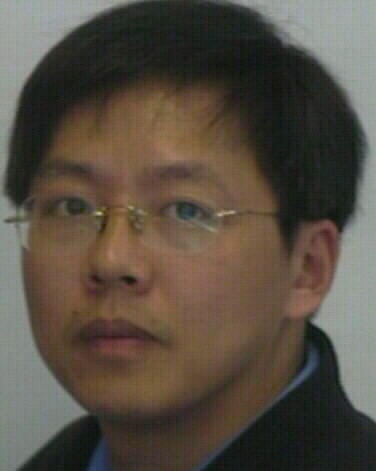
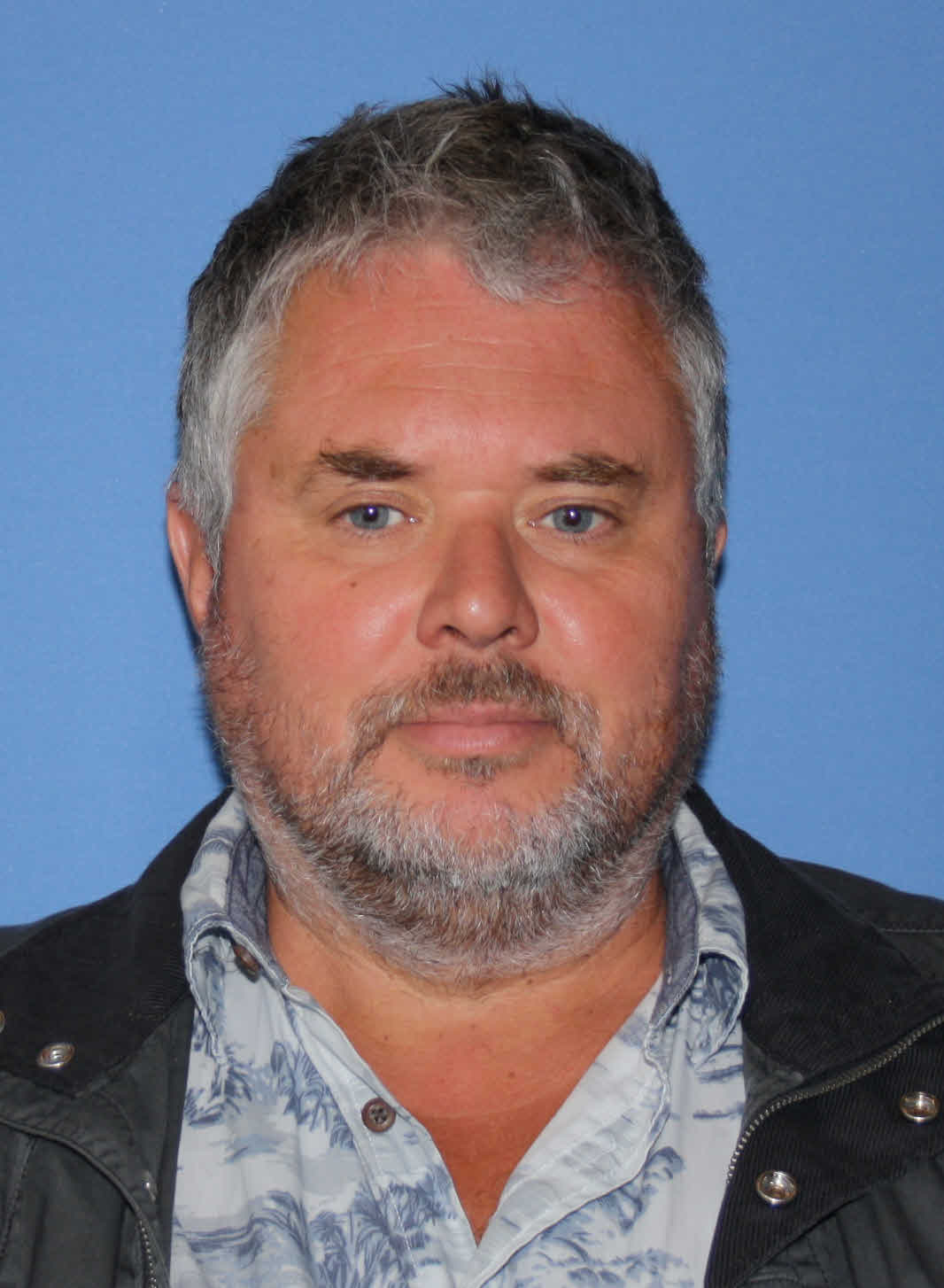
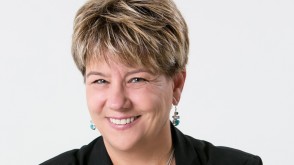
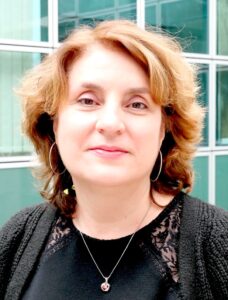
Professor Chenggui Yuan is a faculty member in the Department of Mathematics at Swansea University, School of Mathematics and Computer Science. His academic rank is Professor, and he is actively involved in research and teaching. He specializes in Stochastic Analysis, Population Dynamics, Financial Mathematics, and Stochastic Control, with a focus on theoretical and numerical aspects of stochastic differential equations and their applications. Professor Yuan has held roles including Lecturer (2004–2008), Senior Lecturer (2008–2011), Reader (2011–2016), and Professor (2016–present) at Swansea University. He has served as an external examiner at the University of Liverpool (2015–2019) and holds editorial positions in journals like Numerical Algorithms and Discrete & Continuous Dynamical Systems S . His research explores stability analysis, numerical methods for stochastic systems, and applications in biology and finance. Key grants include projects on functional differential equations in natural systems (2017–2019) and eco-evolutionary dynamics (2016–2019). He has supervised PhD students focusing on topics like stochastic differential equations and control systems. Professor Yuan’s work includes over 150 publications in prestigious journals such as the SIAM Journal on Control and Optimization and Stochastic Processes and their Applications . His contributions span stochastic modeling, numerical analysis, and interdisciplinary applications.
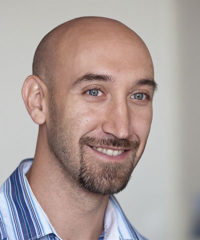
Frederik Beuk is an Associate Professor of Marketing at The University of Akron's Fisher Institute for Professional Selling and founding Research Director of the nation's first Sales Biometrics Laboratory. His academic focus combines sales management, innovation dynamics, and personality trait analysis. Education: PhD from University of Illinois at Chicago, LLM and MS from Erasmus University Rotterdam Research: Examines how salesperson traits influence firm innovation and negotiation effectiveness His publications span journals like Journal of Product Innovation Management , Creativity and Innovation Management , and Journal of Marketing Education , emphasizing trends in biomarker applications, fake news impact, and interdisciplinary sales training. Awards include Beta Gamma Sigma induction and CBA University Service Excellence recognition. Active in curriculum development and sales education outreach.
Richard Evan Schwartz is the Chancellor's Professor of Mathematics at Brown University, where he has been a faculty member since 2005, becoming Chancellor's Professor in 2010. His research spans several areas of geometry and dynamical systems, with particular focus on billiards, projective geometry, and topological phenomena. Dr. Schwartz received his B.S. in Mathematics from UCLA in 1987 and his Ph.D. from Princeton University in 1991. Prior to joining Brown, he held positions at various institutions including the University of Maryland, where he served as Associate Professor (1997-2000), Professor (2000-2004), and Ruth Davis Professor (2004-2005). His research interests include mathematical billiards, particularly outer billiards; projective geometry and the pentagram map; CR geometry; and the geometry of paper folding including Moebius bands and tori. He approaches these topics with a unique blend of theoretical analysis, computational experimentation, and visual intuition. His work often reveals surprising connections between seemingly disparate mathematical areas and frequently produces beautiful geometric patterns and structures. Dr. Schwartz's recent publications demonstrate a continued focus on geometric optimization problems, particularly in paper folding geometry. His work on optimal Moebius bands represents a significant breakthrough in a problem that had remained unsolved for decades. He has also made substantial contributions to understanding the pentagram map and its connections to integrable systems, as well as exploring connections between continued fractions, graph theory, and projective geometry. National Merit Scholar (1984-7) NSF Graduate Fellow (1987-90) Sloan Dissertation Fellow (1991) NSF Postdoctoral Fellow (1993-5) Sloan Research Fellow (1996-8) ICM Speaker (2002 and 2022) Guggenheim Fellow (2003) IAS member (2003-4 and 2020-1) Clay Research Scholar (2009) Multiple Simons Sabbatical Fellowships (2012-3, 2016-7, 2020-1, 2024-5) Dr. Schwartz has mentored numerous students through his research and teaching activities. His current research is supported by NSF grant DMS-2102802 and a Mercator Fellowship. He serves as an organizer for the Brown University Geometry/Topology Seminar, fostering academic exchange in his field. His work bridges pure mathematics with creative visualization, as evidenced by his development of numerous interactive Java programs to accompany his research. He has also authored several expository works and popular mathematics books including 'You Can Count on Monsters,' 'Really Big Numbers,' and 'Gallery of the Infinite,' making complex mathematical concepts accessible to broader audiences.
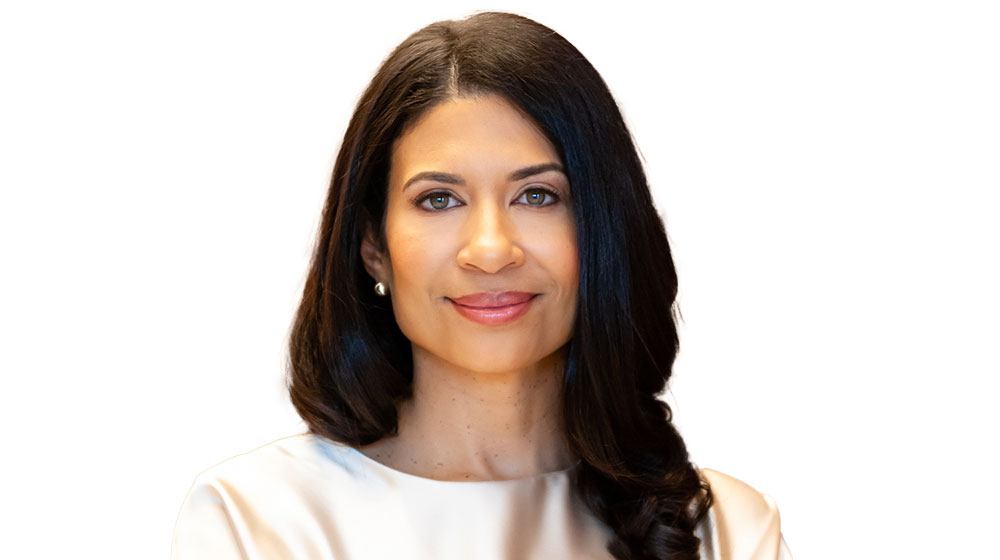
Dr. Anna Krasnova is a faculty member at Wrocław University of Economics, specializing in Human Resource Management (HRM). She is a certified business trainer with over 3,000 hours of teaching experience across diverse groups, including professionals, managers, and students. Her research focuses on derecruitment , modern HR technologies , and diversity management . She emphasizes bridging theoretical HR concepts with practical managerial applications. Key Research Themes : Employee retention and exit strategies in remote work environments Innovative technologies in decruitment processes Impact of social media (e.g., Instagram) on labor market dynamics Career sustainability for performing artists during crises Publication Trends : Over 20 articles since 2015, with recent work addressing remote work challenges (2023), dual careers in arts (2024), and decruitment in project teams (2022). These studies highlight her expertise in organizational behavior, crisis management, and HR process optimization. Awards & Grants : No specific awards or grants mentioned, though her prolific publication record indicates sustained academic engagement. Labs/Teams : No formal research groups highlighted; collaboration occurs primarily through international co-authorships (e.g., with Slovak and Czech institutions).
Professor Andrew Hendry is a faculty member at McGill University, known for his work in eco-evolutionary dynamics and conservation biology. He maintains a popular blog offering unconventional advice to young scientists on research strategies, career choices, and maintaining a healthy work-life balance. His approach emphasizes storytelling in scientific proposals and the importance of pursuing research driven by passion rather than strategic calculations. Key research interests include ecological theory, latitudinal gradients in biodiversity, and the practical challenges faced by early-career researchers. He advocates for scientists to embrace varied forms of advocacy and communication, such as blogging, while resisting the pressure to conform to perceived 'optimal' career paths. Hendry emphasizes that geographical flexibility and personal fulfillment are critical for long-term success and happiness in academia. His philosophy on work-life balance centers on prioritizing personal well-being and aligning professional activities with personal enjoyment. He critiques the misconception that constant overwork is necessary for career advancement, advocating instead for intentional choices about work intensity and location.
Dr. DSc, Eng. Alicja Smolbik-Jęczmień is a Professor at the Department of Production and Labor Management, Wrocław University of Economics. Her research focuses on generational dynamics in the workforce, career development strategies, and multigenerational team management. She has extensively studied how different generations (e.g., BB, X, Y) approach career building, workplace values, and professional identity. Her work emphasizes organizational behavior, human resource management practices, and the impact of global economic changes on career trajectories. Key research interests include: Intergenerational workplace interactions Career capital accumulation and success factors Work-life balance and employee well-being Human resource strategies in public employment services Her publications analyze trends in career shaping, generational stereotypes, and the challenges of managing multigenerational teams in contemporary organizations. Recent work explores how preferred work values vary across generations in Poland’s labor market and the role of organizational values alignment in employee retention. No scientific awards or students are explicitly listed in the provided materials. Her contributions include analyses of graduate employment outcomes, workforce diversity, and the evolving role of career development in knowledge-based economies.
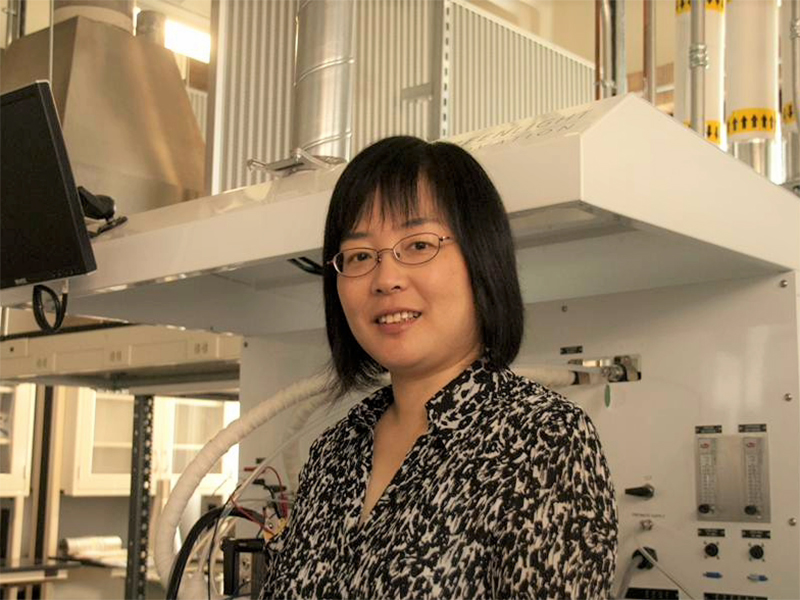
Dr. Dongmei "Maggie" Chen is the J. Mike Walker Professor of Mechanical Engineering at The University of Texas at Austin since 2009. Her research focuses on automatic control, dynamic systems, and their applications in energy systems (wind turbines, fuel cells, geothermal wells), drilling technology, and robotics. She holds a Ph.D. from the University of Michigan (2006) and a B.S. from Tsinghua University (precision instruments). Her work spans advanced manufacturing (e.g., roll-to-roll graphene transfer), geothermal energy production, and control strategies for drilling vibrations. Notable contributions include managed pressure drilling systems, real-time anomaly detection, and predictive control for autonomous systems. She leads the Advanced Power and Sustainable Control Lab (APSCL) and has pioneered energy-efficient trajectory planning for robots. Awards include the NSF CAREER Award (2011) and IEEE PES Prize Papers (2016). Her lab develops hardware/software platforms for autonomous ground vehicles and collaborates on real-time drilling control systems.
Monika Seisenberger is an Associate Professor at the Department of Computer Science , Swansea University, within the Faculty of Science and Engineering . Her academic role is centered on Formal Methods , Interactive Theorem Proving , and Specification & Verification , with significant contributions to logic, proof theory, and well-quasiorders. Research Interests : Her work bridges Computer Science and Mathematics , focusing on Program extraction from proofs Formal verification of safety-critical systems Applications of AI in medical and railway domains Computational content of choice principles Development of concurrent algorithms and toolchains Article Trends : Her publications over the past decade highlight a consistent focus on formal methods applied to railway logistics , AI explainability in healthcare, and constructive mathematics . Notable themes include Counterfactual explanation generation Multi-agent optimization in transportation Temporal model analysis via gradients Railway system safety verification Verification of geographic data Computational logic foundations Supervision & Collaboration : She actively supervises postgraduate research in areas like formal software verification , AI-driven railway technologies , and SHAP refinement , often collaborating with experts in Markus Roggenbach , Anton Setzer , and Fabio Caraffini . Labs & Teams : Based at the Computational Foundry (Bay Campus), she contributes to Swansea University's Formal Methods research group, advancing tools for proof theory and program synthesis .
George B. Mertzios is an Associate Professor in the Department of Computer Science at Durham University, affiliated with the Algorithms and Complexity Research Group (ACiD) within the School of Engineering and Computing Sciences. He has held academic positions at Durham since 2011, progressing from Lecturer to Senior Lecturer and then to Associate Professor since 2017. He has also held visiting positions at institutions including the University of Bordeaux/CNRS and the University of Haifa. His research interests lie at the intersection of theoretical computer science and network science, with a strong focus on temporal graphs , algorithmic graph theory , parameterized complexity , and combinatorial optimization . He investigates efficient algorithms for dynamic and evolving networks, geometric graph models, and computational problems in network evolution and connectivity. His work often bridges foundational theory with applications in network design and distributed systems. The recent publications and ongoing activities of George B. Mertzios demonstrate a consistent and impactful research trajectory centered on the algorithmic foundations of temporal and dynamic networks. His work spans complexity analysis, algorithm design, and structural graph theory, with a notable emphasis on temporal vertex cover, sliding window models, and connectivity in time-varying graphs. He frequently publishes in top-tier conferences such as ICALP, MFCS, AAAI, and STACS, as well as leading journals including the Journal of Computer and System Sciences and Algorithmica . Gold Medal, Balkan Mathematical Olympiad, 1998 Distinguish Diploma, Bulgarian National Mathematical Competition 'Chernorizets Hrabar', 1998 Certificate of Merit, Mediterranean Mathematics Competition, 1999 Best paper award of Track C, ICALP 2010 Best student paper award, SAND 2024 George B. Mertzios has been actively involved in research supervision and leadership. He has supervised multiple PhD students to completion and currently advises ongoing doctoral research. He has served as Principal Investigator for EPSRC grants on Algorithmic Aspects of Temporal Graphs and Algorithmic Aspects of Intersection Graph Models , and as a Co-Investigator on projects related to graph coloring. He is a frequent organizer of scientific workshops, including the Algorithmic Aspects of Temporal Graphs series at ICALP and Dagstuhl seminars, and serves on the program committees of numerous international conferences such as MFCS, IWOCA, and SAND. He is a key member of the Network Engineering Science and Theory in Durham (NESTiD) research group, where he coordinates seminar series and fosters collaborative research in network algorithms and theory.
Matteo-Claudio Palpacelli is an Associate Professor in the Department of Industrial Engineering and Mathematical Sciences at the Polytechnic University of Marche, where he has been a faculty member since 2019, following his role as a researcher from 2008 to 2019. He teaches Applied Mechanics to Machines at the Bachelor's level and Functional Design at the Master's level, both at the Ancona campus. Bachelor of Science in Mechanical Engineering, Polytechnic University of Marche, 2004 PhD in Artificial Intelligence Systems in Information, Management, and Industrial Engineering, Polytechnic University of Marche, 2008 His research lies at the intersection of Robotics, Mechatronics, and Applied Mechanics , with a strong emphasis on parallel kinematic machines , collaborative robotics , reconfigurable robots , robotic microassembly , and visual servoing . He has advanced expertise in biomechanics and rehabilitation robotics through a collaboration with King’s College London. His work also extends to multibody system dynamics and compliant mechanisms. Palpacelli has contributed to national PRIN projects in bioengineering and miniaturized robotics, as well as European projects in the textile sector. The recent publications (2021–2024) highlight a consistent focus on collaborative robotics, optimization of robotic motion, compliant mechanisms, and industrial automation. There is a clear trend toward integrating AI and machine learning in robotic polishing and defect detection, while maintaining a strong foundation in kinematic analysis, control strategies, and mechanical design. Topics such as collision avoidance, inverse kinematics of non-spherical wrist robots, and flexure hinge modeling reflect both theoretical and applied contributions. His scientific contributions are recognized through over 60 Scopus-indexed publications and two patents. While no specific awards are mentioned in the text, his leadership in research projects and international collaborations underscores his academic impact. He actively supervises PhD students, including Albin Bajrami, Federico Emiliani, and others, and collaborates closely with colleagues such as Massimo Callegari and Luca Carbonari. He is involved in the i-LABS research initiative, focusing on human-robot collaboration and industrial case studies. His research group is engaged in both fundamental and applied projects, bridging academia and industry.
Nicole Johnson-Scales is an Adjunct Professor of Management at the Quinlan School of Business, DePaul University, and founder of Design Your Professional Joy, a career coaching firm. She specializes in helping executive leaders navigate career transitions, develop professional skills, and cultivate joyful, meaningful professional lives. Her work integrates insights from over 20 years of leadership experience, focusing on talent optimization, goal alignment, and overcoming professional challenges like imbalance or uncertainty. Education: MBA from Olivet Nazarene University and Coach Training Certification from Coach Training Alliance (CTA), an ICF-accredited program. She also holds an adjunct role at Lake Forest Graduate School of Management. Research Interests: Nicole’s expertise spans career strategy, leadership development, diversity & inclusion in professional settings, and the intersection of personal well-being with professional success. She emphasizes practical frameworks for executives to align their values with actionable career paths. Awards: Recognized for her contributions, she has received the National Diversity Council’s Most Powerful & Influential Women award and Chicago United’s Leader of Color designation. Her dual academic and consulting roles reflect a commitment to both scholarly and real-world organizational impact.
Jan Aage Aasen is an Associate Professor in Drilling at the University of Stavanger, affiliated with the Faculty of Science and Technology and the Department of Energy and Petroleum Technology. His research focuses on drilling engineering, wellbore integrity, and sustainable materials for oil and gas applications. Research Interests: His work spans drilling mechanics , wellbore integrity , zonal isolation , and geopolymer-based cementing . He investigates advanced materials for plugging and abandonment, long-term cement performance, and 3D tubular design for critical wells. His research combines experimental validation with computational modeling, especially in annular flows and pressure control systems. Publication Trends: Recent publications emphasize sustainable alternatives like geopolymers for well sealing, reflecting a growing focus on environmental performance in drilling operations. Earlier works focus on mechanistic modeling of tubulars, buckling behavior, and multistring well analysis, showing a long-standing expertise in structural well design. Scientific Awards: No awards are listed in the provided text. Advising and Grants: While no formal list of students is provided, Dr. Aasen collaborates extensively with researchers such as Mahmoud Khalifeh, Arild Saasen, and Hans Joakim Skadsem, suggesting active supervision and mentorship. His work appears to be supported by institutional and industry-aligned grants, particularly in areas of well integrity and sustainable drilling technologies. Labs and Teams: He is part of a research group focused on drilling and well technology at the University of Stavanger, contributing to experimental and computational studies on wellbore flows, casing design, and cement performance.
Jesús Tordesillas Torres is an Assistant Professor in the Department of Electronics, Automation, and Communications at the School of Engineering, Comillas Pontifical University. He joined the institution in June 2024, bringing extensive experience from postdoctoral research at MIT and ETH Zurich, and prior academic training from MIT and the Polytechnic University of Madrid. Education: PhD in Aeronautics and Astronautics, Massachusetts Institute of Technology (MIT), 2022 MS in Aeronautics and Astronautics, MIT, 2019 MS in Industrial Engineering, Polytechnic University of Madrid, 2019 BS in Industrial Engineering, Polytechnic University of Madrid, 2016 His research focuses on robotics, particularly autonomous navigation, trajectory planning, and optimization under uncertainty. He integrates deep learning and control theory to develop systems capable of safe, fast, and perception-aware navigation in dynamic and unknown environments. His work spans aerial and ground robots, multiagent systems, and challenging terrains, with strong emphasis on real-world deployment and robustness. The recent publications highlight a consistent trend in trajectory optimization, perception-aware planning, and multiagent coordination. His work bridges theoretical advances in optimization and learning with practical robotic applications, especially in safety-critical and communication-constrained scenarios. Scientific Awards: Best Paper Award, IEEE ICRA 2023 1st Place, Urban Circuit, DARPA Subterranean Challenge (2020) 2nd Place, Tunnel Circuit, DARPA Subterranean Challenge (2021) Finalist, Best Paper, IEEE IROS 2019 Jesús Tordesillas Torres has been actively involved in research grants and projects, including the ADS FERRARI WP-2 Project funded by Airbus Defence and Space (2025–2025). He mentors students and collaborates with leading institutions such as MIT, ETH Zurich, and the University of Pennsylvania. He also serves as a reviewer for top-tier journals including IEEE Transactions on Robotics , International Journal of Robotics Research , and IEEE Robotics and Automation Letters , as well as major conferences like ICRA and IROS. He leads and participates in research teams focused on autonomous systems, with affiliations to the Institute for Research in Technology (IIT) at Comillas. His invited talks at ETH Robotics Summer School and University of Pennsylvania reflect his growing influence in the robotics community.
Dr. Kristina Hallett serves as Associate Professor of Psychology at Bay Path University, a Board-Certified Clinical Psychologist, and TEDx Speaker with over 25 years of professional experience. She authors international best-selling books and hosts the "Be Awesome – Celebrating Mental Health and Wellness" podcast, while frequently contributing to national media platforms including NBC, U.S. News and World Report, and the American Psychological Association. Her educational credentials include: Bachelor's degree in Biology and Psychology from Wellesley College Doctorate in Clinical Psychology (1993) Dr. Hallett's expertise spans clinical psychology and mental health promotion, with specialized focus on adolescent trauma treatment evidenced by her "Trauma Treatment Toolbox for Teens". Her work examines resilience building, productivity optimization, self-care methodologies, and constructive stress management frameworks. She develops evidence-based strategies for banishing burnout and cultivating purpose-driven living through both clinical practice and public education initiatives. Her professional recognition includes: Fellow of the American Academy of Clinical Psychology While Dr. Hallett actively contributes to graduate programs in Developmental Psychology and Clinical Mental Health Counseling, available documentation does not specify details regarding graduate student advising relationships or externally funded research grants.
Madalina Deaconu is an Inria Research Director and Assistant Scientific Delegate (DSA) at the Inria Center of the University of Lorraine since January 2022. She leads the PASTA joint project team (Processus Aléatoires Spatio-Temporels et leurs Applications) hosted at the Institut Elie Cartan de Lorraine (IECL). Her academic affiliation is with the Faculty of Science and Technology at the University of Lorraine, where she conducts research in probability theory and stochastic modeling. She serves on multiple committees including the Inria Evaluation Commission, the Geophysics Program Committee of the RT CNRS "Earth & Energies", and has held leadership positions including Director of the Charles Hermite Federation (2018-2022). Dr. Deaconu completed her Habilitation à diriger des recherches (HDR) at Université Henri Poincaré – Nancy 1 in 2008 and earned her PhD in Stochastic Processes and Partial Differential Equations from the same institution in 1997. Habilitation à diriger des recherches (HDR), Université Henri Poincaré – Nancy 1, France, 2008 PhD in Stochastic Processes and Partial Differential Equations, Université Henri Poincaré – Nancy 1, France, 1997 Madalina Deaconu's research focuses on stochastic modeling with applications across multiple domains. Her primary areas include data-enriched stochastic modeling, probabilistic approaches to coagulation/fragmentation models, numerical methods for diffusion reach times, and stochastic methods for linear and nonlinear partial differential equations. Her work bridges theoretical probability with practical applications in environmental science, geophysics, and actuarial science. She develops innovative probabilistic simulation methods and analyzes random spatio-temporal processes, with particular emphasis on fragmentation equations, Bessel processes, and Hawkes processes. Her research has significant applications in modeling avalanches, natural disasters, insurance risk assessment, and hydrochemical data analysis. She has established international collaborations with researchers from University of Turin, University of Uruguay, and institutions in Bucharest, as well as national collaborations with University of Burgundy and INRAE Grenoble. Analysis of Dr. Deaconu's recent publications reveals a consistent focus on fragmentation processes and stochastic modeling approaches. Her work spans theoretical developments in probability theory, numerical methods for stochastic processes, and practical applications in environmental science and actuarial mathematics. A notable trend is her increasing focus on Bayesian inference methods and point process applications, particularly for environmental and insurance contexts. Her most recent work demonstrates strong interdisciplinary connections, applying stochastic methods to hydrochemical data analysis, insurance recommendation systems, and natural disaster modeling. The consistent thread throughout her publications is the development and application of sophisticated probabilistic techniques to solve complex real-world problems. Dr. Deaconu has received recognition for her contributions to research: Paper and Poster award at EWEA 2015 (European Wind Energy Association) Plenary speaker at the 14th International Conference on Monte Carlo Methods and Applications (MCM23) While specific student names aren't listed in the provided text, Dr. Deaconu is involved in doctoral training through the IECL and supervises research in stochastic modeling. She coordinates multiple research collaborations including industrial partnerships with Le Foyer Luxembourg and SnT Université du Luxembourg (2018-2022). Her teaching activities include Stochastic Modeling at Master 2 level, Stochastic Differential Equations at École des Mines de Nancy, and Monte Carlo Simulation for Financial Market Engineering. Dr. Deaconu leads the PASTA research team (Processus Aléatoires Spatio-Temporels et leurs Applications), a joint Inria project hosted at IECL. She previously directed the Charles Hermite Federation (2018-2022), which brought together three major research laboratories: CRAN (Automatic Control), IECL (Mathematics), and LORIA (Computer Science). Her work is centered at the Institut Elie Cartan de Lorraine, a mathematics research institute affiliated with the University of Lorraine, where she contributes to both theoretical developments and practical applications of stochastic methods across multiple scientific domains.