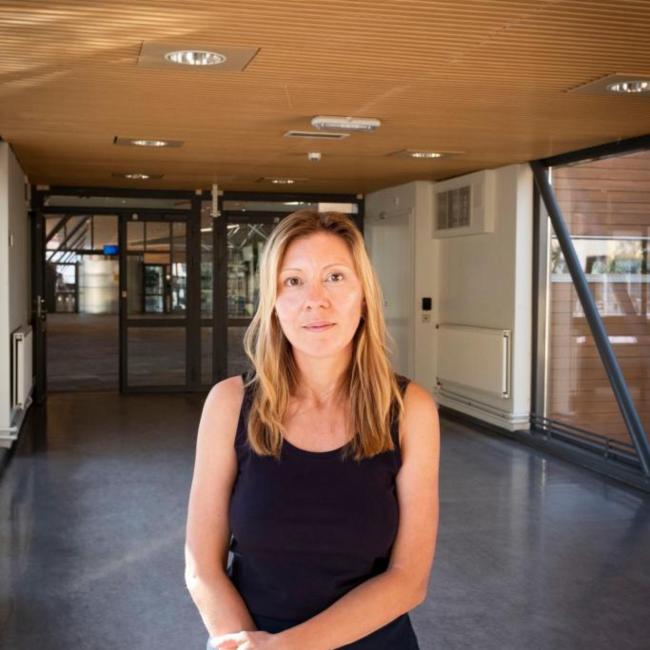
Sandra SiegertView profile
Professor
Sandra Siegert is a Professor in the Life Sciences Department at the Institute of Science and Technology Austria (ISTA). Her research focuses on understanding how microglia interact with neuronal networks in both healthy and diseased states, particularly in the context of neuropathological disorders. She integrates knowledge from virology, immunology, molecular biology, neuroscience, and applied mathematics to study microglia's role in brain maintenance and disease progression. Education Dr. phil. nat in Neurobiology from the University of Basel (2005-2010) Diploma in Biological Sciences from Goethe-Universität Frankfurt am Main (2000-2005) Research Interests Dr. Siegert's work emphasizes microglia's response to environmental cues, their epigenetic regulation, and their contribution to neurological disorders like schizophrenia and Alzheimer's disease. Key areas include: Microglia-neuron communication in retinal and cortical circuits Role of microRNAs (e.g., miR-137) in synaptic plasticity 60-Hz light entrainment effects on brain plasticity Applied topology for analyzing cellular networks Human iPSC-derived microglia modeling Publication Trends Her recent articles highlight interdisciplinary approaches to studying microglia in retinal organoids, mitochondrial dynamics in stress response, and chimeric GPCR tools for modulating neuroimmune activity. Collaborative work spans gene therapy vectors (AAV2/6), synaptic dysfunction in schizophrenia, and ketamine/light entrainment effects on perineuronal nets. Scientific Contributions EMBO short-term fellowship (2011) FWF Austrian Science Fund grant P 37131 (2023-2026) European Research Council grant 715571 (2017-2022) Human Frontiers Science Program grant (2012-2015) Multiple Swiss National Science Foundation grants (2011-2012)