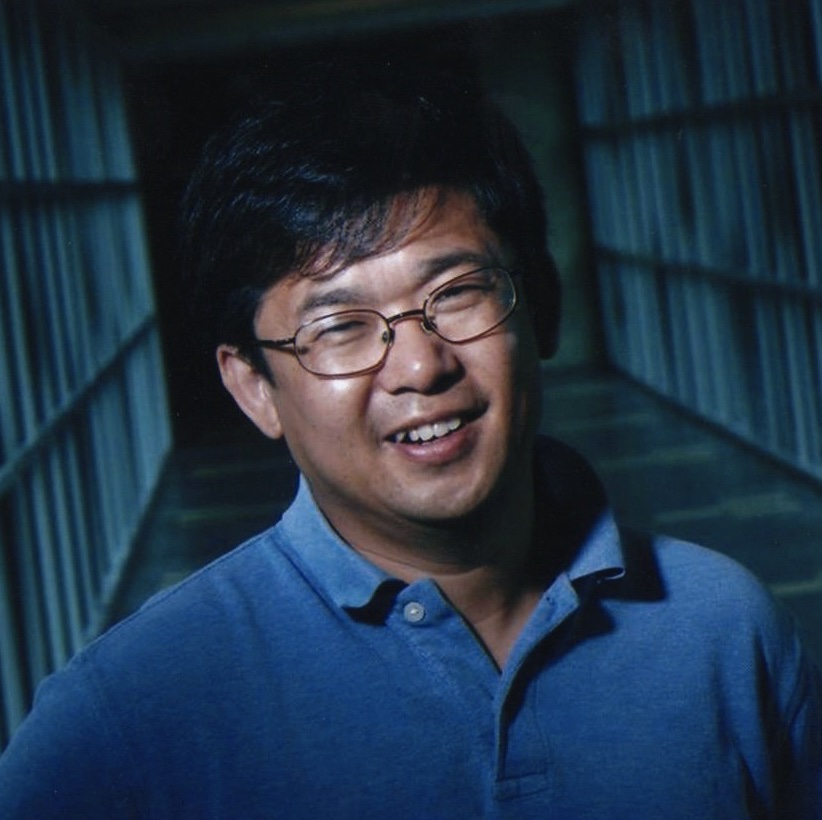
Hui Zhang is a Professor in the Computer Science Department at Carnegie Mellon University. His research focuses on data-driven networking systems, video streaming optimization, and network control frameworks. He has contributed to innovations in adaptive resource allocation, real-time analytics, and sustainable strategies for resource utilization. Key research themes include time-state analytics, network anomaly detection, and integrating machine learning for enhanced performance. His work addresses challenges in content delivery networks (CDNs), peer-to-peer systems, and environmental applications like waste management. Recent publications (2021–2024) highlight advancements in neural network-based prediction, timeline frameworks, and sustainable material science innovations. No scientific awards are mentioned in the provided text. His research emphasizes practical solutions for improving video quality of experience (QoE), network efficiency, and cross-disciplinary applications.
Bart J. Hengeveld is an Assistant Professor at Eindhoven University of Technology (TU/e), affiliated with the Industrial Design department within the Faculty of Industrial Design. He leads the Future Everyday research cluster, focusing on the intersection of sound design and IoT systems. His work explores how embedded technologies can communicate through sound and tangible interaction in ways that enhance human experience. Education: BSc/MSc in Industrial Design Engineering, Delft University of Technology (2003) PhD in Industrial Design, TU/e (2011), with concurrent training in double bass at Codarts Conservatory Research Interests: Acoustic communication in IoT systems Tangible interaction design Social implications of ubiquitous computing Sound as a medium for human-technology interaction Recent Research Trends: Focus on multimodal interfaces combining sound/light/haptics Studies on sound design for healthcare and smart living environments Investigations into ethical and inclusive IoT soundscapes Awards: Two Teacher of the Year awards at TU/e, reflecting his commitment to pedagogical excellence. Advising & Projects: Supervised 113 student projects including interactive installations like 'Naktis' and 'Sonostapp' Leading the €1.5M 'Role of Sound in Hybrid Work Environments' project (2023–2026) Organized TEI 2016 conference and serves on its steering committee Teams/Labs: Core member of TU/e's Future Everyday cluster, collaborating with multidisciplinary teams on embodied interaction research.
Ray Wills serves as Adjunct Professor at the University of Western Australia's School of Agriculture and Environment while leading multiple sustainability enterprises including Future Smart Strategies (Managing Director), Blue by Design (Chair and Partner), and Sundrop Estates Pty Ltd (Chair, Partner, Director). His academic foundation includes a Bachelor of Science Degree with Honours in Mycology and Doctor of Philosophy in Ecology from the University of Western Australia. Professor Wills specializes in sustainability technology applications across energy infrastructure and built environments, with research addressing climate change mitigation through renewable energy systems. His work bridges technical innovation and socio-economic implementation strategies for global sustainability challenges. Recent publications analyze disruptive trends in customer-driven energy transitions and decentralized renewable systems in Africa, revealing patterns in battery storage adoption and socio-technical barriers to clean energy deployment. Earlier ecological research examined plant-pollinator relationships in Western Australian ecosystems. Key recognitions include: Fellow of the Australian Institute of Energy Top 100 Global Leaders in Sustainability, Climate Change and Energy He has supervised academic work as indicated by institutional records, and directs nationally significant projects including the 'Lithium Valley' report and Cunderdin solar farm with battery storage. His current initiatives focus on globally scalable energy solutions through Western Australian partnerships.
Dr Jonathan Baker is a Senior Lecturer in Strategy at the Adelaide Business School , part of the Faculty of Arts, Business, Law and Economics at the University of Adelaide. He previously served as Director of the Yunus Centre for Business, Sustainability & Social Impact (2022-2023) and has held academic positions at Auckland University of Technology, University of Auckland, and guest professorship at University of Bayreuth. His research focuses on Interdisciplinary intersections of markets, strategy, and social impact Market-shaping strategies Sustainability and circularity transitions UN Sustainable Development Goals (9, 11, 12) Systemic business model perspectives Dr Baker's work appears in top journals including Industrial Marketing Management , Journal of Business Research , and Marketing Theory . He serves on the Editorial Review Board of Industrial Marketing Management (ABDC A*). Scientific Awards Excellence Early Career Researcher Award (ANZAM-European Management Journal, 2023) Emerging Career Researcher Award (Adelaide Business School, 2023) As a principal supervisor, he welcomes PhD/MPhil candidates interested in market shaping, sustainability transitions, or social entrepreneurship. His methodology emphasizes qualitative research and ecosystem-level analysis.
Dr. Anna De Simoni is a Clinical Associate Professor in Primary Care Research at Queen Mary University of London. She specializes in improving self-management and adherence to medications for patients with long-term conditions, particularly asthma and stroke. She co-leads the Centre for Primary Care and leads the AD-HOC NIHR Programme Grant, focusing on digital social interventions and online peer support systems. Her research integrates network science, big data analytics, and computational social science to enhance primary care outcomes. Education: MBBS (Medicine), PhD in Neurophysiology (University of Milan), followed by postdoctoral fellowships at UCL and the University of Cambridge. She holds NIHR Academic Clinical Fellowship and Lectureship awards, and is a Fellow of the Higher Education Academy (FHEA) and a Member of the Royal College of General Practitioners (MRCGP). Research Interests: Digital health interventions, medication adherence strategies, primary care after stroke/TIA, domestic violence in healthcare settings, and patient engagement in online communities. She employs mixed-methods approaches including systematic reviews, qualitative studies, and computational analyses. Key Awards: EU Marie Curie Individual Fellowship (2010-2012), NIHR Academic Clinical Lectureship (2013-2016). Current roles include co-leadership of the Asthma UK Centre for Applied Research (AUKCAR) and supervision of postgraduate students in MSc/PhD programs. Grants and Projects: AD-HOC NIHR Programme Grant, PAM Programme on Adherence to Medication, TEAM-care project on asthma management. Collaborations include industry partners and charities to develop scalable digital solutions for chronic disease management. Labs/Teams: Clinical Effectiveness Group at Queen Mary, Asthma UK Centre for Applied Research (AUKCAR).
Karan Ahuja is the Lisa Wissner-Slivka & Benjamin Slivka Assistant Professor of Computer Science at Northwestern University, directing the Sensing, Perception, Interactive Computing & Experiences (SPICE) Lab. He earned his Ph.D. in Human-Computer Interaction from Carnegie Mellon University (2023) and a B.Tech. in Computer Science (2017). His research focuses on creating technologies that sense and understand human behavior, with applications in mobile health, extended reality, and natural user interfaces. Key projects include LemurDx for ADHD diagnosis, EITPose for wearable hand pose tracking, and MobilePoser for full-body pose estimation via consumer IMUs. Awards include Forbes 30 Under 30 (2024), MIT 35 Innovators Under 35 Asia Pacific, and ACM SIGCHI's Outstanding Dissertation Award. He has worked at Google, Apple, Microsoft Research, Meta Reality Labs, and IBM Research. His lab emphasizes real-world deployments, with technologies licensed and integrated into products used by millions. Prospective students are invited to join his lab at Northwestern via a dedicated application form. Research spans embedded systems, computer vision, and on-device ML, with a focus on impactful applications in healthcare and XR.
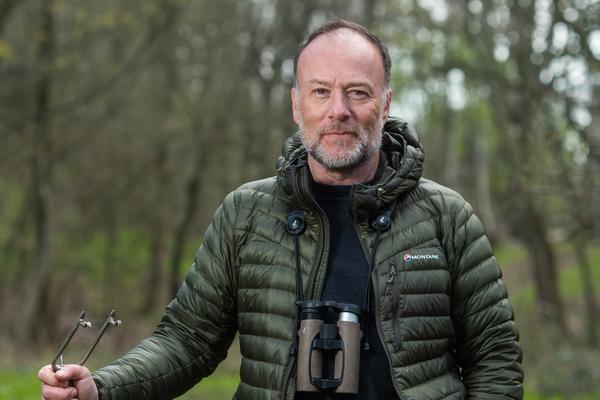
Professor Ben Sheldon FRS holds the Luc Hoffmann Chair of Ornithology and directs the Edward Grey Institute within the University of Oxford's Department of Biology. His research focuses on evolutionary ecology, particularly individual variation, environmental adaptation, and long-term ecological studies like the Wytham Woods great tit project. Current themes include spatial scaling of ecological interactions, life-history evolution, and social dynamics in bird populations. He has secured major grants from ERC, UKRI, NERC, and BBSRC, and hosted postdocs via Marie Curie Fellowships. Research interests integrate field studies, genetics, and quantitative analysis to explore how environmental and social factors shape animal behavior and adaptation. Recent work examines phenological mismatches, climate impacts, and social network effects on reproduction and survival. Awards include Fellowship of the Royal Society. Advising includes 7-8 graduate students and postdocs, with a focus on PhD and postdoc project supervision. Administrative roles include past Head of the Department of Zoology (2016–2021) and Senior User Representative for the Life and Mind Building (2019–2022). The Edward Grey Institute serves as a key research hub for avian ecology and ornithology.
Dr. Daniel Hein is a researcher affiliated with the University of Bamberg's Faculty of Social Sciences, Economics, and Business Administration, specifically within the Chair of Sales & Marketing. His work focuses on Business Digitization, Customer Relationship Management (CRM), and Augmented Reality (AR) technologies. He has contributed to studies exploring the digitization of services and CRM systems, societal implications of emerging technologies like AR smart glasses, and strategic frameworks for digital transformation in non-digital enterprises. His research emphasizes bridging theoretical concepts with practical business challenges, particularly in leveraging digital tools to enhance customer engagement and operational efficiency. Notable themes include analyzing adoption barriers for technologies like autonomous vehicles and smartwatches, and evaluating how analytics drive innovation performance. Dr. Hein has also explored ethical dimensions of wearable technologies and the psychological factors influencing consumer preferences, such as the role of disease avoidance in color choices. His publications span academic journals and conference proceedings, reflecting a keen interest in both technological innovation and its societal ramifications. While no specific grants or awards are listed, his work contributes to interdisciplinary discussions at the intersection of marketing, technology, and organizational strategy. As part of the Chair of Sales & Marketing, Dr. Hein collaborates with academic and industry partners to advance research in digital business practices, CRM effectiveness, and the strategic implications of emerging technologies.
Christena Nippert-Eng is Professor of Informatics at Indiana University's Luddy School with adjunct appointment in Sociology. She directs the Animal Computer Interaction Track and researches cognition, privacy, ethnography, and human-animal interaction. Her work combines sociological frameworks with technology design. Nippert-Eng has authored influential books on boundary negotiation and ethnographic methods. Her current research examines privacy negotiations with domestic robots and human-animal-computer interaction. She has consulted for major technology companies including HP, Motorola, and Steelcase. Her publications demonstrate sustained interdisciplinary examination of privacy practices across contexts including homes, workplaces, online gaming, and social media, increasingly focusing on technology-mediated interactions and ethical considerations.
Asad Abdi is a Lecturer in Computer Science at the College of Science and Engineering. His research focuses on deep learning, data mining, and artificial intelligence , with applications in traffic analysis, educational technology, and maritime logistics. He has published extensively on topics like social media-based traffic forecasting, fake news detection, and vessel arrival prediction. Abdi’s work bridges theoretical advancements in machine learning with practical challenges in domains such as transportation systems and education. He has explored hybrid approaches combining deep learning models with linguistic knowledge and knowledge graphs to address real-world problems. Notable contributions include frameworks for feedback analysis in hybrid classrooms and fusion-based prediction models for vessel arrival times. His recent articles highlight trends in leveraging large language models and multi-feature fusion techniques for tasks like opinion summarization and aspect extraction. Abdi’s research often emphasizes interdisciplinary collaboration, integrating insights from computer science, transportation engineering, and educational psychology. While no formal awards or grants are explicitly listed, his publication record demonstrates sustained contributions to applied AI and data-driven solutions across multiple sectors.
Shion Guha is an Assistant Professor at the University of Toronto's Faculty of Information, cross-appointed to the Department of Computer Science. He directs the Human-Centered Data Science Lab and is affiliated with the Schwartz Reisman Institute for Technology and Society and the Data Sciences Institute. His research focuses on integrating technical methodologies with critical social science approaches to address algorithmic biases in public sectors like child welfare, healthcare, and policing. Key roles include coordinating the Human-Centred Data Science concentration in the Master of Information program and advising national policies on AI ethics. Education: PhD in Information Science and Statistics, Cornell University (2016) MS in Information Science, Indian Statistical Institute (2010) Bachelor of Business Administration, Jadavpur University (India) Research Interests: Human-Centered Data Science, AI ethics, public policy, healthcare systems, algorithmic accountability, and marginalized communities' interaction with technology. His work emphasizes participatory design and real-world impact, addressing high-stakes decisions in public services. Recent Trends in Articles: Focus on participatory AI design in public sectors, algorithmic harms in child welfare, and cultural biases in NLP tools. His studies explore the intersection of technical systems and societal values, advocating for equity and transparency in algorithmic decision-making. Awards: Way-Klingler Early Career Award (2019) Connaught New Researcher Award (2021) Schwartz-Reisman Institute Faculty Fellowship (2023–2025) Grants & Advising: Secured funding from NSERC, CIFAR, and others for projects like the Responsible AI for Health Systems (RAIHS) framework. Advises PhD students through cross-departmental programs and collaborates with organizations like Parkview Health and the ACLU. Current supervisees include Ramaravind Kommiya Mothilal and Seh Young Moon. Labs & Initiatives: Leads the Human-Centered Data Science Lab, contributing to interdisciplinary research on AI ethics. Active in policy advocacy, including work with the Canadian government’s AI Policymakers Expert Group and the CIFAR AI Solutions Network.
Peter Newman, Ph.D., serves as Dean of the Rubenstein School of Environment and Natural Resources at the University of Vermont since July 1, 2024, and holds the Suzie and Allen Martin Professor title. With a career spanning decades, he has conducted extensive research on visitor management in protected areas, soundscape management, and transportation planning, partnering with the National Park Service's Natural Sounds and Night Sky Division since 2012. Education Ph.D. in Natural Resources, University of Vermont M.S. in Forest Resource Management, SUNY College of Environmental Science and Forestry B.A. in Political Science, University of Rochester His research focuses on social carrying capacity decision-making in protected area management, with fieldwork across major U.S. parks including Denali, Grand Canyon, and Great Smokies. He has developed frameworks for acoustic management and Leave No Trace efficacy, contributing to sustainable outdoor recreation practices. Scientific Awards: Cooperative Ecosystem Studies Unit National Award (2012) George Wright Society National Award for Achievement in Social Sciences (2013) Throughout his career, Newman has led high-quality teaching at Penn State's Graduate Degree Program in Acoustics and mentored numerous students through research projects on wildlife approach norms, pandemic recreation shifts, and waste management strategies in national parks. He previously served as a Park Ranger in Yosemite and Backcountry Patrol member in Idaho.
Soteris Demetriou is a Senior Lecturer of Computer Systems Security at Imperial College London's Department of Computing, within the Faculty of Engineering. He leads the Applications, Platforms, and Systems Security (APSS) Research Lab and directs the Academic Centre of Excellence in Cyber Security Research (ACE-CSR). His research focuses on securing mobile, IoT, and cyber-physical systems through techniques like explainable AI, reverse engineering, and trusted computing. Notable contributions include tools for privacy preservation in machine learning models, detection of LiDAR spoofing attacks, and securing Android's middleware. Education: PhD and MSc in Computer Science (University of Illinois at Urbana-Champaign), Diploma in Electrical and Computer Engineering (University of Patras). Research Interests: Mobile/IoT security, AI security, trusted computing, and vulnerability analysis. Key areas include privacy in generative models, adversarial attacks on autonomous systems, and large-scale distributed systems. Publications: Over 50 peer-reviewed papers in top venues like NDSS, CCS, and SOSP. Recent work addresses privacy in speech generation, LiDAR security for autonomous vehicles, and hyperscale serverless architectures at Meta. Awards: Distinguished Paper Award at NDSS 2018, Best Paper at SafeThings 2024, and multiple travel grants. Served on technical committees for PETS, CCS, and AutoSec. Grants & Collaborations: SPRITE+ grant for Bio-IoT security, collaboration with Meta on distributed systems, and leadership in ACE-CSR. Labs: APSS Lab focuses on systems and AI security, with interdisciplinary projects in healthcare and autonomous systems.
Dr Jeff Chamberlain is a Senior Lecturer at Deakin Business School, Faculty of Business and Law, Deakin University, where he also serves as Deputy Director of the MBA program. With over two decades of industry experience at the Australian Taxation Office (ATO), he transitioned into academia, bringing a pragmatic, industry-informed approach to teaching and research. His work centers on the 'triple helix' model linking strategy, business processes, and technology. Doctor of Philosophy, Deakin University Master of Electronic Commerce, Deakin University Graduate Diploma of Electronic Commerce, Deakin University Graduate Certificate of Electronic Commerce, Deakin University Graduate Certificate of Higher Education, Deakin University Bachelor of Business, Deakin University CPA (Certified Practising Accountant), CPA Australia His research focuses on business process management, digital transformation in SMEs, enterprise systems (especially ERP), and organizational learning. He explores how SMEs strategize for technological change and the role of awareness and learning in enterprise transformation. Recent work includes a study on a Global Advisory Program (GAP) for innovative SMEs. The recent articles reflect a strong trajectory in e-government, digital services, and cross-cultural project management, with a pivot toward educational innovation and flexible learning models. His work bridges public sector digital transformation and academic pedagogy, emphasizing practical application. Vice Chancellor's Award for Teaching Excellence, 2017 Fellow, CPA Australia (FCPA), 2016 Fellow, Institute of Managers and Leaders (FIML), 2016 Dean's Lecturing Legend Award, 2012 Australia Day Achievement Award, 2002 Jeff has supervised numerous student capstone projects, led industry-university partnerships, and secured internal grants such as the BPM Deakin project. He has been involved in executive education with DeakinCo, delivering transformation leadership programs to Tata Aerospace. He also serves on the board of Eastern Innovation Business Centre, supporting sustainable startups. He leads the 'BPMDeakin' virtual community and has developed innovative teaching models like 'Start Anytime' and 'Cloud First'. His teaching units include MBA705 Enterprise Optimisation and Transformation, emphasizing real-world applicability and digital agility.
Chris Bryan is an Assistant Professor in the School of Computing and Augmented Intelligence (SCAI) at Arizona State University (ASU), part of the Ira A. Fulton Schools of Engineering. He leads the Sonoran Visualization Laboratory (SVL @ ASU), focusing on data visualization, human-computer interaction, and advanced interfaces for data science. His research includes explainable AI, augmented/virtual reality, and privacy-preserving visualization techniques. Educations: Ph.D. Computer Science, University of California, Davis (2018) B.S. Computer Science, University of Arkansas (2008) Research Interests: Bryan’s work spans data visualization, human-computer interaction, explainable AI, and immersive visualization. He develops tools for collaborative analysis, privacy-aware systems, and visual analytics for complex data. Current projects involve VR/AR interfaces, bias reduction in NLP tasks, and educational visualization tools. Recent Achievements: Recipient of the 2024 and 2023 Top Five Percent Faculty Award at ASU’s Ira A. Fulton Schools of Engineering. NSF grants for privacy-preserving visualization (SaTC #2224066) and visualization education (IUSE #2216452). Multiple publications in top venues like IEEE VIS, CHI, and EuroVis, including work on differential privacy, mind wandering in visualization, and LLM prompt exploration. Advising & Grants: Advises Ph.D., MS, and undergraduate students on visualization and HCI research. Collaborates with institutions like Los Alamos National Laboratory, Phoenix Children’s Hospital, and Nankai University. Lab focuses on mentoring and preparing students for academic and industry roles in visualization and AI. Labs & Teams: Leads the SVL @ ASU, which uses advanced hardware (HTC Vive, HoloLens 2) and tools like D3.js, React, and LaTeX. The lab emphasizes interdisciplinary projects with domain experts in medicine, engineering, and security.