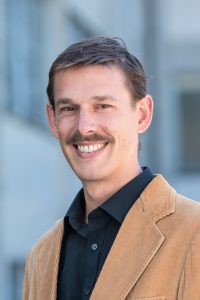
Dr. Alex Bigazzi is an Associate Professor and Associate Head (Undergraduate Program) in the Department of Civil Engineering at the University of British Columbia (UBC), with a joint appointment in the School of Community and Regional Planning. He leads the REACT Lab, focusing on active transportation, micromobility, and sustainable infrastructure design. His research emphasizes the intersection of physics, physiology, and behavior in active travel, particularly for pedestrians and cyclists, and addresses emissions reduction and equitable urban mobility. Bigazzi holds a B.M. in Jazz Saxophone from the University of Miami and a Ph.D. in Civil Engineering from Portland State University. His career includes academic and practical contributions, such as founding the REACT Lab and leading projects on e-bike incentives, air pollution exposure, and infrastructure design. His work has earned awards like the 2024 Wall Legacy Award for inclusive transport design and the 2023 Climate Action Award. He teaches courses on pedestrian/bicycle facility design and capstone projects, mentoring students through UBC’s Civil Engineering programs.
Professor Alexandra M. Schmidt is a leading academic in Biostatistics at McGill University, holding an endowed University Chair. She specializes in spatial and spatio-temporal modeling, particularly in epidemiology and environmental health. Previously, she served as a Full Professor at the Federal University of Rio de Janeiro (2012–2016). Her research focuses on Bayesian methodologies for analyzing complex processes, including disease spread, environmental hazards, and socio-economic disparities. She has authored influential books such as Spatio-Temporal Methods in Environmental Epidemiology with R (2023) and contributed to over 150 peer-reviewed articles. Key awards include the ISBA Fellowship (2024), ASA Fellowship (2020), and the Abdel El-Shaarawi Award (2008). Education: PhD in Statistics (2001, University of Sheffield, UK), MSc and BSc in Statistics (Federal University of Rio de Janeiro, Brazil). Research interests span Bayesian inference, spatial statistics, and environmental epidemiology. She has advised numerous PhD/MSc students and collaborated on projects linking statistical methods to public health challenges, such as modeling dengue outbreaks and air pollution impacts. Active in academic service, she has chaired major conferences (e.g., 2022 ISBA World Meeting) and serves on editorial boards of top journals like Bayesian Analysis and Canadian Journal of Statistics . Teaching includes advanced courses on generalized linear models, spatial epidemiology, and Bayesian analysis. Her work bridges theoretical statistics with practical applications, addressing global health issues through innovative spatio-temporal modeling techniques.
Dr. Amir Hakami is a Professor in the Department of Civil & Environmental Engineering at Carleton University , where he leads the Carleton Atmospheric Modelling Group . His research focuses on advanced air quality modeling techniques to inform environmental policy. Degrees: B.Sc. (Polytechnic of Tehran), M.Sc., Ph.D. (Georgia Tech), Postdoc (Caltech) Contact: Office 3454 Mackenzie Building, Phone: 613-520-2600 ext. 8609, Email: amir.hakami@carleton.ca Research Interests: Air quality modeling at multiple spatial scales Adjoint sensitivity analysis for atmospheric response Inverse modeling and data assimilation techniques Uncertainty quantification in environmental systems Interdisciplinary applications in policy, public health, and economics Teaching: Courses include Environmental Engineering Systems Modeling , Contaminant Transport , and Air Pollution & Emissions Control at undergraduate and graduate levels. Research Group: The group includes Ph.D. candidates, postdoctoral fellows, and alumni working on topics ranging from atmospheric chemistry to sustainable energy systems. Members come from diverse backgrounds in engineering, science, and policy disciplines.
Patrick Baylis is an Assistant Professor of Environmental Economics at the Vancouver School of Economics, University of British Columbia. His research focuses on how people respond to environmental threats such as wildfires, air pollution, and extreme temperatures. He employs large datasets, natural language processing, and spatial information in his work, primarily using R/RStudio and Python for data analysis. Dr. Baylis earned his PhD from the University of California Berkeley in 2016 in Agricultural and Resource Economics. Prior to joining UBC, he was a postdoctoral fellow at the Stanford Center on Food Security and the Environment. He also worked as a research assistant at the Energy Institute at Haas and is a proud alumnus of Carleton College. His research interests span environmental economics with a particular focus on climate change impacts, energy economics, and behavioral responses to environmental threats. His work often examines the intersection of climate, health, and economic behavior, using innovative methods like social media data analysis to measure sentiment responses to temperature changes and other environmental factors. Analysis of his publication record reveals a strong focus on using big data approaches to understand human responses to environmental challenges. His work frequently appears in top journals including Nature Climate Change, PNAS, and the Journal of Public Economics. His research spans multiple subfields including wildfire economics, air quality valuation, climate migration, and the behavioral impacts of temperature extremes. Dr. Baylis has received significant media attention for his work, with coverage in major outlets including The New York Times, The Washington Post, The Guardian, and The Atlantic. His research on temperature and suicide rates, as well as climate perception, has been particularly influential in connecting environmental conditions with human behavior and mental health outcomes. He maintains an active research program examining critical environmental challenges, including wildfire risk, air pollution impacts, climate adaptation strategies, and the economic dimensions of climate change. His work combines rigorous economic analysis with innovative data collection and processing methods to provide new insights into how humans respond to environmental threats.
Hisham Zerriffi is an Associate Professor at the University of British Columbia (UBC) in the Department of Forest Resources Management, Faculty of Forestry. He also serves as Associate Dean for Equity, Diversity, and Inclusion. His research intersects technology, energy, and the environment, focusing on rural areas in the Global South. Affiliation: BioProducts Institute Affiliation: Clean Energy Research Centre Affiliation: Institute for Resources, Environment and Sustainability His research examines institutional factors in technology diffusion, household energy choices, and welfare impacts of energy use. Current projects include analyzing forest density's ecological impact, clean cooking transitions in India, and decentralized energy systems. Recent publications address just transitions, biomass energy economics, and policy misalignments in Indigenous communities. He has authored works on climate change mitigation via forest carbon credits and rural electrification strategies. Scientific Award: Ivan Head South/North Research Chair As a PhD supervisor, he has guided Natalie Payer on urban energy poverty in the U.S. He collaborates on interdisciplinary grants and leads the Energy Resources, Development and Environment Lab (ERDELab).
Amanda Giang serves as Assistant Professor at the University of British Columbia's Faculty of Applied Science, Department of Mechanical Engineering, holding a Canada Research Chair in Environmental Modelling for Policy. She maintains a joint appointment with the Institute for Resources, Environment and Sustainability (IRES). Her educational background includes a B.A.Sc. from the University of Toronto, followed by M.S. and Ph.D. degrees from MIT, with postdoctoral training at MIT and Harvard. Dr. Giang's research employs interdisciplinary approaches to develop modeling tools for environmental policy analysis, focusing on pollution assessment, environmental injustice, and the intersection of air quality, decarbonization, and equity. Her work emphasizes action-oriented partnerships with community organizations and government health/environment agencies. Current projects address freight transport decarbonization equity, cumulative impact assessment methodologies for overburdened communities, and holistic environmental impact evaluation in technology design. Her recent publications demonstrate expertise across environmental modeling, policy analysis, and justice frameworks, with significant contributions to understanding spatial inequities in environmental risk distribution and developing community-engaged research methodologies. UBC Killam Research Prize, 2023 Dr. Giang actively collaborates with community groups and government authorities through her LEAP (Learning, Environmental Assessment, and Policy) research group. Her work integrates technical modeling with real-world policy applications, particularly in urban environmental planning contexts where equity considerations are paramount. She has developed innovative frameworks for cumulative impact assessment and environmental justice analysis that directly inform regulatory decision-making processes. Her research laboratory focuses on developing open-source modeling tools for environmental policy analysis while maintaining strong community partnerships that ensure research addresses pressing local environmental justice concerns.
Dr. Joshua Brinkerhoff is an Associate Professor in Mechanical Engineering at the University of British Columbia Okanagan Campus. He serves as the Associate Director for Research & Industrial Partnerships in the School of Engineering and leads the UBC-Okanagan Computational Fluid Dynamics Laboratory. His research spans computational fluid dynamics, turbomachinery, multiphase flows, hydrogen safety, wind energy, and biofluid mechanics. He teaches courses in mechanics of materials, alternative energy systems, turbulence, computational fluid dynamics, and aircraft design. PhD, Aerospace Engineering (Carleton University, Ottawa, ON) BEng, Aerospace Engineering (Carleton University) Dr. Brinkerhoff’s research interests include: Computational Fluid Dynamics (CFD) for laminar-to-turbulent transition and instability analysis Wind energy systems and turbine aerodynamics Hydrogen storage and safety protocols for transportation Biofluid mechanics for respiratory diseases and aneurysm modeling Multiphase flows in industrial and environmental contexts His publications focus on CFD simulations for: Aerosol dispersion and mitigation in indoor environments Wind farm interactions and atmospheric gravity waves Cavitation and phase transitions in cryogenic and LNG systems Heat transfer optimization in industrial and thermal systems Instability dynamics in buoyancy-driven and swept flows Turbulent structures in fluidized beds and reactors Dr. Brinkerhoff has no listed scientific awards in the provided data but has extensive contributions to renewable energy, hydrogen safety, and medical fluid dynamics. His laboratory develops open-source tools like TOSCA for large-eddy simulations and investigates practical applications in urban air quality, dental aerosol control, and turbine wake modeling.
Miriam Diamond is a Professor at the Department of Earth Sciences and School of the Environment, University of Toronto. She holds cross-appointments in Chemical Engineering, Dalla Lana School of Public Health, and Physical & Environmental Sciences. PhD in Chemical Engineering (University of Toronto, 1990) MSc in Mining Engineering (Queen’s University, 1984) MSc in Zoology (University of Alberta, 1980) Her research focuses on chemical contaminant fate, transport, and exposure in indoor and urban environments, Arctic regions, and Great Lakes systems. She develops mathematical models , passive sampling methods , and policy frameworks to address pollution from flame retardants, phthalates, PFAS, and microplastics. Recent publications highlight microplastic extraction techniques , sleeping children’s exposure , and polymeric flame retardant risks . Key awards include the Royal Society of Canada Fellowship and 2025 President’s Impact Award . She supervises PhD candidates Anna Shalin , Lin Boynton , and others. Her policy contributions include serving on the Canadian Chemical Management Plan Science Committee and co-chairing the Earth Commissioner initiative.
Jonathan Abbatt is a Professor of Chemistry at the University of Toronto, specializing in environmental chemistry with a focus on atmospheric processes. His research examines multiphase chemistry in indoor and outdoor environments, particularly aerosol particle interactions and their impacts on climate and air quality. He leads the Abbatt Group, which investigates topics such as Arctic chemistry, indoor chemical transformations, and brown carbon aging. Research interests span indoor/outdoor chemical reactions, aerosol physics, and environmental modeling. Notable projects include studies on ozone deposition on indoor surfaces, biomass burning emissions, and reactive chlorine sources in urban areas. His work integrates lab experiments, field measurements, and computational models. Recent studies highlight indoor surface reactivity, wildfire impacts on ozone, and multiphase oxidation mechanisms. Collaborations with institutions like Environment and Climate Change Canada ensure practical applications of his findings. Students and postdocs in his lab contribute to advancing knowledge in air quality and climate change mitigation.
Soodeh Saberian is an Associate Professor in the Department of Economics at the University of Manitoba, affiliated with the Faculty of Arts. She is also a Research Affiliate at the Institute of Labor Economics (IZA). Education: PhD in Economics (2018) from the University of Ottawa Her research focuses on environmental economics, labor economics, and health economics, particularly examining how air pollution and climate change affect health outcomes, criminal activity, and decision-making processes. She has published extensively in journals such as the American Economic Journal: Applied, Journal of Development Economics, and Canadian Journal of Economics. Recent publications highlight her work on pollution's impact on mental health, climate resilience in labor markets, and the reproducibility of economic studies. She teaches courses like Introduction to Environmental Economics and Seminar in Applied Econometrics.
Dr. Alison Holloway is a Professor at McMaster University's Faculty of Health Sciences, specializing in environmental toxicology and reproductive health. Her research focuses on the effects of environmental contaminants (e.g., oil sands pollutants, pesticides, endocrine disruptors) on maternal and child health, metabolic disorders, and developmental outcomes. She has conducted studies on naphthenic acids, synthetic food additives, and maternal exposure to pharmaceuticals like fluoxetine. Key research areas include: Environmental contaminants' impact on reproductive systems and placental function Metabolic disturbances caused by chemical exposures during critical developmental windows Neurobehavioral and gastrointestinal effects of prenatal drug exposure Assessment of urban air pollution on in vitro fertilization (IVF) success rates Her recent work highlights the role of the tryptophan-kynurenine pathway as a biomarker of environmental stress and the obesogenic effects of bisphenol analogs and food additives. Collaborations involve interdisciplinary teams addressing environmental health, with studies published in high-impact toxicology and public health journals. Dr. Holloway's research has informed policies on chemical safety and maternal health, emphasizing cross-species markers for organismal health and risk assessment of emerging contaminants like cannabis derivatives.
Patrick Hayes is a Full Professor in the Department of Chemistry at Université de Montréal. His research focuses on atmospheric chemistry of air pollution and climate-forcing agents, with expertise in aerosol chemistry, mineral dust dynamics, and analytical spectroscopy. He collaborates with Environment and Climate Change Canada, Quebec’s Ministry of the Environment, and private sector partners like Glencore. Education & Roles: PhD in Chemistry (not explicitly stated, inferred from academic rank) Director of the Hayes Group conducting Arctic fieldwork and computational modeling Teaches courses in environmental chemistry across multiple programs Research Interests: Chemical characterization of atmospheric particles and their climate impacts Mineral surface chemistry and dust emission processes Development of advanced analytical tools for environmental monitoring Study of Arctic aerosol dynamics and transboundary pollution Recent Trends in Publications: Focus on Arctic aerosol behavior and dust dynamics Analysis of urban pollution sources (Beirut/Montreal comparisons) Integration of remote sensing with ground-based measurements Health risk assessments of particulate matter components Awards & Recognition: 2021 Perkin-Elmer Award (CSASS) RSC Analyst Emerging Investigator Award Advising & Grants: Supervised 8+ graduate students since 2016 Lead researcher on 20+ projects, including $2.5M+ in funding from CRSNG, FRQNT, and industry Key roles in networks like EcotoQ and MOACC Labs & Teams: Hayes Group at UdeM with advanced instrumentation capabilities Partnerships with federal/provincial agencies and international collaborators
Dr. Vahid Hosseini is an Associate Professor and Graduate Program Chair in the School of Sustainable Energy Engineering at Simon Fraser University (SFU). His research focuses on sustainable energy systems, urban air pollution, and clean mobility solutions. He holds a Ph.D. in Mechanical Engineering from the University of Alberta (2008), and M.A.Sc. and B.Eng. degrees from Sharif University of Technology (Iran). His academic roles include leadership in graduate academic programs and engineering education. Key research areas include thermo-fluid systems analysis, vehicle emissions reduction, and urban air quality modeling. He is actively involved in projects addressing real-world driving emissions, emission inventory development, and the impact of cold climates on transportation energy consumption and pollution. Notable contributions include studies on retrofit emission control devices for motorcycles, high-emitter vehicle identification, and policy recommendations for emission reduction. His work integrates experimental methods, computational fluid dynamics (CFD), and machine learning to tackle complex environmental challenges. Teaching interests span thermodynamics, fluid mechanics, and air pollution control engineering. Current courses include SEE 325 D100 Mechanical Design and Finite Element Analysis . Research highlights include collaborations on Tehran’s air quality management, particulate matter (PM2.5) source apportionment, and the development of high-resolution emission inventories. He contributes to international conferences and journals, with a focus on practical solutions for sustainable urban transportation systems.
Dr. Ken Ferens is an Assistant Professor in the Department of Electrical and Computer Engineering at the Price Faculty of Engineering, University of Manitoba. He serves as the Computer Engineering Champion in the Centre for Engineering Professional Practice and Engineering Education and directs the Applied Cognitive Intelligence (ACI) Research Group. Dr. Ferens is a senior member of the Institute of Electrical & Electronics Engineers (IEEE), Chair of the EduManCom Chapter of the IEEE, Vice-Chair of the Computer and Computational Intelligence Chapter of the IEEE, and Chair of the Industry, Teaching Assistants, and Student Forums for Engineering Curriculum Review and Improvement. Ph.D. (Computer Engineering), University of Manitoba, 1996 M.Sc. (Computer Engineering), University of Manitoba, 1991 B.Sc. (Electrical Engineering), University of Manitoba, 1989 Dr. Ferens has over 33 years of research experience in computational intelligence, focusing on cognitive machine learning, artificial intelligence, cognitive computational intelligence, chaos theory applications, agent-based models, and various optimization algorithms including simulated annealing, genetic algorithms, artificial neural networks, and particle swarm optimization. His research applies these techniques to develop software and hardware intrusion detection systems for cybersecurity applications. He teaches graduate-level courses on Computer Network Security and Applied Computational Intelligence, providing students with theoretical background and hands-on experience in state-of-the-art security methods. Analysis of Dr. Ferens' recent publications reveals a strong focus on applying cognitive and chaotic computational techniques to cybersecurity challenges, particularly malware detection and network intrusion detection. His work increasingly integrates complexity theory, fractal analysis, and hybrid optimization approaches to enhance security systems' effectiveness. There's a clear progression toward more sophisticated machine learning architectures applied to increasingly complex security scenarios, with growing emphasis on real-world IoT and network security applications. Best Paper Award at IEEE International Conference on Cognitive Informatics and Cognitive Computing (ICCI*CC 2022) Best Paper Award at IEEE International Conference on Cognitive Informatics and Cognitive Computing (ICCI*CC 2015) Best Journal Paper Award for 2013 (Journal of ICT Research and Applications) Best Poster Award at 12th International Conference on e-Health Networking, Application & Services (2010) Best Paper Award at IASTED International Conference on Computer, Electronics, Control, and Communication (1991) Dr. Ferens collaborates with national and international industry partners including the Department of Advanced Information Management, Content Technology Canadian Tire Corporation (CTC), and Magellan Aerospace. His research group has received funding supporting the Cyber-security Research Program, developing practical applications of computational intelligence for security systems. He has supervised numerous graduate students in the Electrical and Computer Engineering department, focusing on research at the intersection of machine learning and cybersecurity. Dr. Ferens leads the Applied Cognitive Intelligence (ACI) Research Group within the Department of Electrical and Computer Engineering, which focuses on applying cognitive, chaotic, and computationally intelligent algorithms to build intrusion detection systems. The group collaborates with industry partners to develop practical security solutions while providing students with hands-on research experience in cutting-edge security technologies. Their work spans both theoretical algorithm development and practical hardware implementation for real-world security applications.
Dr. Anne-Marie Nicol is an Associate Professor of Professional Practice in Health Sciences at Simon Fraser University. Her multidisciplinary research spans health communication, toxicology, social marketing, risk perception, and risk assessment, with emphasis on environmental and occupational health exposures. She leads CAREX Canada, a national carcinogen surveillance program, and has developed public health campaigns including Wash with Care and Tick Talk. Her work focuses on translating scientific information about carcinogens to policymakers and cancer prevention stakeholders. She teaches Human Health Risk Assessment, Toxicology for Public Health, and Health Communication. Her research has been funded by CIHR, Michael Smith Foundation, and Canadian Cancer Society. Current projects include studies on radon exposure, infodemic communication strategies, and community resilience to wildfire smoke. She holds a BA from SFU, MES from York University, and PhD from UBC.