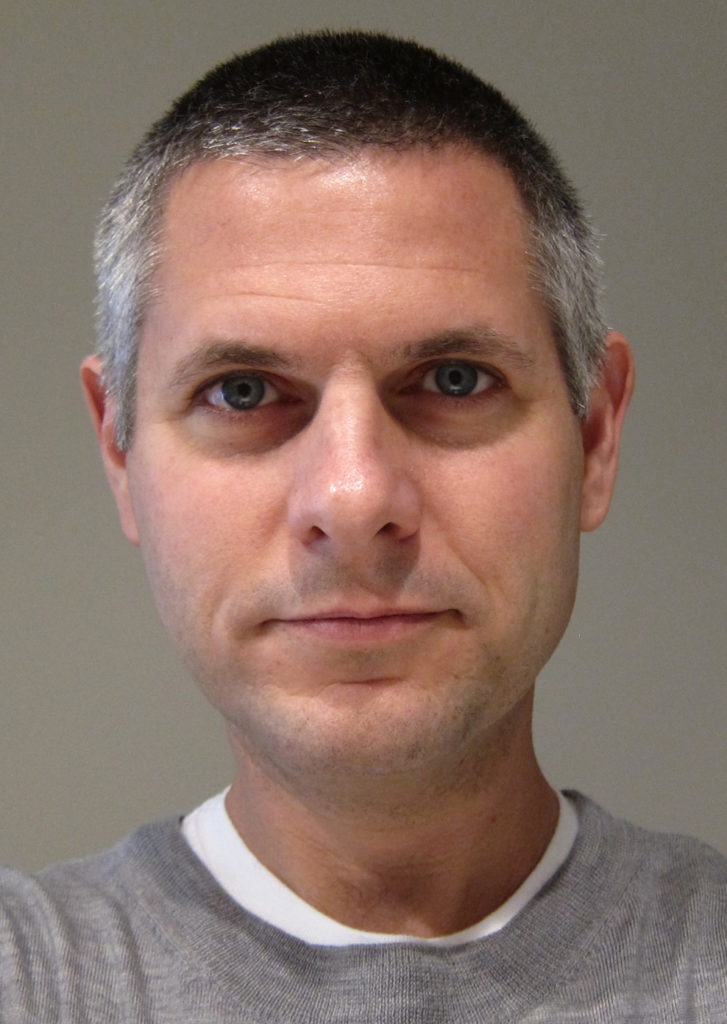
Jacob Eyferth is an Associate Professor at the University of Chicago, jointly appointed in the Department of East Asian Languages and Civilizations, the Department of History, and the College. His research focuses on the social and cultural history of twentieth-century China, particularly rural communities, gender dynamics, and the intersection of technology and everyday life. Key research themes include the impact of industrialization, collectivization, and revolution on non-elite populations, with an emphasis on rural women's labor and cultural resistance. His current project explores cotton production, clothing, and gender during China's socialist era. Eating Rice from Bamboo Roots (2009) How China Works (2006) Rural Development in Transitional China (2004) He received the 2011 Joseph Levenson Prize for his first book. Eyferth has taught courses on topics such as class inequality, everyday life under socialism, and revolutionary China, and has held postdoctoral fellowships at Oxford, Harvard, and Rutgers.
Crystal S. Rudds is an Assistant Professor in the Department of English at the University of Utah, specializing in African American literature and culture. Her research focuses on twentieth-century American and African American fiction, qualitative narratives about urban life and housing, Black Feminisms, and black geography/ecology. PhD in English from the University of Illinois at Urbana-Champaign (2016) MFA in Creative Writing from Indiana University-Bloomington (2004) BA in Communications with minors in French and Theatre from Wake Forest University (1999) Her scholarly work examines the intersection of literature and urban environments, particularly through public housing fiction. She uses interdisciplinary approaches combining qualitative research with literary analysis, emphasizing community engagement and the phenomenological experiences of residents in urban spaces. Her publications address topics like the historical context of public housing narratives and the concept of 'the black interior' as a framework for understanding spatial identity. Rudds has received prestigious honors, including the David D. Anderson Award for Midwestern Literary Studies and the Mary Blinn Poetry Prize. She is also a Faculty Research Fellow and Intersectionality Pedagogy Fellow at the University of Utah. Her teaching philosophy integrates experiential learning and community-focused methods, with courses such as African Amer Lit 2, Seminar in Lit. Study, and Studies Af Amer Lit. She emphasizes archival research, site visits, and performance-based learning to empower students as co-creators of knowledge.
Sigrid Schmalzer is a Professor of History at the University of Massachusetts Amherst, specializing in the history of science and modern China. She holds a Ph.D. in History and Science Studies from the University of California, San Diego (2004). Her research bridges the social, cultural, and political dimensions of science in China, with a focus on the intersections of agriculture, activism, and revolutionary movements. Schmalzer is the author of *Red Revolution, Green Revolution: Scientific Farming in Socialist China* (2016), winner of the Joseph Levenson Book Prize, and *The People's Peking Man: Popular Science and Human Identity in Twentieth-Century China* (2008), recipient of the Allan Sharlin Award. Her current projects include a book on agricultural heritage in the People’s Republic of China and leadership roles in organizations like the Critical China Scholars and Science for the People. She co-edits the *Activist Studies of Science and Technology* series for UMass Press, emphasizing socially engaged scholarship. Schmalzer also serves as Co-President of the MSP faculty union at UMass Amherst. Research interests span the history of science activism, transnational movements, and the legacy of Maoist science. Notable awards include the Freeman Book Award (2018) for her children’s book *Moth and Wasp, Soil and Ocean*, which integrates science education with historical narratives. Her work often critiques capitalist and authoritarian structures while advocating for science as a tool for justice and sustainability. Recent publications explore themes like agroecology, science policy, and the global dimensions of China’s scientific history. She teaches courses on modern China, science in society, and radical science movements, blending interdisciplinary approaches to engage students in critical analysis of historical and contemporary issues.
Crystal S. Rudds is an Assistant Professor of African American literature and culture in the Department of English at the University of Utah, specializing in twentieth-century American and African American fiction, urban life narratives, Black Feminisms, and black geography/ecology. She earned her PhD in English from the University of Illinois at Urbana-Champaign (2016) and MFA in Creative Writing from Indiana University-Bloomington (2004). Her research explores intersections between literary analysis and community engagement, focusing on urban spatiality, public housing representation, and black interiority. She has published works analyzing Frank London Brown and Jasmon Drain's housing narratives, digital archiving practices, and pedagogical identity evolution. Key grant activities include: Gathering, Sewing, Giving: Chronopolitics and Black Women's Quilting (TRIC/Mellon Foundation, 2023) Utah Presidential Leadership Fellowship (2023) Recognitions: David D. Anderson Award for Midwestern Literary Studies (2023) Mary Blinn Poetry Prize (2022) University of Utah Fellowships (2022) Teaching activities feature: Experiential learning with archival documents Historic site visits Performance-based literary analysis Community-focused pedagogy
Sasha Welland is an Adjunct Associate Professor in the Department of Anthropology at the University of Washington, affiliated with Gender, Women & Sexuality Studies; China Studies; Comparative History of Ideas; and graduate certificate programs in Cinema & Media Studies and Public Scholarship. Her research focuses on Asian American studies, East Asian ethnography, feminism, visual culture, and sociocultural anthropology. Welland’s scholarship bridges historical and contemporary analyses. Her book Experimental Beijing (2018) explores Chinese contemporary art as a site of cultural negotiation around gender, globalization, and post-socialist transformations. Her earlier work A Thousand Miles of Dreams (2006) traces the transnational lives of two 20 th -century Chinese women activists. She contributes to Journal of Visual Culture and has published in Signs and Yishu . An engaged public scholar, Welland has curated feminist art exhibitions in Beijing, Shanghai, and Hong Kong, blending academic research with cultural practice. Her work interrogates intersections of gender, space, and global flows in East Asian contexts.
Ramsey McGlazer is an Associate Professor specializing in twentieth-century European and Latin American literature, film, and critical theory. His research engages with poetry, politics-aesthetics intersections, critical carceral studies, and feminist/queer/psychoanalytic frameworks. He holds a Ph.D. in Comparative Literature and Critical Theory from UC Berkeley (2015) and previously taught at the University of St Andrews and Brown University’s Pembroke Center. McGlazer’s work interrogates modernist critiques of progress, radical psychiatry movements, and the interplay between aesthetic practices and institutional critique. His acclaimed monograph Old Schools: Modernism, Education, and the Critique of Progress (2020) won the American Association for Italian Studies First Book Prize. Current projects include The Clinic and its Double , exploring mid-century radical psychiatry and avant-garde art. He serves as Senior Editor of Critical Times and Coeditor of Italian Culture , and has translated key works like Rita Segato’s The War Against Women . McGlazer’s writing appears in venues such as Los Angeles Review of Books and n+1 . Research interests span Surrealist provocations, Brazilian artist Lygia Clark’s propositions, and transnational feminist solidarities. His scholarship bridges literary analysis with critical engagements in carceral studies, postcolonial theory, and decolonial thought.
Kenneth Pomeranz is the University Professor of Modern Chinese History at the University of Chicago in the Department of East Asian Languages and Civilizations (EALC). Previously taught at the University of California, Irvine , his research spans late Imperial and twentieth-century China , comparative world history , and global economic systems . Research Focus: Reciprocal influences between state, society, and economy; origins of the world economy through mutual regional influences; comparative studies of labor, family organization, and economic history. Current Projects: A history of Chinese political economy from the seventeenth century to the present; a book titled Why Is China So Big? exploring China's political unity despite its vast size. Scientific Awards and Fellowships: John K. Fairbank Prize (twice) World History Association Book Prize (shared) Guggenheim Fellowship American Academy of Arts and Sciences Fellow Publications: Key works include The Great Divergence , The Making of a Hinterland , and The World that Trade Created . His articles address topics such as labor-intensive industrialization, global environmental history, and Qing state-building.
Janet Chen is Professor of History and East Asian Studies at Princeton University, serving as Director of the East Asian Studies Program. Based in 302 Dickinson Hall, she maintains regular office hours on Thursdays from 9:30 am to 11:30 am and is contactable via jychen@princeton.edu. Her academic credentials include: Ph.D. in History, Yale University M. Phil in History, Yale University M.A. in History, Yale University B.A. in History and Asian Studies with highest honors, Williams College Chen specializes in twentieth-century Chinese social and urban history, examining marginalized populations during periods of war and revolution. Her research explores intersections of poverty, state formation, and cultural identity, with current work focused on Mandarin language standardization in China and Taiwan. This scholarship bridges historical analysis with sociological frameworks to understand how ordinary people navigate systemic upheaval. Her publication 'Guilty of Indigence: The Urban Poor in China, 1900-1953' (2012) exemplifies her methodological approach, revealing how destitution became criminalized amid political transformation. Collectively, her work demonstrates consistent focus on urban marginality, state-society relations, and historical memory in modern East Asia, establishing her as a significant voice in social history methodologies.
Sunny Xiang is an Associate Professor of English at Yale University, where she teaches and conducts research at the intersection of literature, race, war, and empire. Her work critically examines U.S. military empire in Asia and the Pacific, particularly through aesthetic, cultural, and documentary forms from the mid-twentieth century. She is affiliated with the Department of English in the Faculty of Arts and Sciences at Yale. Ph.D., University of California, Berkeley B.A., Northwestern University Her research focuses on the cultural genealogies of American empire, with an emphasis on how war and militarism shape perception, knowledge, and everyday life. Key areas include Cold War aesthetics, Asian American studies, Pacific studies, critical militarization studies, and feminist science studies. She is particularly interested in how literary and cultural forms reveal the intimate, quotidian, and often invisible operations of empire. Her publications span journals such as ASAP/Journal , Radical History Review , PMLA , and Public Books . Her first book, Tonal Intelligence: The Aesthetics of Asian Inscrutability During the Long Cold War (Columbia University Press, 2020), explores the visual and narrative trope of Oriental inscrutability in relation to U.S. intelligence operations. Her current project, Chemical Apophenia: Air Conspiracies and Skin Connections in the Toxic Tropics , investigates how WWII military science in the Pacific generated new paradigms for detecting toxicity. The articles reflect a consistent engagement with themes of militarized domesticity, aesthetic excess, diasporic memory, and the entanglement of fashion, food, and war in imperial contexts. Mundane Militarisms: War, Archives, and Everyday Life (2024) Militarized Comfort: How to Feel Naked While Wearing Clothes (2023) Bikinis and Other Atomic Incidents: The Synthetic Life of the Nuclear Pacific (2022) Wars of Contemporary Life (2020) Global China as Genre (2019) Sunny Xiang has not been mentioned in relation to any scientific awards or fellowships in the provided text. She teaches courses such as War and Everyday Life, Readings in Comparative World English Literatures, and The Teaching of English. While her advisees or research teams are not listed, her scholarship demonstrates deep engagement with interdisciplinary methodologies and collaborative work, such as with the Mundane Militarisms Collective. She has not indicated any lab affiliations, but her research involves critical archival work and analysis of visual, literary, and cultural materials.
Stephen Cushman is the Robert C. Taylor Professor at the University of Virginia, specializing in American literature and poetry. His interdisciplinary work bridges Civil War studies, 19th-century poetry, and environmental literature. He earned his Ph.D. (1982), M.Phil. (1981), and M.A. (1980) from Yale University, and a B.A. from Cornell University (1978). His research explores how literary forms shape historical understanding, particularly through works like *The Generals' Civil War* (2021) and *Belligerent Muse* (2014). He has edited major volumes such as *The Princeton Handbook of Poetic Terms* (2016) and *Civil War Writing* (2019). His poetry collections include *Keep the Feast* (2022) and *Hothead* (2018), blending personal reflection with historical inquiry. Cushman has received prestigious awards including the Cavaliers' Distinguished Teaching Professorship (2014–2016) and the All-University Teaching Award (1992). His writing often intersects with Virginia’s literary landscape, as seen in *After Great Pain, Dickinson in Charlottesville* (2018). He actively engages with environmental themes in works like *Pope Francis, Laudato Si’, and U.S. Environmentalism* (2017). His articles critically analyze figures like Lincoln, Sherman, and Thoreau, while exploring modernist engagements with biblical texts and Civil War memory. He serves as a leading voice in American literary history, emphasizing the interplay between form, content, and cultural context.
Ruben Gallo is the Walter S. Carpenter, Jr., Professor in Language, Literature, and Civilization of Spain at Princeton University. He serves as Professor in the Department of Spanish and Portuguese Languages and Cultures and has directed the Program in Latin American Studies since 2008. His academic credentials include a B.A. in English from Yale University and a Ph.D. in Comparative Literature from Columbia University. Professor Gallo specializes in Latin American Studies with interdisciplinary research spanning: Twentieth-century cultural movements Avant-garde literature and art Psychoanalytic theory (particularly Freudian studies) Transatlantic intellectual history His endowed professorship recognizes significant contributions to Hispanic studies. Current institutional roles include program leadership and teaching graduate/undergraduate courses on modern cultural theory.
Madeleine Zelin serves as the Dean Lung Professor of Chinese Studies and History East Asia coordinator within Columbia University's Department of East Asian Languages & Cultures, maintaining active office hours and scholarly engagement. Her academic foundation includes: BA: Cornell University (1970) PhD: University of California, Berkeley (1979) Professor Zelin pioneers research in Modern Chinese Legal and Economic History , challenging conventional narratives about imperial China's economic restrictions through rigorous analysis of legal frameworks, merchant institutions, and customary business practices. Her iconoclastic approach reveals unexpected continuities between law, culture, and market dynamics in early modern China, particularly through case studies of industrial communities like Zigong. Her publications demonstrate sustained scholarly evolution from eighteenth-century fiscal systems to twentieth-century bankruptcy reforms, consistently emphasizing China's indigenous economic development models within global comparative contexts. Award recognition includes: Fairbank Prize (American Historical Association) Alan Sharlin Memorial Award (Social Science History Association) Humanities Prize of the International Conference on Asian Studies (ICAS) She actively cultivates next-generation scholarship as co-director of the AAS New Directions Workshop: Economic History of Asia and founding board member of the International Society for Chinese Law and History, while currently finalizing a book on China's earliest company and bankruptcy law reforms.
Jesse Schotter is an Associate Professor of English at Ohio State University and a faculty member in the Film Studies Program. His academic work bridges literary scholarship and creative writing, with a focus on twentieth-century literature and media studies. He holds a PhD from Yale University (2011) and a BA from Yale (2003). PhD, Yale University, 2011 BA, Yale University, 2003 Schotter specializes in modernist literature and culture, film theory, and media histories of the twentieth century. His research explores the intersections between traditional literary forms and emerging media technologies, particularly examining how debates about ancient media like Egyptian hieroglyphics influenced twentieth-century understandings of new media such as film and phonography. He investigates how literary modernism engages with questions of media transitions, narrative form, and cultural memory across different historical contexts. His scholarly output reveals consistent engagement with media theory, adaptation studies, and modernist experimentation. Schotter's work demonstrates how literary texts negotiate technological change, with particular attention to narrative structure across different media forms. His publications span traditional academic journals like Genre and James Joyce Quarterly to more accessible venues like Full Stop and Electric Lit , showing his commitment to reaching both academic and public audiences. Finalist, Modernist Studies Association First Book Prize Schotter teaches a diverse range of courses including modernism and media, silent film, ghosts and trauma, contemporary British fiction, introductory film studies, children's fantasy literature and video games. He co-organized the Modernist Studies Association Conference in Columbus in 2018, demonstrating active engagement with the broader academic community. His teaching philosophy appears to integrate his research interests, connecting historical literary forms with contemporary media experiences for students. Schotter maintains an active presence both in academic scholarship and creative writing, with fiction published in literary journals. His work demonstrates the productive tension between scholarly analysis and creative practice, with his research on media history informing his creative writing and vice versa.
Christopher A. Reed is an Associate Professor at The Ohio State University’s Department of History, specializing in modern Chinese history (18th-20th centuries) with a focus on print culture, media, and state power. He holds a PhD from UC Berkeley and has taught at institutions including Reed College, University of Oklahoma, and University of San Francisco. Education: PhD, UC Berkeley C Phil, UC Berkeley M Phil, University of Glasgow BA (Jt Hons), McGill University Research Interests: Modern Chinese media and print culture Historical intersections of technology, business, and politics Comparative empires and state power dynamics Maoist propaganda art and textual influence Historical publishing practices in East Asia His work notably includes Gutenberg in Shanghai (2004), awarded the ICAS Humanities Book Prize, and co-edited volumes like From Woodblocks to the Internet (2010). Recent publications analyze Maoist-era art, Chiang Kai-shek’s China’s Destiny , and KMT propaganda. Awards: ICAS Humanities Book Prize (2003–05) Three Fulbright Awards Hulsewe-Wasniewski Lecturer (Leiden University, 2006) Editorial Roles: Chief Editor, Twentieth-Century China (2004–2009) Editorial Board Member, Book History (Asia section) Editorial Board Member, Studies on Asia He has held visiting roles at Victoria University (New Zealand) and delivered lectures at institutions including the National Library of New Zealand. His research spans over 5 years lived in China/Taiwan, with fieldwork across Asia, Europe, and the South Pacific.
Michael Stamm is Chairperson and Professor in the Department of History at Michigan State University, within the College of Social Science. His research focuses on media and journalism history, with specialties in cultural, political, and environmental history. He has authored influential books like Sound Business (2011) and Dead Tree Media (2018), which explore the material and economic dimensions of print media. His work bridges media studies with environmental history, examining global commodity chains and the geopolitical impact of newsprint production. Stamm’s research has been recognized with awards including the Canadian Business History Association’s Best Book Prize (2019) and the Richard E. Sullivan Teaching Excellence Award (2022). He leads courses on North American history, media, business, and environmental history. From 2017–2020, he directed MSU’s participation in the American Historical Association’s Career Diversity initiative, fostering innovative historian training. His recent projects expand into international media comparisons and digital-age publishing challenges. Stamm’s academic profile combines rigorous historical scholarship with interdisciplinary engagement, reflecting his dual role as a researcher and educator.