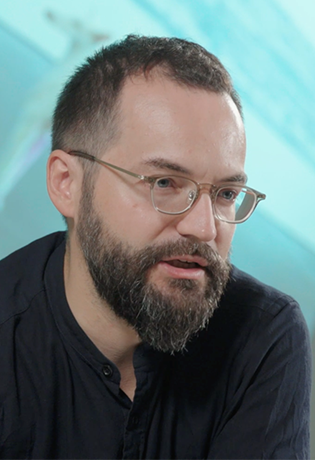
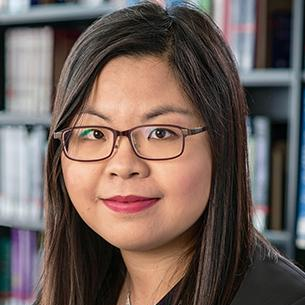
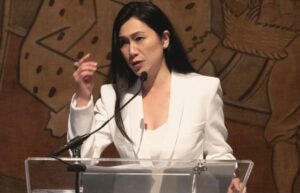
Jacob Eyferth is an Associate Professor at the University of Chicago, jointly appointed in the Department of East Asian Languages and Civilizations, the Department of History, and the College. His research focuses on the social and cultural history of twentieth-century China, particularly rural communities, gender dynamics, and the intersection of technology and everyday life. Key research themes include the impact of industrialization, collectivization, and revolution on non-elite populations, with an emphasis on rural women's labor and cultural resistance. His current project explores cotton production, clothing, and gender during China's socialist era. Eating Rice from Bamboo Roots (2009) How China Works (2006) Rural Development in Transitional China (2004) He received the 2011 Joseph Levenson Prize for his first book. Eyferth has taught courses on topics such as class inequality, everyday life under socialism, and revolutionary China, and has held postdoctoral fellowships at Oxford, Harvard, and Rutgers.
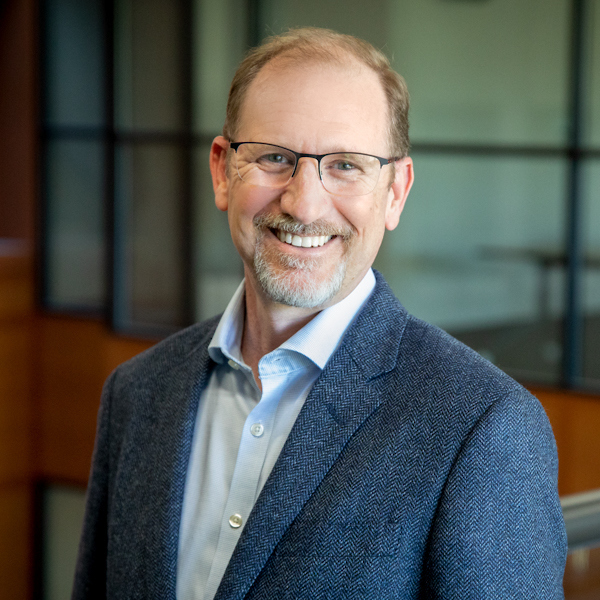
Professor David A Palmer is a distinguished academic jointly appointed by the Hong Kong Institute for the Humanities and Social Sciences and the Department of Sociology at the University of Hong Kong, where he has been teaching since 2008. His interdisciplinary work bridges anthropology, sociology, religious studies, and Sinology, establishing him as a leading scholar in Chinese religious studies and transnational religious movements. Palmer's educational background includes a PhD in Anthropology of Religion from Ecole Pratique des Hautes Etudes (Sorbonne, Paris), an MPhil in Clinical Psychology/Medical Anthropology from University of Paris-VIII, and a BA in Anthropology and East Asian Studies from McGill University. His scholarly contributions span multiple disciplines with particular emphasis on Chinese religious traditions and their global manifestations. His research interests focus on the anthropology and sociology of spirituality and religion, especially Daoism and Chinese religion; religion in modern and contemporary China; inter-Asian and transnational religious circulations; Baháʼí Faith; civil society, volunteering, philanthropy, community engagement; and cultural and religious interactions on the Belt and Road. His work examines how religious traditions navigate modernity, state power, and globalization, with particular attention to the Belt and Road Initiative's cultural dimensions. Palmer's publications reveal a consistent focus on understanding Chinese religious traditions within broader theoretical frameworks of social theory, civil society, and transnational religious networks. His articles demonstrate how Chinese religious practices and institutions both adapt to and shape contemporary social and political contexts, with particular attention to the intersections of spirituality, modernity, and state-society relations. Joseph Levenson Award of the Association for Asian Studies PROSE award of the American Publishers' Association Francis L.K. Hsu Award of the Society for East Asian Anthropology Edward Bruner Prize for the best book in Anthropology of Tourism HK Research Grants Council RGC Research Fellowship (2021-2025) HK Research Grants Council Humanities and Social Sciences Prestigious Fellowship (2019) Palmer currently leads multiple significant research projects including 'Global China, Local Cultures: Chinese Modernity and Soft Power on the Belt and Road' (RGC Research Fellowship, 2021-2025), 'Infrastructures of Faith: Religious Mobilities on the Belt and Road' (CRF, 2019-2023), 'Rituals and Manuscripts of the Lanten Yao (Laos)' (GRF, 2021-2024), and 'Religious Cosmopolitanism in China, 1895-1927' (GRF, 2021-2024). He leads the 'Asian Religious Connections' research cluster at HKIHSS, co-convenes the 'Culture, Community and Social Equity' research cluster in the HKU Faculty of Social Sciences, and serves as co-convenor of the HKU Anthropology Research Network. As President of the East Asian Society for the Scientific Study of Religion, he plays a key role in advancing scholarly understanding of religion in the region.
Sasha Welland is an Adjunct Associate Professor in the Department of Anthropology at the University of Washington, affiliated with Gender, Women & Sexuality Studies; China Studies; Comparative History of Ideas; and graduate certificate programs in Cinema & Media Studies and Public Scholarship. Her research focuses on Asian American studies, East Asian ethnography, feminism, visual culture, and sociocultural anthropology. Welland’s scholarship bridges historical and contemporary analyses. Her book Experimental Beijing (2018) explores Chinese contemporary art as a site of cultural negotiation around gender, globalization, and post-socialist transformations. Her earlier work A Thousand Miles of Dreams (2006) traces the transnational lives of two 20 th -century Chinese women activists. She contributes to Journal of Visual Culture and has published in Signs and Yishu . An engaged public scholar, Welland has curated feminist art exhibitions in Beijing, Shanghai, and Hong Kong, blending academic research with cultural practice. Her work interrogates intersections of gender, space, and global flows in East Asian contexts.
David Williamson Shaffer is the Sears Bascom Professor of Learning Analytics and Vilas Distinguished Achievement Professor of Learning Sciences at the University of Wisconsin-Madison's Department of Educational Psychology. He is also a Data Philosopher at the Wisconsin Center for Education Research. His work focuses on merging statistical and qualitative methods to model complex human collaboration. Shaffer holds an AB in History and East Asian Studies from Harvard University (1987), and MS/PhD in Media Arts and Sciences from MIT (1996/1998). Before academia, he was a teacher, curriculum developer, and game designer. His research emphasizes Quantitative Ethnography —a methodology combining big data analysis with cultural interpretation. Key contributions include Epistemic Network Analysis (ENA) and over 250 publications, including influential books like How Computer Games Help Children Learn (2006) and Quantitative Ethnography (2017). Awardees of the EU Marie Curie Fellowship (2008) and Spencer Foundation Fellowship (2003), Shaffer's work has been presented globally at conferences like Learning Analytics & Knowledge and Computer Supported Collaborative Learning. His interdisciplinary approach bridges education, data science, and humanities, addressing challenges in authentic STEM experiences, collaborative learning analytics, and culturally responsive pedagogy.
Dr. Damien Charrieras is an Associate Professor at the School of Creative Media , City University of Hong Kong, where he serves as Program Leader for the Master of Art in Creative Media and deputy program leader for the PhD in Creative Media. His work bridges cultural studies, new media theory, and the intersection of financial technologies with artistic practices through the ACIM Laboratory for Interventions in Speculative Finance . Doctoral research on digital artists' trajectories in Montreal FRQSC Postdoctoral Fellowship at McGill University Research spans game engine design , datafication of creativity , blockchain in art , and post-anthropocentric creative processes . With over HK$3.14M in grants as Principal Investigator, he explores situated digital creativity in urban contexts, critical worldbuilding pedagogy , and the mediation of technical systems in cultural production. His publications in Cities , Organized Sound , and Human Relations analyze the reconfiguration of artistic practices through software infrastructures and automation paradigms. Scientific awards include: FRQSC Postdoctoral Fellowship
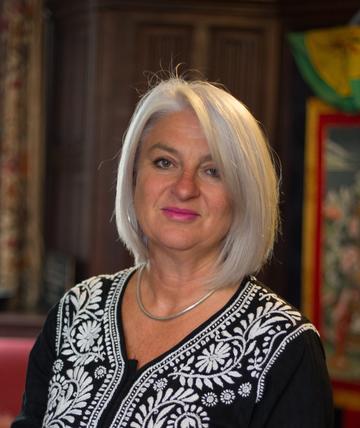
Clare Harris serves as Professor of Visual Anthropology and Head of the School of Anthropology and Museum Ethnography at the University of Oxford, concurrently holding curatorship of Asian Collections at the Pitt Rivers Museum and a Fellowship at Magdalen College. Her academic leadership spans institutional administration, museum curation, and doctoral supervision within Oxford's anthropological ecosystem. Her educational foundation includes a BA from the University of Cambridge and MA/doctorate from SOAS, University of London. Early career roles comprised Lecturer in Anthropology of Art at the University of East Anglia (1994-1998) before her Oxford appointment. Harris pioneers research at the intersection of visual anthropology, Tibetan studies, and museum decolonization. Her work critically examines Himalayan visual culture, colonial/post-colonial photography, and museum representation politics, evolving toward digital repatriation and community-centered curation. She integrates anthropological fieldwork (conducted in Tibetan diaspora communities since the 1990s) with art historical analysis and archival research. Her 13 recent publications (2004-2022) reveal a progressive trajectory from Tibetan art history toward urgent museum decolonization debates, with consistent focus on photographic practices and cross-cultural representation. Key thematic developments include the shift from historical analysis to active digital repatriation projects and increased engagement with contemporary artists. Harris's accolades include: Fellowship of the British Academy (2019) E. Gene Smith Prize for The Museum on the Roof of the World (2014) Visual Anthropology Prize for In the Image of Tibet (2000) She currently supervises five DPhil students while examining over 25 completed doctorates globally. Research funding spans British Academy personal grants, Leverhulme Trust support, and major collaborative projects including AHRC, Wenner-Gren Foundation, and EU grants—most notably the current AHRC-funded Decolonising the Museum: Digital Repatriation of the Gaidinliu Collection . At the Pitt Rivers Museum, Harris leads high-impact curatorial initiatives including the Abramović collaboration ( Gates and Portals ), Nyema Droma's Performing Tibetan Identities , and community projects like My Tibet Museum , establishing innovative frameworks for museum-public engagement.
Prof. Dr. Kianoosh Rezania is a Professor of West Asian Religious History and Director of the Käte Hamburger Kolleg Dynamics of Religious History at Ruhr University Bochum. His research focuses on Zoroastrianism, Iranian religions, and the history of religions, with a particular emphasis on ancient Iranian languages and interreligious dynamics. He holds a Ph.D. from Georg-August University Göttingen and has conducted extensive research on topics such as Zoroastrian cosmology, Sasanian-Zoroastrian interactions, and the transmission of religious texts. His work combines philological analysis with historical and cultural studies approaches. Rezania's academic career includes roles as a research associate at Göttingen University and his habilitation project on spatial concepts in early Zoroastrianism. He has directed major research initiatives like the Graduate School of Metaphor and Religion (GSMR) and the Käte Hamburger Kolleg. His publications span monographs, edited volumes, and peer-reviewed articles exploring themes such as religious economics, Middle Persian lexicography, and cross-cultural exchanges between the Safavid and Mughal empires. His current projects include the 'Zoroastrian Middle Persian: Digital Corpus and Dictionary' initiative and studies on Pahlavi literature's interreligious context. He collaborates internationally, leading interdisciplinary teams and contributing to digital humanities efforts in religious studies.
Professor Ruth Holliday holds the position of Professor of Gender and Culture at the University of Leeds since 2006, where she has also served as Director of Studies for the Centre for Interdisciplinary Gender Studies, Director of Research and Innovation, and Director of Recruitment and Admissions for the School of Sociology and Social Policy. Previously, she worked at Staffordshire University and Birmingham City University, and served as a Visiting Professor at the University of Technology Sydney (UTS). Her research expertise spans cultural sociology, body studies, material culture, medical tourism, and gender relations, with a focus on low fertility and East Asian cultural contexts. Her academic qualifications include a PhD in Sociology and a BA in Electronics and Management Science. She has contributed to over 50 articles and 7 books, including the award-winning Beautyscapes (2019), which explored global cosmetic surgery tourism and won the Foundation for the Sociology of Health and Illness Book Prize in 2020. Her work on kitsch aesthetics and visual methodologies has also been influential, particularly in understanding class, gender, and race through taste politics. Ruth’s current research projects include studying low fertility cultures’ impacts on gender identities and a project on the cultural meaning of the penis in gender construction. She teaches modules such as Theorizing Gender and Contested Bodies at the MA level, emphasizing critical approaches to gender and embodiment. Key Projects: ESRC-funded 'Building Capacity in Visual Research' and collaborative work on medical tourism in East Asia and Europe. Awards: 2020 Foundation for the Sociology of Health and Illness Book Prize. Supervision: Active in mentoring PhD students researching the body, intimacy, and low fertility in China and Korea. Her interdisciplinary approach bridges sociology, cultural studies, and visual methodologies, with a commitment to ethnographic fieldwork and global comparative analysis.
Tong Lam is an Associate Professor in the Department of Historical Studies and the Graduate Department of History at the University of Toronto, where he also directs the Dr. David Chu Program in Asia-Pacific Studies at the Asian Institute. His research sits at the intersection of media studies, environmental history, and science and technology studies (STS), focusing on the politics and aesthetics of mobilization in China’s special zones across socialist and postsocialist eras. Employing interdisciplinary methodologies, his work explores themes such as state-precipitated violence, industrial ruination, and the socio-political implications of technology. He is a visual artist whose lens-based projects interrogate military violence, surveillance, and postindustrial landscapes. His recent scholarship analyzes postsocialist urbanism, digital governance, and the temporalities of infrastructure. While the absence of explicit scientific awards or student advisement records in the provided text precludes their inclusion here, his publications and creative practice reflect a sustained engagement with critical historical inquiry and contemporary socio-technological challenges.
London School of Economics and Political Science (LSE)United Kingdom
Professor Catherine Allerton is a faculty member in the Department of Anthropology at the London School of Economics and Political Science (LSE). She specializes in the materialities and mobilities of everyday life, with a focus on place, kinship, childhood, migration, and temporalities in island Southeast Asia. Her fieldwork spans a two-placed village in Flores, Indonesia, and Kota Kinabalu, Sabah, East Malaysia. Her research emphasizes interdisciplinary ethnographic methods, particularly involving child participants to challenge adult-centric approaches. She launched the 'Childhood in the Migrant City' exhibition using child-taken photographs from her ESRC-sponsored research. Current projects include exploring discordant temporalities between migration systems and childhood development, as well as completing a book manuscript on moral economies of belonging. Key research interests include the social and political dimensions of landscapes, the anthropology of children, and the impacts of legal status on marginalized youth. She teaches an LSE course on 'Children and Youth in Contemporary Ethnography' and actively supervises PhD students focusing on childhood, migration, citizenship, and Southeast Asian studies. Her work addresses exclusionary practices tied to race, religion, and legal frameworks in Malaysia and Indonesia. Languages spoken include Bahasa Manggarai, English, Indonesian, and Malay. No part-time status is mentioned, indicating full-time faculty commitment.
Professor Mari Yoshihara is a bilingual scholar and writer affiliated with the University of Hawaii as a Core Faculty member. She serves as Editor of American Quarterly , the journal of the American Studies Association, and collaborates with international scholars. Her research focuses on U.S. cultural history, U.S.-Asian relations, Asian American studies, gender studies, and literary studies. She holds a BA from the University of Tokyo and a PhD from Brown University. Her work bridges academic and popular audiences, with notable publications including Embracing the East (2003), Musicians from a Different Shore (2007), and Dearest Lenny (2019). She also writes extensively in Japanese on topics ranging from graduate education to contemporary American culture. Her interdisciplinary approach combines historical analysis, ethnography, and personal narratives to explore cultural exchanges, identity, and music. Professor Yoshihara actively engages with classical music as an amateur pianist, participating in prestigious competitions like the Van Cliburn International Piano Competition. Her writings and fieldwork on music competitions highlight themes of civic engagement and cultural significance. Her blog and website further showcase her interests in U.S. affairs, classical music, and cross-cultural relationships.
Dr Oscar Zhou serves as a Lecturer in Media Studies and Director of Studies for Planning, Culture and Environment (PGT) at the School of Arts, University of Kent, following prior academic appointments at the University of Sussex, University of Brighton, and University of Hertfordshire. His scholarly trajectory includes a PhD in Media and Cultural Studies from the University of Sussex and a Masters in Globalisation and Communications from the University of Leicester. His educational credentials: PhD in Media and Cultural Studies, University of Sussex Masters in Globalisation and Communications, University of Leicester Undergraduate training in communication and technical science Zhou's research critically examines intersections of digital culture, gender/sexuality studies, and media technologies, with concentrated focus on LGBTQ+ communities' engagements in transnational contexts. Employing digital and algorithmic ethnography, he investigates queer digital cultures, critical health communication, and platform politics—particularly analyzing how algorithms reconfigure power dynamics around gender, sexuality, and youth wellbeing in Chinese digital ecosystems like Douyin/TikTok. Analysis of his publication record reveals consistent exploration of Chinese digital media landscapes, emphasizing queer visibility on platforms such as Douyin and Zhihu, danmei fan cultures, and gender politics in television. His work also addresses digital activism, influencer economies, and geopolitical representations in fandom, demonstrating methodological innovation through short-video platform analytics and participatory youth research. Professional recognition: Fellow of the Higher Education Academy As an active PhD supervisor, Zhou seeks candidates with qualitative and ethnographic expertise in digital culture, particularly welcoming projects on Chinese media, algorithmic governance, and queer health communication. He chairs the UK-China Media and Cultural Studies Association while contributing to the Centre for Health and Medical Humanities, currently leading collaborative research on short-video apps' societal impacts through the lens of gender, sexuality, and youth wellbeing.
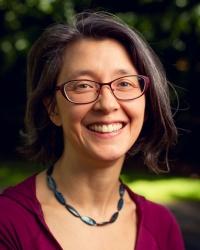
Dr. Zhiying Ma is an Assistant Professor at the University of Chicago Crown Family School of Social Work, Policy, and Practice , with faculty affiliations at the Center for East Asian Studies, Center for the Study of Gender and Sexuality, and Global Studies Program. She holds a joint PhD in Comparative Human Development and Anthropology from the University of Chicago and bachelor's degrees in Psychology and Philosophy from Peking University. Research Focus: Examines biopolitical paternalism in China's mental health governance Develops peer support systems for persons with serious mental illnesses Investigates intersections of disability rights, care ethics, and welfare systems Conducts ethnographic fieldwork in psychiatric hospitals and community teams Key Projects: Led a CBPR pilot project (2019-2021) to create peer support manuals in Guangzhou, and currently scales services in Guangzhou/Yunnan with Cyrus Tang Foundation support. Collaborated with the WHO on community mental health models. Scientific Recognition: 2021 Ford Global Fellow Published in SSM-Mental Health , Cultural Anthropology , and Disability Studies Quarterly Advocacy & Impact: Combines scholarship and activism , consulting for NGOs on disability livelihoods and gender equality. Collaborates with China's community mental health teams to improve service fidelity and client satisfaction.
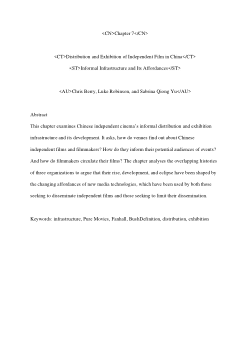
Dr. Luke Robinson is an Associate Professor in Film Studies at the University of Sussex's School of Media, Arts and Humanities, where he has been since 2014. Previously, he taught at the University of Nottingham's Department of Culture, Film and Media. He holds a BA from the University of Cambridge, an MA and PhD from SOAS (University of London), and a certificate from the Hopkins-Nanjing Center. His research focuses on Chinese independent cinema, film festivals as sites of cultural translation, and the global circulation of documentary media. Robinson is co-editor of influential volumes like Chinese Independent Cinema and Chinese Film Festivals , and his work bridges cultural studies, visual anthropology, and media policy analysis. He maintains the Chinese Independent Film Archive and has published widely on topics ranging from Taiwanese subimperialism to the cultural politics of Sundance and CNEX. His teaching spans global cinema studies, film festival curating, and East Asian media aesthetics. Education: BA, History, University of Cambridge MA, Chinese Studies, School of Oriental and African Studies (SOAS), London PhD, Film and Media Studies, SOAS Certificate in Chinese Studies, The Hopkins-Nanjing Center Research Themes: Chinese independent film ecosystems, transnational film festival circuits, documentary as public culture, and the intersection of politics with audiovisual media. Recent work examines humanitarian intervention narratives in documentaries and the evolving role of non-state cultural agents in soft power dynamics.
Dr. Agnes Hsu-Tang is an Adjunct Professor at Columbia University’s Department of East Asian Languages & Cultures, specializing in archaeology and art history with a focus on cultural heritage and transnational trade routes. She holds a PhD from the University of Pennsylvania and has served in prestigious roles including Board Chair of The New York Historical Society and Co-chair of the Metropolitan Museum of Art’s Objects Conservation Committee. Her academic contributions span UNESCO missions, international film collaborations, and co-founding institutions like the Tang Center for Early China and Silk Road Studies. Education: BA (Bryn Mawr College, Classical Languages & English Literature), MA (University of Pennsylvania, East Asian & Middle Eastern Studies), PhD (University of Pennsylvania, 2004). Research interests include early Chinese cartography, Silk Road cultural exchanges, and the intersection of art history with imperial geography. Her work bridges archaeology, art, and policy, addressing illicit cultural trafficking and heritage preservation. She has produced award-winning documentaries and serves on global arts and museum boards. Her publications explore topics such as ancient mapping techniques and Silk Road heritage. Awards recognize her academic and leadership roles in cultural preservation. She co-founded the Tang Centers and Hsu-Tang Library, advocating for interdisciplinary scholarship and global cultural dialogue.