Sam Parkinson is a Research Fellow at Aston University's College of Engineering and Physical Sciences. He holds a PhD in Polymer Chemistry from the University of Leeds (2016–2020). His research focuses on advanced polymer materials, particularly in the areas of self-assembly, nanoparticle synthesis, and continuous flow processes. Key contributions include developing methods for 2D platelet formation via accelerated seed mechanisms and enhancing scalability of crystallization-driven self-assembly using flow reactors. Research interests span polymer synthesis, nanomaterials, and their applications in fields like biomaterials and agriculture. Recent work emphasizes tunable nanoparticle behavior and chemosensor design for biofluid analysis. Parkinson collaborates internationally and actively supervises PhD students in these areas. Publications highlight innovations in polymerization-induced self-assembly, flow chemistry, and material characterization. No scientific awards are explicitly listed, but his work has been cited in high-impact journals like Nature Synthesis and Macromolecules .
Marco Caccamo is a Professor at the Technical University of Munich (TUM) , holding the Chair of Cyber-Physical Systems in Production Engineering within the Faculty of Mechanical Engineering. He is also a Principal Investigator and Professor at the Department of Computer Science, with courtesy appointments in Electrical and Computer Engineering, Coordinated Science Lab (CSL), and Aerospace Engineering at the University of Illinois at Urbana-Champaign (UIUC). His research spans Embedded Systems , Real-Time Systems , and Cyber-Physical Systems (CPS) , focusing on resource management, reinforcement learning architectures, and 6D pose recognition for robotics. University of Pisa (B.Sc., 1997) Scuola Superiore Sant'Anna (Ph.D., 2002) Research highlights include predictable resource management on heterogeneous platforms, security frameworks for AI-based controllers , and UAV testbed development . His work integrates deep learning and real-time constraints in industrial applications like avionics, farming, and automotive systems. His 15 most recent publications emphasize cache optimization , memory bandwidth regulation , and reinforcement learning for CPS , with a focus on multi-core processors and DNN inference . Awards include the IEEE Fellow (2018), Alexander von Humboldt Professorship (2018), and multiple Best Paper Awards at RTSS, RTNS, and RTAS. NSF CAREER Award (2003) IEEE Fellow (2018) Alexander von Humboldt Professorship (2018) Best Paper Awards (RTSS 2024, RTNS 2023, ECRTS 2019) He has advised numerous Ph.D. students and postdocs, with a track record in UAV development and industrial collaborations . His lab, the Real-Time and Embedded System Laboratory , focuses on real-time OS and predictable computing .
Lande Liu is a Senior Lecturer in Chemical Engineering at the University of Huddersfield's School of Applied Sciences. Previously, he held a Lectureship at the University of Manchester (2010-2014), and earlier worked as an industrial consultant and research fellow at Leeds and Sheffield Universities. His academic journey began with a MEng in Chemical Engineering and a PhD in kinetic theory of aggregation from Sheffield (2004), preceded by a visiting PhD at Twente University (2002). Education: PhD in Chemical Engineering (University of Sheffield, 2004) Visiting PhD (Twente University, 2002) MEng in Chemical Engineering (Tsinghua University, 1999) BSc in Applied Mathematics (Tsinghua University, 1996) Liu's research focuses on multi-scale particle interactions (molecular to granular) using kinetic theory of aggregation, with applications spanning nanotechnology, pharmaceutical engineering, and sustainable chemical processes. His work aligns with UN Sustainable Development Goals for environmental protection and industrial innovation. Recent publications examine particle deposition in turbulent flows, enhanced heat exchanger designs, and nanofluid stabilization techniques. He teaches core chemical engineering topics including transport phenomena, unit operations, and process design. Active in collaborative research, Liu has partnered with institutions across Europe on projects involving spectroscopy, ultrasonics, and dynamic modeling. His technical expertise includes particle size analysis, tomography, and computational simulation of complex systems.
Dr. Kanwaljeet S. Anand is a dual-appointed Professor of Pediatrics (Pediatric Critical Care) and Anesthesiology, Perioperative & Pain Medicine at Stanford University School of Medicine. As director of the Pain/Stress Neurobiology Lab and Jackson Vaughan Critical Care Research Fund, he serves as Editor-in-Chief of Pediatric Research and maintains active membership in Bio-X, MCHRI, and Wu Tsai Neurosciences Institute. Rhodes Scholar with D.Phil from University of Oxford Harvard postdoctoral fellowship and Boston Children's Hospital residency Founded Harmony Health Clinic - Arkansas' largest charitable medical-dental facility A translational researcher with 30+ years of impact, Dr. Anand established the first scientific framework for infant pain perception and developed novel pain assessment methodologies. Current research focuses on: Hair biomarker analysis for stress and social affiliation (cortisol/oxytocin) Machine learning systems for objective pain detection in non-verbal infants Biopsychosocial interventions for stress reduction in disadvantaged youth Neurotoxicity mechanisms of sedatives in developing brains Global NICU opioid usage patterns through the NeoOpioid Consortium His work has yielded over 260 publications and significant advances in: Pediatric pain management protocols Neonatal stress biomarker development Critical care neurobiology insights Community health initiatives AI-driven clinical decision support systems Scientific Recognition 9th Annual 'In Praise of Medicine' Public Address, Erasmus University (2014) Nightingale Excellence Award (2016) Honorary Doctorate from University of Örebro (2019) NIH SBIB-H82 Study Section Chair (2018) Multiple IASP and American Pain Society awards Swedish Academy of Medicine's Nils Rosén von Rosenstein Award (2009) St. Jude Endowed Chairholder (2010) As mentor to Med Scholar Anjali Gupta and advisor to numerous professional bodies, Dr. Anand maintains active clinical leadership in Pediatric Intensive Care while advancing computational approaches to pain detection through collaborations with Stanford's AI researchers.
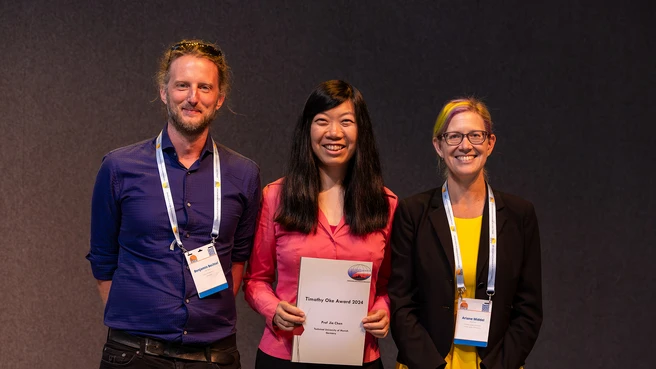
Professor Jia Chen is a Professor of Environmental Sensing and Modeling at the Technical University of Munich (TUM), holding positions in both the TUM School of Computation, Information and Technology (CIT) and the Department of Electrical and Computer Engineering, as well as the Department of Civil, Geo and Environmental Engineering. She also maintains an affiliation as an Associate at Harvard University. Her pioneering work focuses on developing novel optical sensors and atmospheric models to monitor and quantify greenhouse gas emissions in urban environments. Professor Chen's most significant contribution is the development of the differential column measurement method and the establishment of MUCCnet, the world's first permanent urban column sensor network. This groundbreaking work enables continuous, city-wide monitoring of greenhouse gases. Her research team has made notable discoveries, including quantifying methane emissions from events like the Munich Oktoberfest and identifying previously underestimated urban emission sources. Her research spans atmospheric science, environmental engineering, and climate change mitigation, with particular emphasis on: Urban greenhouse gas monitoring systems Advanced atmospheric modeling techniques Sensor network development for environmental monitoring Integration of machine learning with emission quantification Urban air quality assessment methodologies Professor Chen has received numerous prestigious awards including: Timothy Oke Award (2024) for original research in urban climatology ERC Consolidator Grant (2022) Arnold Sommerfeld-Award (2021) Germany's "Top 40 under 40" recognition by Capital Magazine (2020) Membership in the Global Young Academy (2021) She leads an extensive research group with numerous PhD students and postdoctoral researchers, and her work is supported by major funding from ERC, EU Horizon 2020, United Nations Environment Programme, NASA, ESA, German Federal Ministry of Education and Research, and German Research Foundation. Professor Chen has authored over 180 publications and 12 patents, with an h-index of 35.
René Jr Landry is a full Professor in the Department of Electrical Engineering at École de technologie supérieure (ETS), Université du Québec, specializing in Global Navigation Satellite Systems (GNSS), avionics, and wireless communication technologies. His academic journey includes a B.Ing. from Polytechnique Montréal, M.Sc. from University of Surrey (UK), and Ph.D. from SupAréo in Toulouse. He maintains active research leadership through two key laboratories: LASSENA (Laboratory of Space Technologies, Embedded Systems, Navigation and Avionics) and LACIME (Communications and Microelectronic Integration Laboratory). His research spans critical aerospace navigation domains including GNSS signal processing, inertial navigation systems, software-defined radio for avionics, radio frequency interference mitigation, and indoor positioning technologies. Landry's work addresses real-world challenges in satellite navigation robustness, precision positioning in urban/denied environments, and next-generation avionic system security. His current projects focus on blockchain-enhanced IoT security, AI-driven GNSS disruption analysis, and adaptive RF front-ends for multi-band avionics applications. Analysis of his recent publications reveals strong emphasis on resilient positioning systems through multi-constellation integration (particularly Iridium-NEXT), blockchain applications for navigation security, and explainable AI techniques for GNSS signal quality assessment. His work increasingly bridges traditional navigation engineering with cutting-edge security and machine learning paradigms. 2014 Prix d'excellence du c.a. pour les services à la collectivité Landry has supervised over 100 graduate students across doctoral, master's, and research projects since 2005, with current supervision extending through Summer 2025. His research funding supports multiple industry partnerships focused on avionics certification, software-defined radio implementations, and next-generation navigation systems. The LASSENA laboratory under his leadership develops certified avionic products from open-source SDR platforms and advances multi-sensor fusion techniques for challenging navigation environments. His research infrastructure includes specialized facilities for GNSS signal simulation, avionics hardware testing, and multi-sensor integration. Current work emphasizes flight-tested validation of RF front-end technologies, blockchain-secured navigation data, and real-time interference mitigation systems for aviation applications.
Abhijit Sarkar is a Professor in the Department of Civil and Environmental Engineering at Carleton University, Ottawa. His work centers on computational dynamics and probabilistic modeling, with office MC 3076 in the Minto Centre for Advanced Studies in Engineering and contact details including phone (613) 520-2600 x6320 and email abhijit_sarkar@carleton.ca . Education: D.Phil. from University of Oxford M.Sc. from Indian Institute of Science (IISc) B.E. from Calcutta University Professional Engineer (P.Eng.) designation His research drives innovation in uncertainty quantification for complex engineering systems. Core interests include dynamics of nonlinear structures, probabilistic mechanics for stochastic finite element methods, and Bayesian inference frameworks for parameter estimation. He pioneers scalable high-performance computing solvers for large-scale systems and sparse learning algorithms to address overfitting in statistical modeling. Recent publications (2022-2024) reveal three dominant trends: (1) Bayesian model calibration for stochastic compartmental systems applied to epidemiology and aerospace, (2) domain decomposition techniques for scalable uncertainty quantification in stochastic PDEs, and (3) sparse learning methods for nonlinear aerodynamic encoding. Key applications span wind turbine vibration analysis, flutter margin prediction, MEMS resonator optimization, and geospatial pandemic modeling. Scientific awards: No awards, fellowships, or medals listed in the source material Graduate supervision includes 6 current students (Ajay Kumar, John Clarabut, Nastaran Dabiran, Sakhi Mittal, Michael Pantano, Brandon Robinson) and 18 graduated students across 17 years (2006-2023). His research leverages high-performance computing for projects in structural dynamics, aeroelasticity, and computational epidemiology, frequently co-supervised with Dominique Poirel and Chris Pettit. Notable grants focus on wind tunnel validation for nonlinear systems and pandemic spread modeling. Based in the Minto Centre for Advanced Studies in Engineering, his computational mechanics group develops algorithms for stochastic dynamics using Carleton University's high-performance computing infrastructure. Collaborations span aerospace engineering (flutter analysis), civil infrastructure (seismic wave propagation), and public health (Covid-19 modeling).
Prof. Casper Hoogenraad is a full professor in Molecular Neuroscience at the Department of Cell Biology, Faculty of Science, Utrecht University. His research focuses on understanding how intracellular protein trafficking underlies neuronal development and function, with particular emphasis on the microtubule cytoskeleton, synaptic cargo trafficking, and synaptic plasticity. He leads an active research group within Utrecht University's Cell Biology department and collaborates extensively with other neuroscience research groups. Education: PhD, Erasmus University Rotterdam (1996-2001) Postdoc, Massachusetts Institute of Technology (2002-2005) Hoogenraad's research spans three main themes: cytoskeleton dynamics during neurodevelopment and synaptic plasticity, motor proteins and adaptors as regulators of synaptic transport, and psychiatric and neurologic disease disorders linked to intracellular transport. His work combines genetics, biochemistry, molecular, and cellular biology methods in in vitro (neuron cultures), ex vivo (brain slices), and in vivo (mice) systems, along with advanced microscopy techniques including immunofluorescent confocal microscopy, high-resolution live cell imaging, and photo-activated localization microscopy (PALM). Analysis of Hoogenraad's recent publications reveals a strong focus on microtubule organization, neuronal polarity, and the molecular mechanisms underlying synaptic function and dysfunction. His work frequently explores how disruptions in intracellular transport contribute to neurological disorders including Alzheimer's disease, schizophrenia, and autism spectrum disorders, with particular attention to the relationship between cytoskeletal organization and cargo transport in neuronal compartments. Scientific Awards and Memberships: ZonMW-VIDI (2004) European Young Investigators (EURYI) award (2005) NWO-ALW VICI (2011) ERC Consolidator grants (2013) FENS-Kavli Network of Excellence (2014) European Molecular Biology Organization (EMBO) (2015) Young Academy of Europe (YAE) (2015) IBRO Kemali Prize (2016) Hoogenraad leads a research group studying neuronal development and function, with a particular focus on how intracellular transport mechanisms contribute to both normal brain function and neurological disorders. His laboratory employs a multidisciplinary approach combining molecular, cellular, and systems neuroscience techniques to investigate the molecular basis of neuronal polarity, synaptic plasticity, and the pathogenesis of neurological disorders. He has secured significant research funding through prestigious grants including ERC Consolidator grants. The Hoogenraad lab operates within the Cell Biology department at Utrecht University, collaborating with other research groups focusing on cellular dynamics, biophysics, and neurobiology. The lab utilizes advanced microscopy techniques including immunofluorescent confocal microscopy, high-resolution live cell imaging (spinning disc microscopy and total internal reflection fluorescence microscopy), and quantitative analysis using advanced high-resolution microscopy (photo-activated localization microscopy). Current lab technicians include Phebe Wulf and Bart de Haan.
Marilena Vendittelli is a Professor at Sapienza University of Rome, affiliated with the Robotics group. Her research spans control systems, biomedical robotics, motion planning, and autonomous systems. Research Areas: Control systems for robotics and nonholonomic systems Biomedical applications (hyperthermia therapy, needle insertion) UAV navigation and obstacle avoidance Haptics and human-robot interaction Adaptive estimation algorithms Recent Publications focus on adaptive control of bio-heat equations, safe UAV motion planning, soft robotics actuation, and haptic feedback in medical procedures.
John Diffley is a Principal Group Leader and Associate Research Director at The Francis Crick Institute in London, UK, where he leads research on DNA replication mechanisms. His work focuses on understanding how cells precisely duplicate their DNA during cell division and how errors in this process contribute to cancer development. Diffley obtained his PhD from New York University in 1985 and completed postdoctoral training with Bruce Stillman at Cold Spring Harbor Laboratory until 1990. He established his research group at the Clare Hall Laboratories (originally Imperial Cancer Research Fund, then Cancer Research UK) before moving to The Francis Crick Institute in 2015. His research spans DNA replication initiation, cell cycle control, replication fork checkpoints, and epigenetic inheritance. Diffley's lab has pioneered methods to reconstitute chromatin replication using purified proteins, providing unprecedented insights into chromosome biology. His team combines genetics, cell biology, and biochemistry to study the molecular 'machines' that copy DNA in yeast and human cells. Analysis of Diffley's recent publications reveals a strong focus on structural mechanisms of DNA replication, particularly using cryo-EM to visualize replication machinery. His work examines helicase loading and activation, replication fork stability under stress, and the connection between replication errors and cancer development. The research spans model organisms to human cells, with increasing emphasis on structural approaches in recent years. FRS (Fellow of the Royal Society) FMedSci (Fellow of the Academy of Medical Sciences) Diffley actively mentors a diverse team of postdoctoral researchers and PhD students, investigating various aspects of DNA replication. His lab has received substantial funding to support their work on replication mechanisms, with projects spanning basic biochemical reconstitution to studies of replication errors in cancer contexts. The lab maintains multiple technical platforms including structural biology, biochemistry, and cell biology approaches. His research group operates within The Francis Crick Institute's collaborative environment, utilizing shared facilities for structural biology, microscopy, and genomics to advance understanding of DNA replication mechanisms and their implications for genome stability and disease.
Yan Gu is an Associate Professor of Mechanical Engineering at Purdue University, located in West Lafayette, Indiana. He is affiliated with the School of Mechanical Engineering within the College of Engineering. His research focuses on legged locomotion, humanoid and quadrupedal robots, wearable robotics, hybrid dynamical systems, control systems, state estimation, and dynamics. He leads the TRACE Lab and has been recognized with prestigious awards including the NSF CAREER Award (2021) and multiple teaching accolades. Gu holds a Ph.D. from Purdue University (2017) and a B.S. from Zhejiang University, China (2011). His work emphasizes robust control strategies for legged robots in dynamic environments, including adaptive ankle torque control, time-varying foot-placement algorithms, and state estimation techniques for non-inertial surfaces. His recent publications explore multimodal datasets in animal-robot interaction and the stabilization of quadrupedal locomotion on accelerating platforms. His research has been supported through grants such as the NSF CAREER Award, and his contributions span both theoretical advancements in hybrid control systems and practical applications in wearable robotics and exoskeleton design. Gu’s TRACE Lab serves as a hub for innovative robotics research, addressing challenges in robot-environment interaction and dynamic stability.
Distinguished Professor Dayong Jin is a leading academic in nanotechnology and biomedical engineering at the University of Technology Sydney (UTS). He holds roles including Director of the Institute for Biomedical Materials and Devices (IBMD), ARC Laureate Fellow, and Chair Professor at Southern University of Science and Technology (China). His research focuses on photonics, luminescent materials, and their applications in healthcare, including cancer detection, rapid diagnostics, and super-resolution microscopy. Key innovations include 'Nano Torch' technology for disease detection and 'Super Dots' nanocrystals for imaging and anti-counterfeiting. Education: PhD from Macquarie University (2007). Leadership: Established UTS's IBMD and multiple research hubs, including the ARC IDEAL Research Hub and Australia-China Joint Research Centre. Research Interests: Transforming nanophotonics into diagnostic tools, rapid antigen tests (e.g., for COVID-19), and biomedical devices. His work bridges physics, engineering, and biology to address global health challenges. Awards: Australian Museum Eureka Prize (2015), Prime Minister's Prize for Science (2017), ARC Laureate Fellowship (2021), and Fellow of the Australian Academy of Technology and Engineering. Grants: Overseeing funded projects on quantum biotechnology, deep-tissue imaging, and nanoscale thermometry. Active in interdisciplinary collaborations, including with Chinese institutions. Labs/Teams: Leads IBMD, the ARC IDEAL Hub, and the UTS-SUSTech Joint Research Centre, fostering innovation in wearable biomaterials and point-of-care technologies.
David Lindlbauer is an Assistant Professor at Carnegie Mellon University's Human-Computer Interaction Institute (HCII), where he leads the Augmented Perception Lab and co-directs the CMU Extended Reality Technology Center. His research focuses on advancing Mixed Reality (MR) and Extended Reality (XR) interfaces through computational interaction methods that optimize spatial, temporal, and multimodal feedback.
Nina Balcan is the Cadence Design Systems Professor of Computer Science at Carnegie Mellon University's School of Computer Science, with affiliations in both the Machine Learning Department (MLD) and Computer Science Department (CSD). She maintains her office in Gates Hillman Center (GHC) 8205 and is a prominent figure in theoretical machine learning and algorithmic game theory. Her research spans multiple critical areas in computer science, with a strong focus on the theoretical foundations of machine learning, algorithm design and analysis, and computational approaches to game theory and economics. Balcan has made significant contributions to developing principled algorithms for deep learning, learning with limited supervision, representation learning, and life-long learning. Her work uniquely bridges theoretical computer science with practical applications, particularly in the analysis of complex objects and processes, including algorithmic learning and multi-agent systems. Analysis of her recent publications reveals a strong trend toward data-driven algorithm design, with particular emphasis on learning to optimize combinatorial algorithms, revenue-maximizing mechanisms, and robust learning frameworks. Her work consistently demonstrates how theoretical guarantees can inform practical algorithm development across diverse domains from optimization to economics. Major Awards and Honors: ACM Fellow AAAI Fellow Simons Investigator 2019 ACM Grace Murray Hopper Award (awarded to the outstanding young computer professional of the year) Winner of Outstanding Student Paper Award at UAI 2024 Winner of Exemplary Artificial Intelligence Track Paper Award at ACM EC 2019 Runner Up Best Paper Award at COLT 2012 Professor Balcan has served as Program Committee Co-chair for major conferences including NeurIPS 2020, ICML 2016, and COLT 2014, demonstrating her leadership in the machine learning community. Her teaching portfolio at CMU includes foundational courses such as 10-701 Machine Learning, 10-315 Machine Learning, and 10-715 Advanced Introduction to Machine Learning, where she has mentored numerous students in both theoretical and applied aspects of the field. Her research group focuses on developing theoretically sound yet practically applicable machine learning algorithms, with particular attention to algorithm configuration, data-driven optimization, and learning in strategic environments. Current projects involve learning to improve combinatorial algorithms, designing revenue-maximizing mechanisms, and developing robust learning frameworks that can operate effectively in challenging environments.
Xiaohu Guo is a Professor of Computer Science at the University of Texas at Dallas specializing in computer graphics, computer vision, and geometric modeling. His research develops algorithms for 3D/4D reconstruction, virtual reality, medical imaging, and physics-based simulations. Professor Guo has received significant recognition including a Best Paper Award at SIGGRAPH (2023) and an NSF CAREER Award (2012). His current research focuses on dynamic human capture, deformable models, and medical image computation. Education: PhD, Stony Brook University MS, Stony Brook University BS, University of Science and Technology of China Research Funding: Recently secured a $500,000 NSF grant for developing open-source 4D reconstruction frameworks for real-time dynamic human capture (2021). Editorial Roles: Serves on editorial boards of Graphical Models , Computer Animation and Virtual Worlds , and IEEE Transactions on Visualization and Computer Graphics .