Dr. Ben Swift is a Senior Lecturer at the School of Cybernetics, ANU, specializing in AI, computational art, and cybernetics. He leads the Cybernetic Studio, an interdisciplinary collective exploring cybernetic systems through hardware/software/people collaborations. As a livecoding artist, he performs globally and co-founded the ANU Laptop Ensemble. His research spans generative AI, open-source tools like Extempore, and UX design. Education: PhD in Computer Science (ANU) Projects: Australia's Digital Economy (2022), The Augmented Web (2019) Research focuses on AI creativity, biofeedback interfaces, and computational music. His work bridges technical innovation with artistic expression, evident in projects like TSPNet and adversarial camera systems. Key contributions include Extempore’s development and studies in live coding disruption. Awards unspecified but recognized internationally for interdisciplinary impact.
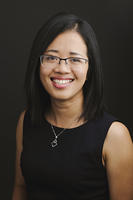
Kaye Morgan is an Associate Professor in the School of Physics and Astronomy at Monash University, specializing in X-ray imaging technologies with applications in medical and respiratory research. She holds an Australian Research Council Future Fellowship and has held prestigious positions including a Hans Fischer Fellowship at Technische Universität München. Her research focuses on advancing X-ray optics methodologies, particularly phase contrast X-ray imaging (PCXI) and dark-field imaging, to enhance resolution, speed, and sensitivity. These techniques are applied to study airway health in cystic fibrosis and other respiratory diseases, using synchrotron facilities like SPring-8 and the Munich Compact Light Source. She has pioneered single-grid imaging and propagation-based dark-field approaches, enabling real-time visualization of lung dynamics and treatment efficacy. Morgan leads multiple high-impact projects funded by ARC and international collaborations, with over 85 publications in journals like Optics Express and Scientific Reports. Her work contributes to UN Sustainable Development Goals related to health and innovation. Key achievements include developing lab-based X-ray sources for clinical translation and quantifying lung microstructure through advanced imaging algorithms.
Mitra Taheri is a Professor in the Department of Materials Science and Engineering at Johns Hopkins University, serving as Director of the Materials Characterization and Processing (MCP) facility and a member of the Hopkins Extreme Materials Institute. She holds affiliations with the Pacific Northwest National Laboratory and the Ralph O’Connor Sustainable Energy Institute. Her research focuses on electron microscopy, particularly in-situ and operando techniques, combined with artificial intelligence to study materials under extreme conditions (e.g., high temperatures, radiation, and oxidation). She aims to accelerate materials discovery by integrating AI with microscopy for real-time analysis. Dr. Taheri earned her BS, MSE, and PhD in Materials Science and Engineering from Carnegie Mellon University. Her work spans corrosion-resistant alloys, additive manufacturing, quantum materials, and biomaterials. Research sponsors include PNNL, JHU, NSF, ARPA-E, and ONR. She leads the Dynamic Characterization Group (DCG), which develops autonomous platforms for materials analysis and explores applications in energy, aerospace, and medical systems. Key research areas include: Design of corrosion-resistant multi-principal element alloys AI-driven microscopy for real-time material behavior insights Additive manufacturing of soft magnetic composites for electric vehicles Biomedical hydrogels for tissue engineering Her team develops novel materials and tools to probe structural, functional, and biological systems across scales, with an emphasis on sustainability and extreme environment applications.
Claire Acevedo is an Assistant Professor in the Department of Mechanical and Aerospace Engineering at the University of California San Diego (UCSD), affiliated with the Jacobs School of Engineering. Her lab, the Fracture and Fatigue of Skeletal Tissues Laboratory (F² Lab), focuses on understanding mechanisms of deformation, fracture, and biological responses in skeletal tissues and biomaterials across molecular to macro scales. She holds a Ph.D. from the Swiss Federal Institute of Technology Lausanne (EPFL) and completed postdoctoral research at UC San Francisco and UC Berkeley/Lawrence Berkeley National Laboratory. Dr. Acevedo’s research is funded by the National Science Foundation (NSF), National Institutes of Health (NIH), and the Advanced Light Source. Her work bridges biomechanics, materials science, and high-energy X-ray physics to address bone fragility in aging and diabetes. Key projects include investigating collagen cross-linking effects on bone mechanics and developing novel imaging techniques like deep learning-enhanced synchrotron micro-CT. Education: Ph.D., Swiss Federal Institute of Technology Lausanne (EPFL) Postdoctoral Research: UC San Francisco & UC Berkeley/Lawrence Berkeley National Lab Previous Faculty Position: University of Utah (Mechanical Engineering) Recent contributions include the NSF CAREER Award for studying fracture mechanisms in fragile bones and an NIH R21 grant to explore collagen-level diabetes impacts. Her lab collaborates with the University of Utah Tanner Dance Program to develop K-12 educational initiatives linking dance with biomechanics. Publications span topics like synchrotron imaging innovations, diabetes-induced bone fragility, and collagen nanomechanics. Students in her lab have contributed to advancements in fatigue testing, cross-link analysis, and imaging algorithms. Awards: NSF CAREER Award (2024) NIH R21 Grant (2023) Alice L. Jee Award (2022) Nikon Small World Image of Distinction (2024) The F² Lab hosts a dynamic team with ongoing projects on glycemic effects, synchrotron techniques, and biomaterial design. Future work emphasizes translating findings into clinical fracture prevention strategies and educational outreach.
Nan Marie Jokerst is the J. A. Jones Distinguished Professor of Electrical and Computer Engineering at Duke University's Pratt School of Engineering and Executive Director of the Duke Shared Materials Instrumentation Facility. She previously served as Chair of the Duke Academic Council (2014-2015) and Associate Dean for six years. B.S. in Physics, Creighton University (1982) M.S.E.E., University of Southern California (1984) Ph.D. in Electrical Engineering, University of Southern California (1989) Her research spans chip-scale photonic sensing systems , III-V thin-film lasers on silicon , metamaterials , and heterogeneous integration . She develops optical systems for medical diagnostics, environmental monitoring, and security applications through the Jokerst Laboratory, which combines optical system design, optoelectronic device development, and semiconductor fabrication expertise. Her recent publications show strong focus on terahertz strain mapping using metamaterials, multi-pixel tissue characterization for cancer margin detection, and microfluidic sensing platforms with embedded photodetectors. Key trends include advancing non-destructive structural monitoring and miniaturized biomedical diagnostics through novel photonic integration techniques. IEEE Fellow (2003) Optica Fellow (2001) NSF Presidential Young Investigator Award IEEE Third Millennium Medal IEEE/HP Harriet B. Rigas Medal USC Viterbi School Alumni Award She has advised numerous graduate students in photonic device research and secured major grants including the NSF National Nanotechnology Coordinated Infrastructure ($6M, 2015-2021) and NNCI: North Carolina Research Triangle Nanotechnology Network ($20M, 2020-2026). Her leadership extends to co-founding Triangle Women in STEM and serving on the National Academies Board on Global Science and Technology. The Duke Shared Materials Instrumentation Facility under her direction provides critical cleanroom and characterization resources for interdisciplinary research.
Prof. Markus Axer is a Professor and Deputy Head of the Structural and Functional Organisation of the Brain (INM-1) at the Institute of Neuroscience and Medicine (INM) within Forschungszentrum Jülich. His research focuses on connectomics, neuroimaging technologies (e.g., 3D-Polarized Light Imaging), and high-performance computing applications in brain architecture analysis. He leads the 'Fiber Architecture' working group, advancing microscopy techniques like scattered light imaging and MRI-histology correlation for studying brain microstructure. His work bridges experimental neuroscience with computational methods, aiming to decode brain organization at meso- and macroscales. Key achievements include developing the HippoMaps atlas of the human hippocampus and improving fiber orientation mapping in brain tissue. Awards include Fellowship in the Royal Netherlands Academy of Arts and Sciences (2024). Research emphasizes cross-modal data integration, with applications in Alzheimer’s disease biomarker validation and primate brain evolution studies. He collaborates with academic institutions like the University of Wuppertal and contributes to international initiatives like the BigBrain Analytics Learning Laboratory.
Dr. Giang Tran is an Associate Professor in the Department of Applied Mathematics at the University of Waterloo, where she leads research in sparse modeling and computational mathematics. She holds a PhD from UCLA and previously served as a Bing Instructor at the University of Texas at Austin. Her research explores sparse optimization techniques with applications in medical imaging, dynamical systems, and data science. Recent publications focus on developing novel algorithms for sparse random feature expansions and dynamical system identification. She mentors numerous graduate and undergraduate researchers through projects on neural networks, transformers, and epidemic forecasting. Awards include the NSERC Discovery Grant and SIAM Student Paper Prize. Dr. Tran teaches advanced courses in numerical methods and functional analysis, contributing to curriculum development in computational mathematics.
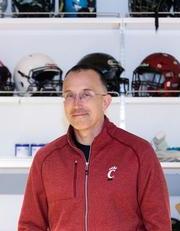
Eric Nauman is the Dane A. and Mary Louise Miller Professor of Biomedical Engineering at the University of Cincinnati and director of the Human Injury Research and Regenerative Technologies (H.I.R.R.T.) Lab. Previously, he held academic roles at Purdue University and Tulane University. He earned his Ph.D., M.S., and B.S. in Mechanical Engineering from UC Berkeley and the University of Delaware. Research Focus: The H.I.R.R.T. Lab investigates mechanisms of traumatic brain injury, spinal cord injury, musculoskeletal damage, atherosclerosis, and cancer metastasis. It develops protective and reconstructive treatments, including FDA-approved engineered tissue products for tendon repair. Collaborative projects emphasize translational research in injury prevention and treatment delivery. Grants & Awards: Lead Principal Investigator (PI) on federal grants totaling $4.7M for projects like AFRL teeming agreements and DoD biomathematical models. Recipient of prestigious awards including the Purdue Book of Great Teachers, Innovators Hall of Fame, and multiple teaching excellence recognitions. Key Contributions: Co-authored landmark TBI studies, holds 14 U.S. patents, and pioneered protective equipment innovations. His work bridges biomechanics, materials science, and clinical applications.
Ellen Arruda is the Tim Manganello/BorgWarner Department Chair and Maria Comninou Collegiate Professor of Mechanical Engineering at the University of Michigan. She holds joint appointments in Biomedical Engineering and Macromolecular Science and Engineering. Her research bridges biomechanics and materials science, focusing on soft tissue mechanics and polymer behavior. PhD (Mechanical Engineering, MIT, 1992) MS (Engineering Mechanics, Penn State, 1988) BS (Engineering Science, Penn State, 1985) Her research spans biomechanics , soft tissue engineering , and polymer mechanics , with applications to knee ligament replacement , impact-resistant materials , and brain-protective helmets . She utilizes full-field displacement mapping and computational modeling to analyze tissue and polymer responses under extreme conditions. Recent publications emphasize knee ligament characterization , nanocomposite design , and impact mitigation . Her work has attracted major funding from DARPA , NSF , and NIH , among others. National Academy of Engineering (2017) A.C. Eringen Medal (2021) Nadai Medal (2019) Distinguished Faculty Achievement Award (2014) As Principal Investigator of the Soft Tissue and Polymer Mechanics Lab , she leads a team exploring tissue engineering strategies and advanced material solutions. Her lab has developed 3D scaffold-free constructs for bone-ligament interfaces and blast-resistant composites .
Dr. Olga Barrera is a Reader in Mechanical Engineering at Oxford Brookes University, School of Engineering, Computing and Mathematics. She serves as a year tutor for undergraduate engineering programs and has previously held a Research Fellow position at the Department of Engineering Science, University of Oxford (2008–2017), and a consultancy role at China Medical University Hospital, Taiwan. Her academic work spans teaching, supervision, and leading a research lab focused on image-based multi-physics modeling of multi-phase materials. Reader in Mechanical Engineering, Oxford Brookes University (2018–present) Research Fellow, Department of Engineering Science, University of Oxford (2008–2017) Consultant, Department of Medical Research, China Medical University Hospital, Taiwan Her research interests lie at the intersection of computational mechanics, biomechanics, and materials science, with a focus on soft load-bearing tissues such as the knee meniscus. She integrates advanced imaging (micro-CT), experimental testing, and fractional calculus-based modeling to study tissue behavior and bio-inspired materials. Her work also extends to hydrogen embrittlement in metals and innovative finite element methods. Her recent publications (2023–2025) reveal a strong trend in image-driven modeling of biological tissues, fractional viscoelasticity, and bioinspired engineering solutions. Key themes include the mechanical behavior of meniscal tissue, fluid-structure interaction, anomalous transport in porous media, and deep learning applications in tissue mimicry. These works are published in high-impact journals such as Philosophical Transactions of the Royal Society A , Materials & Design , and Acta Biomaterialia . Scientific awards and grants highlight her international recognition and research leadership: Marie Skłodowska-Curie Individual Fellowship (€190K, 2018–2020) EPSRC HemS grant (Co-I, £340K, 2014–2017) Research Excellence Award, Oxford Brookes (2021–2022, £20K) Visiting Professor Scholarship, France (2023, €4K) FNR Luxembourg Crucible Grant (€8K, 2021–2022) She has supervised numerous postgraduate students including PhD and MSc researchers, and has advised over 30 undergraduate final-year projects across Oxford and Oxford Brookes. She has led or co-led significant research grants from EPSRC, FNR, Rolls-Royce, and the Oxford Orthopaedic Engineering Centre. Her lab, the Oxford image-based multi-physics modelling of multi-phase materials, collaborates with institutions in Italy, Luxembourg, and France. She is an active member of the Materials Processing and Modelling (MPM) research group.
Christine Tardif is an Assistant Professor in the Department of Biomedical Engineering and the Department of Neurology and Neurosurgery at McGill University. As head of the McConnell Brain Imaging Centre lab at the Montreal Neurological Institute, she develops advanced MRI techniques for in-vivo brain imaging, focusing on quantitative mapping of myelin and cortical microstructure. Her work spans methodological innovation (e.g., multi-modal biophysical modeling) and translational applications across preclinical (7 Tesla) and clinical (3 and 7 Tesla) systems. Undergraduate: B.Eng. in Computer Engineering, McGill University (2004) Master's: M.Sc. in Bioengineering, Imperial College London (2006) PhD: Biomedical Engineering, McGill University (2011) Her research explores myelin dynamics in health and disease, emphasizing its role in neural conduction, brain plasticity, and cognitive functions. The lab investigates dysmyelination in psychiatric disorders (e.g., bipolar disorder) and neurodegenerative conditions (e.g., multiple sclerosis) using relaxometry , magnetization transfer , and diffusion-weighted imaging . Recent methodological work includes 3D MERMAID sequences for motion-insensitive diffusion imaging and optimization of magnetization transfer saturation maps. Current projects integrate ultra-high field MRI with histological validation in preclinical models (e.g., marmoset brain sections), aiming to bridge microstructural metrics with macro-scale brain function. Applications span Alzheimer's disease risk assessment via white matter alterations, synaptic density mapping in psychosis, and cortical laminar differentiation studies.
Ioanna Kakoulli is a Professor in the Department of Materials Science and Engineering at the University of California, Los Angeles (UCLA), affiliated with the Henry Samueli School of Engineering and Applied Science. She leads the Molecular & Nano Archaeology Lab, focusing on interdisciplinary research at the intersection of materials science and cultural heritage preservation. Her work spans archaeological materials characterization, forensic imaging techniques, and conservation science. Education: D.Phil. (PhD) in Archaeological Science from the University of Oxford (1999). Key research interests include ancient pigment technologies, materials diagenesis, and the analysis of Hellenistic/Roman painting. She pioneered studies on Egyptian blue pigments and cross-cultural material exchanges via trade routes like the Silk Road. Awards include membership on the CAARI Board of Trustees, Visiting Fellowship at ICCROM, and multiple research awards from the A.G. Leventis Foundation and Overseas Research Scheme. Her lab collaborates with international institutions (e.g., Homeland Security Investigations) on looted antiquities and integrates cutting-edge imaging technologies (multispectral/hyperspectral) for non-destructive analysis. Guides students like Xuanyi Wu (SCSMM award winner), Aileen Shin, Lindsey Perry, and others in the Archaeomaterials Group. Research highlights include revealing asbestos use in Byzantine murals and identifying arsenic exposure in pre-Columbian Chilean mummies. Active in developing sustainable preservation strategies for rock-cut tombs and globigerina limestone monuments.
Professor Lin Han is affiliated with the School of Biomedical Engineering, Science and Health Systems at Drexel University . His research focuses on nanoscale structure-property relationships of biomaterials , with applications in disease diagnostics, tissue regeneration, and bio-inspired material design . He leads the Nanobiomechanics Laboratory , integrating nanotechnology, biomechanics, and gene therapy. Education: PhD in Bio- and Polymeric Materials, Massachusetts Institute of Technology (2007) BE in Materials Engineering, Tsinghua University (2002) His research interests include: Nanoscale biomechanics of extracellular matrix (ECM) biomolecules like aggrecan, decorin, and type V collagen . Understanding genetic origins of joint tissue diseases and mechanotransduction in cartilage. Developing stimulus-responsive biomaterials and ECM-inspired tissue engineering strategies. The scientific awards he has received include: 2024 AIMBE College of Fellows 2024 NIH Grant for cartilage PCM mechanotransduction 2022 Drexel Faculty Award 2021 Kappa Delta Young Investigator Award 2016 Commonwealth CURE Program Grant His research on articles demonstrates trends in ECM nanomechanics , collagen structure-function analysis , and osteoarthritis intervention using advanced imaging and molecular engineering. His work bridges biomaterial design and clinical applications for cartilage repair. He has secured significant grants and collaborates on interdisciplinary projects involving MIT, Drexel, and industry partners . His lab develops novel hydrogels and nanoscale testing methods to study tissue degeneration and regeneration.
Professor Sungheon Gene Kim holds a faculty position at the Weill Cornell Medicine Graduate School of Medical Sciences within the Department of Radiology . His research focuses on quantitative MRI methodology for oncological applications , particularly in breast cancer and head and neck cancer . Kim's lab develops advanced dynamic contrast-enhanced MRI (DCE-MRI) and diffusion MRI (dMRI) techniques to assess tumor microenvironment and treatment response . Key research areas include: Tumor vascular properties via 3D UTE-GRASP MRI Cellular microstructural analysis through POMACE framework Adipose-tissue cancer interaction via MR spectroscopic imaging His lab has received continuous funding from the National Cancer Institute (R01CA219964, UG3/UH3CA228699, R01CA160620). Recent publications demonstrate technical advancements in ultrafast MRI reconstruction , deep learning-enhanced perfusion analysis , and multi-parametric tumor characterization . Collaborations with the National Institutes of Health Quantitative Imaging Network have produced novel cellular water exchange rate measurements that correlate with patient survival outcomes .
Luigi Bruno is an Associate Professor of Machine Design at the Department of Mechanical, Energy and Management Engineering (DIMEG), University of Calabria. He has held this position since 2014, following 12 years as an Assistant Professor at the same institution and Visiting Professorships at IIT Gandhinagar (2012), University of Alabama at Birmingham (2013-2017), and Free University of Bozen-Bolzano (2021). 1999 : Master's in Mechanical Engineering, University of Calabria (110/110 cum laude) 2003 : PhD in Mechanical Engineering, University of Pisa His research interests span: Experimental Mechanics : Pioneering speckle interferometry for micro-displacement measurement and residual stress analysis. Materials Science : Elastic characterization of anisotropic materials, biomedical applications of soft substrates, and 3D-printed composites. Biomedical Engineering : Mechanical behavior of biological tissues, ocular biomechanics, and dental implant material testing. Recent research trends focus on: Integrating artificial muscles into rehabilitation devices Advancing full-field optical measurement via microCT/DVC Optimizing 3D printed polymer adhesion for industrial components Exploring neuronal biomechanics on soft surfaces Scientific contributions include: CS2007A00010 patent for dual-focus speckle interferometers Deputy Editor of Optics and Lasers in Engineering (2019-present) Guest Editor for special issues on optical methods in experimental mechanics and nanobiotechnology Academic leadership extends to coordinating Mechanical Engineering committees (2021-present), serving on editorial boards, and organizing international conferences like AIAS National Conference (2018). He has secured multiple MIUR research grants and industry collaborations with Alfagomma, 3DNA, and Ferrovie della Calabria. His laboratory, Mechanics of Materials and Structures , supports both research and teaching activities with advanced optical measurement systems and computational tools for mechanical design.