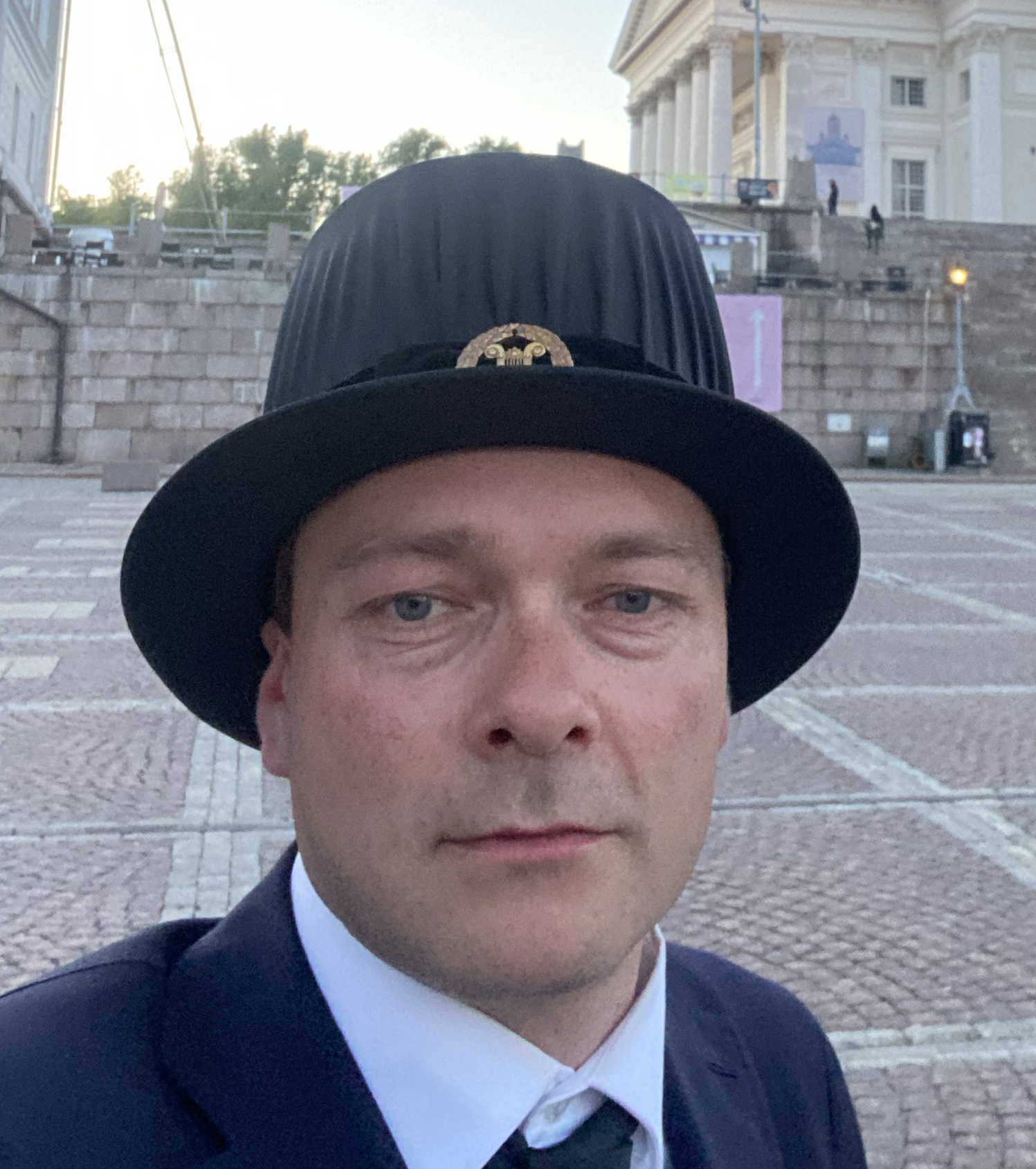
Dar Roberts is a Professor in the Department of Geography at the University of California, Santa Barbara, where he directs the Visualization & Image Processing for Environmental Research (VIPER) Lab. His research focuses on advanced remote sensing applications including: Imaging spectrometry for ecosystem analysis Wildfire fuel mapping and fire emissions modeling Drought impact assessment on vegetation Land use/land cover change detection Integration of remote sensing with climate modeling Roberts leads the Southern California Wildfire Hazard Center and has pioneered techniques for mapping wildfire fuels using remote sensing technologies. His work combines field measurements with satellite, airborne, and drone-based sensors to monitor environmental changes.
Barbara Linke is a Professor in the Department of Mechanical and Aerospace Engineering at the University of California Davis, affiliated with the College of Engineering. She leads the Laboratory for Manufacturing and Sustainable Technologies Research (MASTeR) and serves as Principal Investigator at the Advanced Highway Maintenance and Construction Technology (AHMCT) Research Center. Her research focuses on sustainable manufacturing processes, abrasive machining, and smart manufacturing technologies, with applications in aerospace, biomedical, and automotive sectors. Dr. Linke holds a Dr.-Ing. habil. and has been recognized with the UC Davis Chancellor’s Fellow (2021-2022) and the Outstanding Junior Faculty Award from the College of Engineering. She advises the UC Davis Student Chapter of the Society of Manufacturing Engineers (SME) and the Women Machinists’ Club. She collaborates with the Fire Research Group at UC Berkeley and the Wildfires Research Working Group at UC Davis, integrating sustainability into wildfire-related infrastructure projects. Her research interests include energy-efficient manufacturing systems, lifecycle assessments, and the integration of Industry 4.0 technologies. Notable contributions include developing frameworks for sustainable additive and subtractive manufacturing, analyzing residual stresses in aluminum alloys, and advancing mobile 3D printing for disaster response. Her work bridges engineering education with cutting-edge research, emphasizing hands-on projects like the Shigley Hauler design competition. Dr. Linke’s labs and affiliations include the Materials Decarbonization and Sustainability Center and the UC Davis AI Center in Engineering, reflecting her commitment to interdisciplinary innovation. She has authored over 50 peer-reviewed articles, with recent focus on smart manufacturing systems, renewable energy integration in machining, and sustainable biomedical implant production.
Gerda de Vries is a Professor in the Department of Mathematics & Statistical Sciences at the University of Alberta, Faculty of Science. Her research focuses on mathematical physiology, dynamical systems, and mathematical modeling, particularly in cellular biophysics, pattern formation, and systems biology. She has contributed extensively to understanding complex biological systems through interdisciplinary approaches combining mathematics and biology. Her work spans applications in radiation biology (e.g., cell cycle dynamics and low-dose radiation effects), biophysics (microtubule organization, motor proteins), ecology (predator-prey interactions, forest fire modeling), and education (adapting primary literature for STEM teaching). Recent research highlights include analyzing saddle-node bifurcations, bystander effects in radiation, and collective behavior in animal groups. De Vries has published over 50 peer-reviewed articles since 2000, with a focus on bridging abstract mathematical theory to concrete biological phenomena. Notable contributions include models of pancreatic β-cell dynamics, immune system versatility, and educational frameworks for mathematical biology. Her academic career includes leadership in curriculum development and interdisciplinary research, though no specific grants or awards are explicitly listed in the provided information.
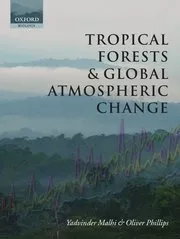
Professor Yadvinder Malhi is a leading ecosystem scientist at the University of Oxford , holding the Professor of Ecosystem Science chair at the Environmental Change Institute (ECI) within the School of Geography and the Environment. He also serves as Jackson Senior Research Fellow at Oriel College , Director of the Leverhulme Centre for Nature Recovery , and President of the British Ecological Society . Active researcher in tropical and temperate forest dynamics Advises UK and Scottish governments on nature restoration Global research across Amazon, Andes, Africa, and UK Research Focus: Malhi investigates how terrestrial ecosystems respond to global atmospheric changes, with emphasis on tropical forests , climate change adaptation , and nature-based solutions . His work integrates field physiology, remote sensing, and ecosystem modeling, notably through the GEM and RAINFOR networks. Recent Trends: Recent publications highlight cross-disciplinary approaches combining terrestrial laser scanning , trait-based ecology , and social-ecological analysis . Research spans from Arctic tundra to tropical coral reefs , with growing emphasis on UK nature recovery and global carbon cycling . Scientific Recognition: 2025: Ramon Margalef Prize in Ecology 2023: Fellow of the Royal Society (FRS) 2022: British Ecological Society President-Elect Academic Leadership: As Programme Leader of the Ecosystems & Biodiversity Research group and member of the ECI , Malhi mentors 24 graduate students while directing large-scale initiatives like the Wytham Woods monitoring station. His lab develops innovative tools for ecosystem assessment through projects like GEM Field Manual and TLS2trees algorithms.
Sunday Oyadiji is an Associate Professor in the Department of Mechanical and Aerospace Engineering at The University of Manchester. He holds a BSc (First Class) and PhD in Mechanical Engineering from the same institution (1979 and 1983). Before joining the University of Manchester in 1991, he served as a Lecturer at Obafemi Awolowo University, Nigeria, and conducted postdoctoral research at Heriot-Watt University and the University of Manchester. His research focuses on viscoelasticity, smart materials for vibration isolation, structural fault identification, and composite materials. Key areas include fracture mechanics, multibody dynamics, and biomechanics. He contributes to the Aerospace Research Institute and Digital Futures platforms, advancing aerospace engineering and structural fire safety. Recent work involves stress-intensity factor analysis using 3D-DIC and finite element methods, constitutive modeling of elastomeric foams, and graphene-based energy storage systems. His publications span high-impact journals like Engineering Fracture Mechanics and Polymer .
Matthias Ihme is a Professor in the Department of Mechanical Engineering and Photon Science Directorate at Stanford University. His research focuses on large-eddy simulation (LES) of turbulent reacting flows, aeroacoustics, combustion-generated noise, numerical methods, and high-order schemes. He holds a Ph.D. from Stanford University (2008), an M.Sc. in Computational Engineering from the University of Erlangen (Germany, 2002), and a Dipl.-Ing. in Mechanical Engineering from Munich University of Applied Sciences (Germany, 2000). His work bridges computational fluid dynamics, combustion science, and photon science, with notable contributions to supercritical fluid dynamics, machine learning integration in fluid simulations, and high-fidelity atmospheric transport modeling. Recent research emphasizes ultrafast cluster dynamics, shock-induced interface behavior, and stochastic ignition mechanisms in advanced fuel systems. Publications highlight interdisciplinary advancements, including physics-informed ML frameworks for reacting flows and experimental studies using X-ray photon correlation spectroscopy. His projects often involve high-performance computing and collaboration with national labs like SLAC.
Alan Andersen is a Professor at Charles Darwin University (CDU), holding positions in the Office of Research and Innovation and the Research Institute for the Environment and Livelihoods. Previously, he served as Chief Research Scientist at CSIRO’s Tropical Ecosystems Research Centre in Darwin, leading interdisciplinary teams to address environmental challenges in tropical savannas. His research focuses on ant ecology, bioindicator systems, fire management, and tropical ecosystem dynamics. Research Interests: Global ant community ecology and biogeography Use of ants as bioindicators for ecological change Tropical savanna ecology and management Fire regimes and their ecological impacts Invertebrate biodiversity conservation Recent articles emphasize ant diversity in monsoonal Australia, fire effects on communities, and cross-taxa ecological responses. His work bridges basic and applied research, with practical outcomes for land management and policy. Awards include the 2000 Asian Innovation Award and the 2007 Charles Darwin Medal. He chairs the Australian Academy of Science’s National Committee for Ecology, Evolution, and Conservation, and leads initiatives like the Territory Science Forum to promote innovation in the NT. Key Projects: TERN ant biodiversity surveys Ecosystem restoration genomics Beetaloo Basin environmental surveys Indigenous energy sustainability projects His contributions span over 250 publications, an h-index of 76, and extensive grants, reflecting leadership in tropical ecological science.
Associate Professor Fangbao Tian is a distinguished researcher and academic at UNSW Canberra's School of Engineering and Technology, where he also serves as Deputy Head of School for Research since July 2023. Previously, he held positions as Senior Lecturer (2017-2021) and Lecturer (2014-2017) at the same institution after completing postdoctoral research at Vanderbilt University. His academic journey began with a BSc (2006) and PhD (2011) in Theoretical and Applied Mechanics and Engineering Mechanics from the University of Science and Technology of China. Dr. Tian's research focuses on Computational Fluid Dynamics (CFD) tools for complex flows and fluid-structure interaction, with particular emphasis on bio-inspired applications. His work spans modeling laryngeal aerodynamics and vocal-fold vibration, fluid-structure interaction of plates in viscous fluid, fish swimming and insect flight, blood flow dynamics, and non-Newtonian flow phenomena. Recent work has expanded into Martian atmosphere aerodynamics, showing his research's growing interdisciplinary nature. His extensive publication record demonstrates consistent contributions across fluid dynamics, with recent trends showing increasing focus on compressible flows, bio-inspired flight systems, heat transfer applications, and computational methods like Lattice Boltzmann approaches. The research shows strong connections between fundamental fluid mechanics and practical applications in aerospace, biomedical engineering, and environmental systems. UNSW Canberra Goldstar Award 2022 IEEE Outstanding SMCS Chapter Award 2021 Outstanding Volunteer Award 2021 UNSW Canberra Silverstar Award 2018 UNSW Canberra Silverstar Award 2017 Journal of Fluids and Structures Highly Cited Research 2017 ARC DECRA 2016 Dr. Tian actively supervises PhD students across diverse topics including bushfire-enhanced wind loads, bio-inspired flight on Mars, flow control optimization, and fluid-structure interactions in compressible flows. He has secured over $5 million in external funding as Chief Investigator, including significant Australian Research Council projects examining Martian atmosphere aerodynamics, bio-inspired flapping wings, and cardiovascular flow modeling. His editorial roles include Associate Editor for Journal of Fluids and Structures and Scientific Reports, reflecting his standing in the fluid dynamics research community.
Dr Michael Boemo is an Assistant Professor at the University of Cambridge, holding dual appointments in the Department of Pathology and Department of Genetics. He leads research at the intersection of computational biology, DNA replication, and cancer genomics, developing machine learning tools to analyze replication stress and genomic instability. Academic Background: BA in Mathematics (Rutgers University), PhD in Physics (University of Oxford) Research Focus: Genomic instability in cancer, DNA replication/repair defects, computational modeling using machine learning and high-performance simulations Teaching: Lectures in Natural Sciences Tripos (mathematical biology, genetics, systems biology), module organizer for cancer biology and biological modeling His research group leverages nanopore sequencing and AI to map replication fork dynamics, revealing how stalled forks generate mutations in cancer cells and pathogens. Recent work examines extrachromosomal DNA replication vulnerabilities and transcription-replication conflicts. Dr Boemo collaborates across computational biology and cancer research domains, with publications spanning journals like Nature Methods, Cell, and PLoS Computational Biology. His lab develops tools such as DNAscent for replication fork analysis and explores therapeutic targeting of replication stress.
Lee Ferguson is a Professor of Civil and Environmental Engineering at Duke University, with additional appointments as Associate Professor in the Division of Marine Science and Policy. His research focuses on environmental analytical chemistry, particularly using high-resolution mass spectrometry to study per- and polyfluoroalkyl substances (PFAS) , microplastics , and endocrine disruptors . Ferguson Lab develops methods for contaminant detection in water systems and investigates chemical leaching from polymers. Ph.D. in Chemistry from Stony Brook University (2002) Former Assistant Professor at University of South Carolina (2003-2009) Recent work includes PFAS analysis in lithium-ion batteries, glyphosate detection in hard waters, and microplastic dye toxicity studies. Key publications explore urban watershed contamination, Sri Lankan drinking water CKDu links, and novel analytical methods for environmental pollutants. Applied Research Fellowship (2022), Kavli Frontiers of Science Fellow (2011) Testified before U.S. Senate on nanotechnology risks Co-founder of NC PFAS Testing Network As an advisor, he mentors Doctoral Candidates Patrick Faught and Anna Lewis , who investigate microplastic dyes and polymer additives. Lab research spans environmental fate of nanomaterials, contaminant bioavailability, and exposomics for health outcomes.
Summary Associate Professor Mehrdad Arashpour is an internationally recognized researcher and educator in construction and civil infrastructure, focusing on automation and information technologies. He leads the ASCII Lab at Monash University's Department of Civil and Environmental Engineering. His academic roles include Head of Construction Engineering and membership in the CIB's Working Commission on Off-site Construction (W121) and Infrastructure Task Group (TG91). Education: Ph.D., RMIT University, Australia M.Sc., Grenoble University, France B.Sc., IU University, Iran Research Interests: Digital twins, computer vision, robotics, BIM integration, sustainable construction, and automation in construction processes. His work contributes to UN Sustainable Development Goals, particularly in sustainable cities and communities. Grants & Awards: Over $6M in grants from ARC, Austroads, and industry partnerships. Recognitions include Editor's Choice Paper (ASCE, 2019) and Outstanding Reviewer (Elsevier, 2016). Teaching: Courses like Risk Management in Engineering Projects and Infrastructure Research Project. Advises on PhD topics in computer vision, robotics, and BIM. Labs & Collaborations: ASCII Lab focuses on smart, sustainable solutions for construction. Collaborates with global researchers and organizations like SPARC Hub and Building 4.0 CRC.
Dr. Marina Bock is a Chartered Civil Engineer and Lecturer in Civil Engineering at Aston University's College of Engineering and Physical Sciences. She specializes in structural engineering with expertise in metallic structures, additive manufacturing, and numerical modeling. Currently accepting PhD students, her work bridges academic research and industry applications in sustainable construction. Her educational background includes: PG Cert in Building and Design and Construction Technology, University of Wolverhampton (2017-2018) PhD in Local Buckling and Web Crippling Response of Stainless Steels, Universitat Politècnica de Catalunya (2010-2015) MSc in Patch Loading of Hybrid Plate Girders, Universitat Politècnica de Catalunya (2004-2010) Dr. Bock's research integrates laboratory experiments and numerical modeling to advance metallic structural systems, with pioneering work in additive manufacturing for construction. Her investigations span stainless steel design code development, corrosion prevention in reinforced concrete using hydrogels, and cold-formed steel behavior. Recent projects focus on sustainable infrastructure solutions through novel composite materials. Analysis of her 2022-2025 publications reveals dominant themes in additive manufactured aluminum structures, cold-formed steel design methodologies, and sustainable paving materials for urban heat island mitigation. Her work consistently addresses practical engineering challenges through experimental validation and code-compliant design solutions. Scientific recognition includes: IStructE Academic Research Award Commendation (2021) for research on aluminum SHS/RHS under biaxial bending Dr. Bock has secured significant research funding including a Royal Society Research Grant (£20k, 2023) for additive manufactured Al7075 aluminum and Innovate UK funding (£437k) for UV-reflective resin-based paving. Previous internal projects (£20k) focused on structural aluminum applications. She supervises PhD research in additive manufacturing and corrosion prevention while maintaining industry collaborations. Her experimental work utilizes advanced university laboratories for structural testing, with collaborations spanning European research consortia and industrial partners. Current projects involve multi-institutional teams developing reusable structural systems and solar-energy-harvesting building envelopes.
Marc D. Abrams is the Nancy and John Steimer Professor of Ecosystem Science and Management at Pennsylvania State University's College of Agricultural Sciences. His research focuses on forest dynamics, particularly the impact of fire exclusion, climate change, and human activity on forest composition and biodiversity. He has conducted extensive studies on oak and pine ecosystems, historical fire regimes, and the role of indigenous burning practices in shaping eastern US forests. Key research interests include dendroecology, paleoecological reconstruction, and vegetation classification. His work frequently integrates historical data, such as witness tree records and colonial land-use patterns, to understand long-term ecological changes. Recent studies have explored deer population impacts, wind damage probability modeling, and the effects of precipitation trends on forest health. His publications highlight interdisciplinary approaches to assess climate change impacts and advocate for adaptive forest management strategies. Abrams retired after 35 years at Penn State in 2022 but continues contributing to scholarly discussions on forest conservation and ecological resilience.
Maria Garlock is the Daniel Tsui Professor in Engineering at Princeton University, serving as Co-Director of the Program in Architecture and Engineering and Head of Forbes College. Her roles also include membership in the Executive Committee of the Council on Science and Technology, Associated Faculty in the School of Architecture, and Associated Faculty in the Program in Latin American Studies. Garlock holds a PhD in Structural Engineering (Lehigh University, 2002), an MS in Civil Engineering (Cornell University, 1993), and a BS in Civil and Environmental Engineering (Lehigh University, 1991). Her research focuses on resilient structural design for extreme hazards like fires, earthquakes, and storm surges. She explores both isolated and cascading multi-hazard scenarios while also analyzing historical structural designs (e.g., Félix Candela’s thin-shell concrete umbrellas) and improving STEM education for non-technical majors through innovative teaching methods, including MOOCs and scale model exhibitions. Recent work emphasizes coastal defense systems using hyperbolic-paraboloid forms and steel-concrete girder performance under shear stress. Garlock has received notable honors including the ASCE SEI Fellowship (2016 T.R. Higgins Lectureship), President’s Award for Distinguished Teaching (2012), and the Emerson Electric Co. Faculty Advancement Award (2006). In education and grants, she teaches courses like Structures and the Urban Environment and Advanced Design of Steel/Concrete Structures , and has secured government funding for STEM literacy initiatives. Her research collaborations include the BRITE Pivot project and studies on Cuba’s historic National School of Ballet domes. She also leads efforts in deploying kinetic umbrellas as flood barriers and advancing probabilistic models for fire fragility in multi-hazard contexts. Garlock’s work bridges engineering and art, exemplified by her preservation studies of Candela’s architectural masterpieces and pedagogical innovations that emphasize creativity in structural design.
Panu Savolainen is an Assistant Professor in the Department of Architecture at Aalto University. His work bridges architectural history, urban studies, and heritage conservation, with a focus on medieval structures, suburban identities, and historical timber innovations. PI of projects: 'La cathédrale engloutie' (2024–2028), 'Deciphering roofs' (2020–2025), 'Lähiöpride' (2021–2022), and 'Argumenta, Fostering modern Heritage' (2021–2022) Recipient of State Award for Public Information (2025), History Book of the Year (2024), and Teacher of the Year (2021) Research Interests: Panu Savolainen specializes in architectural history, urban studies, and heritage. His work explores historical timber structures, medieval archaeology, and suburban environments. He integrates historical analysis with modern design principles, emphasizing cultural memory and sustainable practices. Publication Trends: His recent articles focus on Nordic architecture, historical reconstruction, and urban evolution. Themes include 18th-century domestic spaces, 20th-century suburban identities, and medieval building techniques. He frequently collaborates on topics like forest integration in design and carbon-neutral construction. Scientific Awards: State Award for Public Information (2025) History Book of the Year (2024) Nominee for Tieto-Finlandia Prize (2024) Teacher of the Year, Aalto (2021) Kritiikin punnukset (2021)