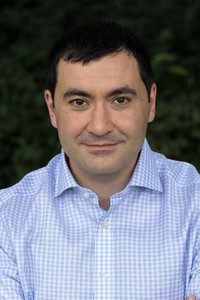
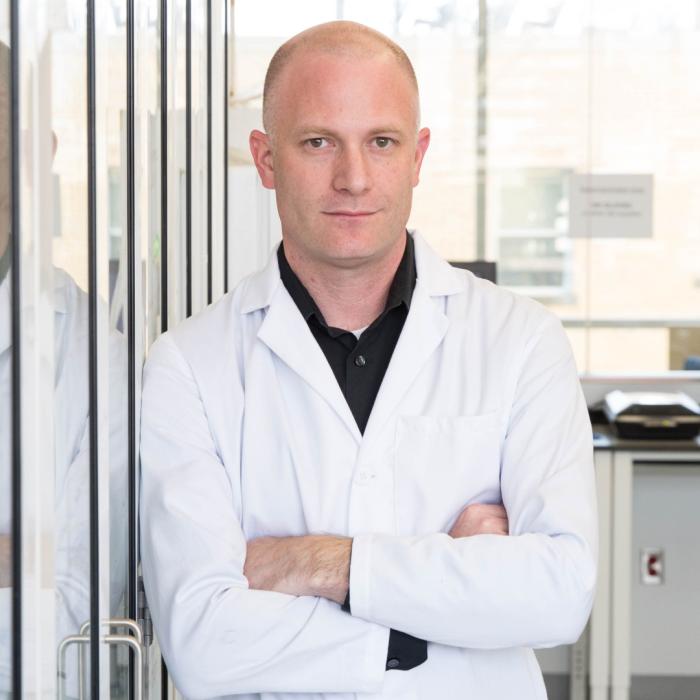
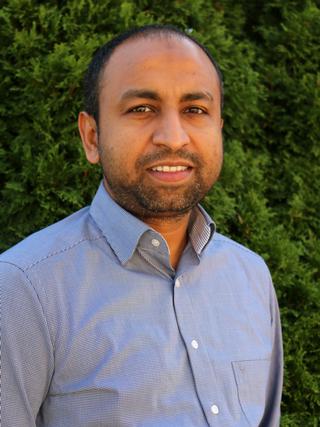
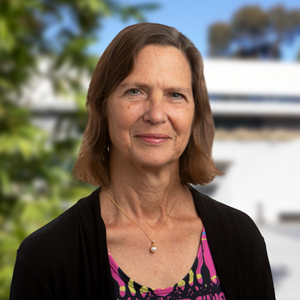
Dustin Scheinost is an Associate Professor at Yale School of Medicine, affiliated with the Department of Radiology & Biomedical Imaging, Yale Child Study Center, Department of Statistics, and Yale Biomedical Imaging Institute. His research focuses on connectomics , machine learning , and neuroinformatics through the Multi-modal Imaging, Neuroinformatics, & Data Science (MINDS) Lab. Radiology & Biomedical Imaging (Primary) Child Study Center (Secondary) Statistics (Secondary) Wu Tsai Institute Yale Stress Center Research Interests include developing novel statistical and machine learning methods for functional connectivity in big neuroscience data, leading the BioImage Suite Web (BISWeb) platform, and advancing early life neuroimaging through the Fetal, Infant, Toddler Neuroimaging Group (FIT’NG). His work is supported by grants from NIMH, NIAA, NIDA, and NHLBI. Selected Scientific Contributions span functional connectivity in laterality preferences, anti-racist AI governance in psychiatry, self-citation trends in neuroscience, and predictive modeling of mood disorders. He collaborates extensively with Todd Constable and others on multimodal neuroimaging studies.
Teresa Cheung is an Adjunct Professor in the Department of Engineering Science at Simon Fraser University’s Faculty of Applied Sciences. Her research focuses on neuroimaging techniques, particularly magnetoencephalography (MEG), and their applications to understanding brain networks in health and disease. She holds a Ph.D. in Physics from SFU (2012) and completed a postdoctoral fellowship at the University of Cambridge (2012–2013). Research interests include: MEG instrumentation and optically pumped magnetometers (OPM) Cortical-cerebellar networks and cerebellar activity localization Neuroimaging of neurological disorders like major depressive disorder and epilepsy Functional and structural connectome analysis across the human lifespan Multimodal integration of MEG, MRI, fMRI, and DTI data Recent work emphasizes the relationship between cardiovascular health, brain aging, and cognitive resilience. Her studies span clinical applications (e.g., depression biomarkers) and technical advancements in neuroimaging systems. Collaborations include multi-site studies on depression and aging cohorts like the Cam-CAN project. Publications highlight innovative methods in MEG system design, neural network dysfunction analysis, and lifespan brain dynamics. Her work bridges engineering, neuroscience, and clinical research to advance non-invasive brain imaging and neurophysiological understanding.
Sophie Caron is an Associate Professor in the Department of Biological Sciences at the University of Utah, where she leads a research laboratory investigating fundamental mechanisms of brain function using Drosophila melanogaster as a model system. Her work focuses on how the brain generates internal representations of the external world, stores memories, and translates these into behavior through multisensory integration. Education: B.S. from Université de Montréal Ph.D. from New York University Dr. Caron's research centers on the Drosophila mushroom body—a critical brain center for learning and memory—with emphasis on multisensory integration mechanisms. Her lab investigates how the brain combines information from multiple sensory modalities (olfaction, vision, etc.) to form unified percepts, challenging traditional views of sensory processing. Key discoveries include the demonstration that mushroom body connectivity follows near-random patterns that maximize memory capacity, and the identification of cross-modal sensory pathways beyond olfaction. Current work explores evolutionary adaptations in neural circuits across Drosophila species and developmental mechanisms establishing sensory wiring. Analysis of her 15 most recent publications (2019-2024) reveals three dominant research trajectories: (1) high-resolution mapping of Kenyon cell inputs using advanced techniques like dye electroporation, (2) computational modeling of how connectivity patterns shape sensory representation and learning, and (3) evolutionary studies of circuit architecture across Drosophila species. Her work consistently bridges experimental neuroanatomy with theoretical frameworks, emphasizing the interplay between random and structured wiring principles in neural circuit design. Scientific Awards: NSF CAREER Award (2021) for research on brain size evolution and neuronal circuit adaptation Dr. Caron mentors graduate students in the University of Utah's Molecular Biology Program and directs an active laboratory utilizing genetic, imaging, and behavioral approaches. Her research program is supported by competitive grants including the NSF CAREER award, with collaborations spanning neuroscience and evolutionary biology. Current projects investigate multisensory integration mechanisms, evolutionary drivers of neural circuit specialization, and developmental basis of sensory wiring. The Caron Lab maintains specialized facilities for Drosophila neurogenetics, advanced microscopy, and behavioral analysis. Her team collaborates with the University of Utah's Brain Institute and Center for Cell and Genome Science, contributing to interdisciplinary initiatives in neural circuit mapping and evolutionary neuroscience. Ongoing work explores how sensory representations evolve in response to ecological pressures and how circuit architecture enables flexible behavior in complex environments.
Mikail Rubinov serves as Assistant Professor of Biomedical Engineering (primary appointment), Computer Science, Psychiatry, and Psychology at Vanderbilt University's School of Engineering. His interdisciplinary work bridges computational neuroscience, network science, and clinical applications. His research focuses on integrative statistical models of large-scale neural data , exploring brain network organization across species and scales. Key interests include evolutionary principles of brain networks, transcriptomic basis of neural individuality, information transfer in neural systems, and neuropsychiatric connectivity phenotypes. The Rubinov Lab develops computational frameworks for analyzing complex neural systems and integrates neuroscientific knowledge with multi-omics data. Recent publications reveal strong trends in network neuroscience methodology development (circular analysis frameworks, unbiased sampling techniques) and translational applications (epilepsy networks, autism spectrum connectomics, gut-brain axis interrogation). His work increasingly incorporates transcriptomic data with neuroimaging at biobank scale. NIH Grant Writing Workshop (June 2022) NIH Workshop Short Talks (April 2023) Rubinov actively mentors graduate and undergraduate students across Biomedical Engineering and Computer Science. His lab maintains collaborations with UCSF, HHMI Janelia Research Campus, Weizmann Institute, and international neuroscience consortia. Current projects include integrative models of large-scale neural data and transcriptomic basis of neural individuality. The Rubinov Lab operates within Vanderbilt's Department of Biomedical Engineering with extensive cross-school collaborations. Technical resources include GitHub repositories for constraint network models (cnm-code), volumetric segmentation (voluseg), and brain connectivity toolboxes.
Dani S. Bassett is the J. Peter Skirkanich Professor at the University of Pennsylvania with primary appointment in the Department of Bioengineering (School of Engineering and Applied Science) and secondary appointments in Physics & Astronomy, Electrical & Systems Engineering, Neurology, and Psychiatry. They serve as an external professor at the Santa Fe Institute and lead a research group focused on complex systems and network science. B.S. in Physics, Penn State University (2004) Ph.D. in Physics, University of Cambridge as Churchill Scholar and NIH Health Sciences Scholar (2009) Postdoctoral position at UC Santa Barbara and Junior Research Fellow at Sage Center for the Study of the Mind Their research integrates complex systems science, statistical mechanics, and applied mathematics to study network dynamics in physical and biological systems. Key areas include brain connectivity mechanisms, cognitive processes, neurological disease modeling, granular matter physics, and collective human curiosity. Bassett employs advanced methodologies including algebraic topology, network control theory, and multilayer network analysis to investigate how network architecture influences system function across diverse domains. Recent publications reveal a strong trend toward interdisciplinary network science applications, particularly in modeling human curiosity through Wikipedia navigation patterns and analyzing brain network reconfiguration during cognitive development. Their work bridges physics, neuroscience, and behavioral science with emphasis on topological network properties and dynamical processes. American Psychological Association's Rising Star (2012) MacArthur Fellow Genius Grant (2014) Lagrange Prize in Complex Systems Science (2017) Erdos-Renyi Prize in Network Science (2018) American Physical Society Fellow (2021) Web of Science Highly Cited Researcher (3 consecutive years) Bassett's research is supported by major agencies including NSF, NIH, DoD, ONR, and private foundations (MacArthur, Sloan, Paul Allen). Their lab actively recruits students from physics, engineering, neuroscience, and computer science backgrounds, emphasizing diversity in academic perspectives. Current projects include the 'Curious Minds' initiative exploring collective knowledge building and network-based models of neurological disorders. Bassett co-authored the MIT Press book 'Curious Minds: The Power of Connection' with philosopher Perry Zurn.
Chet C. Sherwood is a Professor of Anthropology at George Washington University (GW) and a core faculty member of the Center for the Advanced Study of Human Paleobiology (CASHP). He also directs the National Chimpanzee Brain Resource and is affiliated with the GW Mind-Brain Institute. His research focuses on evolutionary neuroscience, particularly brain evolution in primates and other mammals, emphasizing how brain structure relates to behavior, development, and genetics. Education: Ph.D. (2003), M.A. (1998, 1996), and B.A. (1995) from Columbia University, with an additional M.A. from New York University (1996). Teaches courses such as ANTH 1001: Biological Anthropology and ANTH 3413: Evolution of the Human Brain. Research interests include comparative neuroanatomy of the cerebral cortex, human brain evolution relative to other primates, and the molecular and cellular mechanisms underlying cognitive evolution. He explores how brain differences across species correlate with ecological and behavioral traits, leveraging neuroimaging, transcriptomics, and fossil reconstruction techniques. Recent work investigates aging-related brain changes in primates and elephants. Notable achievements include membership in the National Academy of Sciences (2021) and the AAAS Fellowship (2022). His lab’s studies on chimpanzee brain plasticity and the genetic basis of primate cognition have advanced understanding of human uniqueness and shared evolutionary traits. Chet’s interdisciplinary collaborations span paleontology, genomics, and neuroscience, with a focus on bridging evolutionary and medical insights. His leadership in the National Chimpanzee Brain Resource underscores his commitment to advancing comparative neurobiology through resource development and ethical research practices.
Giovanni Petri is a Professor in the Network Science Institute at Northeastern University London, where he joined in June 2023. Previously, he held positions at CENTAI as a Principal Researcher and at IMT Lucca as a Guest Scholar, with earlier affiliations at ISI Foundation and Imperial College London. His educational background includes a PhD in Complex Networks from Imperial College London (2012), an MSc in Theoretical Physics from the University of Pisa (2008), and a BSc in Physics from the University of Pisa (2005). Petri's research spans the analysis of neuroimaging data and AI systems with topological techniques, the formalization of cognitive control models with tools of statistical mechanics and network theory, and the study of the predictability of socio-technical systems. His work in Topological Neuroscience explores brain architecture using algebraic topology, while his research in Cognitive Neuroscience focuses on neural mechanisms underlying human cognition. He is particularly known for his work on higher-order networks, using mathematical frameworks like hypergraphs and simplicial complexes to model systems with multi-way interactions. His recent publications (2023-2025) demonstrate a strong focus on higher-order network theory applied to neuroscience, with particular emphasis on topological approaches to brain connectivity, social contagion models, and the physics of complex systems. These works reveal consistent themes in understanding how multi-body interactions shape system dynamics across biological, social, and technological domains. European Research Council Consolidator Grant (RUNES: Reconstruction and unification of neural and ecological systems, 2024) As Principal Investigator of the NPLab, Petri advises numerous PhD and postdoctoral researchers including Marilyn Gatica, Andrea Santoro, and Simone Poetto. His RUNES project, funded by the ERC Consolidator Grant, represents a significant research initiative. The lab maintains active collaborations with CENTAI, Project CETI (Cetacean Translation Initiative), and various international institutions. The NPLab investigates the role of topology and geometry in the collective dynamics of complex systems, ranging from neuroscience to society, using statistical mechanics, algebraic topology, and innovative computational approaches. Current projects include Topological Neuroscience, Cognitive Neuroscience, Higher-order Networks, Project CETI, and RUNES.
Prof. Markus Axer is a Professor and Deputy Head of the Structural and Functional Organisation of the Brain (INM-1) at the Institute of Neuroscience and Medicine (INM) within Forschungszentrum Jülich. His research focuses on connectomics, neuroimaging technologies (e.g., 3D-Polarized Light Imaging), and high-performance computing applications in brain architecture analysis. He leads the 'Fiber Architecture' working group, advancing microscopy techniques like scattered light imaging and MRI-histology correlation for studying brain microstructure. His work bridges experimental neuroscience with computational methods, aiming to decode brain organization at meso- and macroscales. Key achievements include developing the HippoMaps atlas of the human hippocampus and improving fiber orientation mapping in brain tissue. Awards include Fellowship in the Royal Netherlands Academy of Arts and Sciences (2024). Research emphasizes cross-modal data integration, with applications in Alzheimer’s disease biomarker validation and primate brain evolution studies. He collaborates with academic institutions like the University of Wuppertal and contributes to international initiatives like the BigBrain Analytics Learning Laboratory.
Federico Battiston is an Associate Professor of Network Science and Director of the PhD Program in Network Science at Central European University (CEU), the first such program in Europe. He holds a PhD in Applied Mathematics from Queen Mary University of London and degrees in statistical physics from Sapienza University of Rome. His research focuses on network science, complex systems, and computational social science, with contributions in leading journals like Nature Physics , Physical Review Letters , and Science Advances . He coordinates the software project Hypergraphx and was Chair of NetSci2023, the largest Network Science conference. He has received awards including the Complex Systems Society's Junior Award (2022) and the European Physical Society's Early Career Prize (2021). Education: PhD in Applied Mathematics, Queen Mary University of London MSc in Theoretical Physics, Sapienza University of Rome BSc in Physics, Sapienza University of Rome Research Interests: Battiston explores generalized network structures (e.g., multilayer and higher-order networks), dynamics on networks (epidemics, social/cultural dynamics, synchronization), and their applications in social systems, neuroscience, and ecology. He emphasizes how network topology influences collective behavior and emergent phenomena. Key Contributions: His work includes hypergraph modeling, collaboration in escape rooms, and the role of higher-order interactions in brain networks. He co-authored the book Higher-order systems and guest-edited a Focus Collection on higher-order networks in Communications Physics . Awards & Roles: Junior Award of the Complex Systems Society (2022) Early Career Prize, European Physical Society (2021) Elected Member, Complex Systems Society Council Editor, Communications Physics Advising & Grants: Advised PhD students such as Milan Janosov, Luis Natera, and Rebeka Szabo. Two students received CEU Advanced Awards. His projects include Mapping the Higher-Order Dynamics of Neurodegeneration and DYNASNET . Labs/Teams: Leads the Hypergraphx team and collaborates on interdisciplinary projects in network science, including ecological networks and urban mobility analysis.
Dr. Tanzil M. Arefin is an Assistant Professor of Neuroscience at the University of Rochester School of Medicine and Dentistry and Associate Director of the Preclinical Imaging Core at the Center for Advanced Brain Imaging and Neurophysiology (CABIN). His research focuses on developing neuroimaging techniques to study brain functions and microstructures in animal models of human disorders, including neurodegenerative and psychiatric illnesses. He holds affiliations with the Del Monte Institute for Neuroscience and the Neuroscience Ph.D. Program. **Education**: Ph.D., Neuroscience, University of Freiburg and University of Strasbourg (2017) M.Sc., Biomedical Engineering, Czech Technical University and University of Groningen (2012) B.Sc., Electrical and Electronic Engineering, Islamic University of Technology (2007) **Research Interests**: Dr. Arefin's lab employs multimodal MRI methodologies (resting-state fMRI, diffusion MRI, ASL perfusion MRI, MR spectroscopy) alongside optogenetics and chemogenetics to elucidate molecular mechanisms impairing brain plasticity. Current projects include studying cerebellar connectivity's role in non-motor behaviors and developing interventions for alcohol-dependent brains. **Awards**: Magna cum Laude, Summa Cum Laude, Erasmus Mundus Fellowships (both Doctoral and Masters). **Grants & Advising**: Not explicitly listed in texts, but lab activities suggest involvement in NIH-funded projects. Advising details are pending explicit student listings. **Lab & Affiliations**: Arefin Lab focuses on translational imaging tools. Affiliated with UR CABIN and URMC's Neuroscience programs. Location: 430 Elmwood Ave, Rochester, NY.
Dr. Hermann Cuntz is an Independent Group Leader at the Ernst Strüngmann Institute (ESI) for Neuroscience in cooperation with the Max Planck Society. He is also a Research Fellow at the Frankfurt Institute for Advanced Studies (FIAS) since 2014 and affiliated with the Goethe University Frankfurt via the Institute of Clinical Neuroanatomy . His email address is hermann.neuro@gmail.com , and he is based in Frankfurt am Main, Germany. Research Focus: Dr. Cuntz investigates principles of neuronal wiring, aiming to decode the "connection code" of the brain. His work bridges morphology and function using computational tools, mathematical laws, and morphological modeling. Key areas include dendritic constancy , structural plasticity , connectomics , and neuroinformatics , with applications in understanding neurodegenerative diseases like Alzheimer’s. Education: PhD from the University of California at Berkeley and Max Planck Institute of Neurobiology (2000-2004). Diploma in biology from Eberhard Karls Universität Tübingen (1994-2000). Recent Publications highlight research trends in dendritic structure, pattern separation, synaptic spine distribution, and cortical folding. His lab develops the TREES Toolbox , a MATLAB-based framework for neuronal morphology analysis. Scientific Awards: Bernstein Award (2013-2019) DFG Eigene Stelle (2014-2016) Feodor Lynen Fellowship (Alexander von Humboldt, 2006-2008) Minerva Fellowship (2004-2005) Wellcome Image Award (2011) 1st Prize Poster Competition, UCL Neuroscience Symposium (2010) Advising and Grants: Dr. Cuntz mentors numerous PhD and Master’s students, including Marcel Beining , Mariuss Schneider , and Marvin Weigand . His lab receives funding from the DFG , Bernstein Award , and collaborations with institutions like the 3R-Center Giessen and Interdisciplinary Centre for 3Rs (ICAR3R) . Labs and Collaborations: The Cuntz Lab specializes in computational neuroanatomy, with alumni working globally in academia and industry. Key collaborators include Prof. Peter Jedlicka (Justus Liebig University), Prof. Gaia Tavosanis (DZNE Bonn), and Prof. Alexander Borst (MPI Neurobiology).
Dr. Dina Ferdman is an Associate Professor of Pediatrics at Yale School of Medicine, serving as Director of the Pediatric Echocardiogram Program and Co-director of the Yale Fetal Care Center. She practices pediatric cardiology at Yale Pediatric Specialty Centers in Trumbull and Greenwich, providing comprehensive care for congenital heart disease from prenatal diagnosis through adolescence. Education & Training: MD: University of Massachusetts Medical School (2008) Pediatrics Residency: Columbia University Medical Center (2011) Chief Residency: Columbia University Medical Center (2012) Pediatric Cardiology Fellowship: Columbia University Medical Center (2015) Her research focuses on advancing diagnostic techniques in fetal and pediatric cardiology, particularly through echocardiography innovations. She investigates prenatal detection of congenital heart defects, ventricular strain analysis, and quality improvement initiatives for high-risk infant care. Her work integrates clinical practice with translational research to optimize outcomes for children with structural heart disease. Dr. Ferdman's publications demonstrate consistent focus on echocardiography techniques, prenatal diagnosis, and pediatric cardiac management. Recent work explores the application of high-sensitivity biomarkers for myocarditis diagnosis and quality improvement in preventive cardiology. Her longitudinal studies provide valuable insights into cardiac complications of inflammatory conditions like MIS-C. As Co-director of the Yale Fetal Care Center, she leads interdisciplinary teams providing comprehensive care for pregnancies complicated by fetal heart anomalies. She also directs the Pediatric Echocardiogram Program, implementing advanced imaging protocols and quality standards. She contributes to multicenter collaborative studies through the Fetal Heart Society Research Collaborative.
Hollis Cline, PhD, is the Hahn Professor of Neuroscience and Director of the Dorris Neuroscience Center at The Scripps Research Institute (TSRI). She holds adjunct positions at the University of California San Diego and the Salk Institute. Her research focuses on understanding how sensory experience shapes visual circuit development, plasticity, and function, with a focus on neurodevelopmental disorders. Cline earned her PhD in Neurobiology from UC Berkeley (1985) and conducted postdoctoral work at Yale and Stanford. She has served in leadership roles including Co-Chair of TSRI’s Department of Neuroscience and President of the Society for Neuroscience (2015–2016). Her research integrates molecular genetics, electrophysiology, and imaging to study structural dynamics in neural circuits, neurogenesis regulation, and excitation/inhibition balance. Key projects include the Dynamic Connectome (3D connectomics in the optic tectum), neurogenesis control, and the role of inhibition in visual circuit function. Her work revealed activity-dependent mechanisms driving synaptic maturation and topographic map formation, and identified molecular pathways linking visual experience to brain development. Education : PhD (UC Berkeley), B.A. (Bryn Mawr College) Awards : NIH Pioneer Award, AAAS Fellow, TSRI Mentor Award Labs/Teams : Cline Lab at TSRI, Dorris Neuroscience Center Grants : Not explicitly listed but implied via NIH advisory roles and research infrastructure Professional Service : NINDS Board, NIH Advisory Council, Society for Neuroscience leadership Her recent work bridges neurodevelopmental mechanisms with translational insights, using Xenopus models to study exosome-mediated intercellular communication and regeneration responses to injury. Collaborative efforts include the BigNeuron project for neuronal morphology analysis and AI-driven behavior recognition studies.
David B. Dunson is the Arts and Sciences Distinguished Professor of Statistical Science at Duke University, with a joint appointment in the Department of Mathematics. He is also a Faculty Network Member of the Duke Institute for Brain Sciences. His research bridges theoretical statistics with practical applications across multiple scientific domains, focusing on developing new tools for probabilistic learning from complex data. Dr. Dunson earned his Ph.D. from Emory University in 1997 and his B.S. from Pennsylvania State University in 1994. Dr. Dunson's research focuses on developing statistical methods directly motivated by challenging applications in ecology/biodiversity, neuroscience, environmental health, and criminal justice/fairness. His methodological work spans models for low-dimensional structure in data (latent factors, clustering, geometric and manifold learning), flexible/nonparametric models (neural networks, Gaussian/spatial processes), Bayesian inference frameworks, and models for "object data" (trees, networks, images, spatial processes). His approach emphasizes creating practical tools that scientists and decision makers can use routinely. Dunson's recent publications demonstrate a strong focus on advancing Bayesian methodology for complex data structures across applications in biodiversity mapping, brain connectomics, environmental health, and infectious disease modeling. His work shows consistent innovation in nonparametric Bayesian methods, computational efficiency, and the handling of high-dimensional and structured data, always with an eye toward solving real-world scientific challenges. Dr. Dunson has received numerous prestigious awards including: IMS Medallion Lecturer (2019) Mitchell Prize from the International Society of Bayesian Analysis (2018) Carnegie Centenary Professorship (2018) DeGroot Prize (2017) COPSS Award: President's Award (2010) Fellow of the Institute of Mathematical Statistics (2010) His extensive publication record with numerous co-authors suggests an active research group mentoring graduate students and postdocs. His research on projects like biodiversity mapping (funded by a European Research Council Grant) and brain connectomics indicates well-funded research programs addressing significant scientific challenges across multiple domains. Dr. Dunson's work involves collaborations across multiple labs and teams, particularly through his affiliation with the Duke Institute for Brain Sciences. His research on biodiversity mapping, brain connectomics, and environmental health suggests involvement in large, interdisciplinary teams addressing complex scientific questions that require sophisticated statistical approaches.
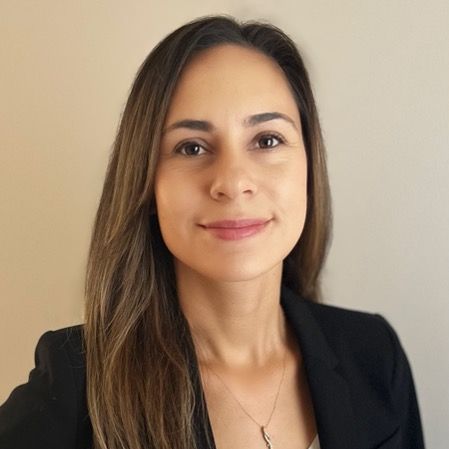
Leanna Hernandez, Ph.D., is Assistant Professor-in-Residence in the Department of Psychiatry and Biobehavioral Sciences at the David Geffen School of Medicine, University of California, Los Angeles. She directs the Hernandez Lab and can be reached at leannahernandez@ucla.edu . Her research integrates multimodal neuroimaging with large-scale genetics to uncover mechanisms underlying autism spectrum disorders, sex differences in brain development, and the role of immune–neurodevelopment pathways such as the complement system. Core themes include: Mapping how common genetic variation shapes brain structure and function across development. Identifying neural signatures that explain the female protective effect in ASD. Elucidating interactions between sleep physiology and brain maturation in youth. Across more than 40 peer-reviewed publications (2012-2023) she has leveraged data from the Adolescent Brain Cognitive Development (ABCD) Study, the GENDAAR Consortium, and multiple international biobanks, generating insights into white-matter microstructure, functional connectivity, and transcriptomic correlates of psychiatric traits. Scientific collaborations span UCLA, UC San Diego, University of Queensland, and the Busselton Health Study, reflecting an interdisciplinary approach that combines neuroimaging, genomics, lipidomics, and behavioral phenotyping. Dr. Hernandez’s laboratory website ( hernandezlabucla.org ) provides further resources, although specific trainees, grants, and awards are not detailed in the supplied text.