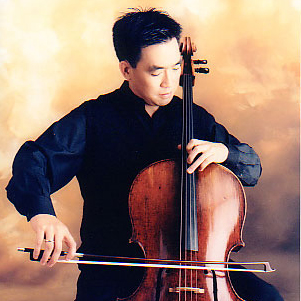
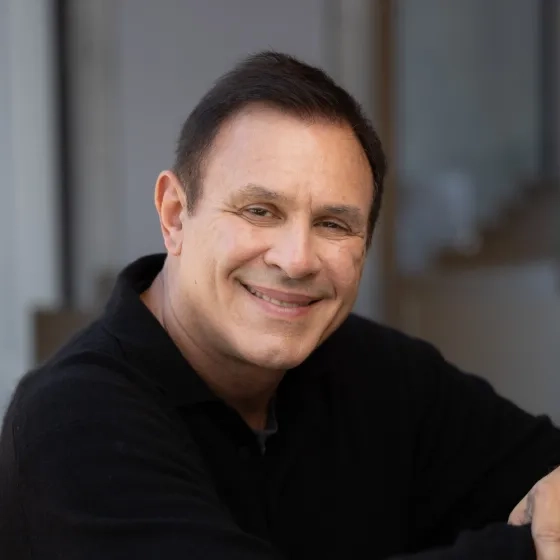
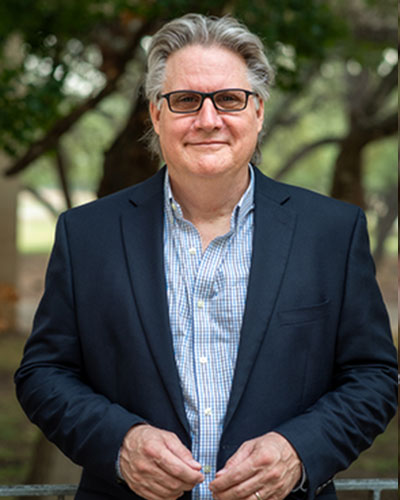
David Ying is an Associate Professor of String Chamber Music and Violoncello at the Eastman School of Music, University of Rochester, and serves as Chair of the Strings, Harp & Guitar Department. He is a founding member of the Grammy-winning Ying Quartet, renowned for performances spanning traditional concert halls to unconventional venues. His professional roles include teaching cello and chamber music at Eastman, co-artistic directorship at the Bowdoin International Music Festival, and artist-in-residence positions at Harvard University and Northwestern University. Education: Studied at the Eastman School of Music and Juilliard School under mentors including Leonard Rose and Paul Katz. Awards include Naumburg International Cello Competition and Washington International Competition prizes. His pedagogical impact extends globally, with students in orchestras like the New York Philharmonic and those pursuing legal and artistic careers. Artistic contributions include recording projects ranging from Beethoven to commissioned contemporary works. The Ying Quartet's activities emphasize interdisciplinary collaborations, as seen in their partnership with PUSH Physical Theatre and educational outreach initiatives.
David Conte is Professor of Composition and Chair of the Composition Department at the San Francisco Conservatory of Music (SFCM), where he has taught since 1985. He is also affiliated with the European American Musical Alliance in Paris, where he served on the composition faculty from 2011-2022. In 2014, he was named Composer in Residence for Cappella SF, a professional chamber choir in San Francisco. His educational background includes: Doctor of Musical Arts (DMA) from Cornell University Master of Fine Arts (MFA) from Cornell University Bachelor of Music (BM) from Bowling Green State University David Conte's research and creative interests focus on contemporary classical composition, particularly in the areas of opera, choral music, and chamber music. His work demonstrates a deep engagement with American musical traditions while incorporating diverse influences from European classical music. He has developed a distinctive compositional voice that bridges traditional techniques with contemporary expression, particularly evident in his vocal and choral works. Conte's approach to composition pedagogy emphasizes the importance of musical memory, keyboard skills, and deep engagement with the music one loves. Analysis of Conte's compositional output reveals a consistent focus on vocal and choral music, with significant contributions to American opera through works like 'The Gift of the Magi.' His chamber music demonstrates sophisticated understanding of instrumental capabilities across various ensembles. More recently, his orchestral works like the 'Sinfonietta for Classical Orchestra' show a refined neoclassical approach. Conte's compositions often explore literary and historical themes, reflecting his broader interests in film, history, politics, and religion. His notable awards and distinctions include: Fulbright Scholarship (1976) Ralph Vaughan Williams Fellowship (1989) Aspen Music Festival Conducting Fellowship (1984) National Association of Teachers of Singing Composition Award (2016) American Guild of Organists Distinguished Composer (2024) Raymond Brock commission from the American Choral Directors Association First Prize in the NATS Composition Competition for 'American Death Ballads' (2016) As an educator, Conte has mentored over 100 composition students since 1985 at SFCM. His teaching philosophy, heavily influenced by his studies with Nadia Boulanger, emphasizes the importance of musical memory, keyboard proficiency for composers, and gradual skill development. He has secured numerous commissions from prestigious organizations including the San Francisco, Oakland, Stockton, and Dayton Symphonies, Chanticleer, and the American Guild of Organists. Conte's work has been supported by institutions like the Fulbright Program and the National Endowment for the Arts. Conte maintains active collaborations with various musical organizations, including Cappella SF where he serves as Composer in Residence. His work with librettists like Nicholas Giardini and collaborators like Todd Boekelheide demonstrates his commitment to interdisciplinary artistic projects. He continues to be an influential figure in American contemporary music through his compositions, teaching, and advocacy for new music.
Julian Smiles is a Senior Lecturer in Cello at the Sydney Conservatorium of Music, part of the University of Sydney. He holds prestigious roles in Australian classical music, including former Principal Cello of the Australian Chamber Orchestra and frequent guest principal with the Sydney Symphony Orchestra. He is a core member of the Australia Ensemble (UNSW) and co-founder of the internationally acclaimed Goldner String Quartet. His performances span soloist engagements with major orchestras, chamber music festivals, and premieres of Australian contemporary works. Ensembles: Goldner String Quartet, Australia Ensemble UNSW Performance Venues: Sydney Opera House, Melbourne Recital Centre, Townsville Civic Theatre Repertoire Focus: Classical chamber works, Australian compositions, and international contemporary pieces Research interests include chamber music interpretation, performance practice, and pedagogy rooted in his studies with Nelson Cooke and Janos Starker. He regularly collaborates with composers like Mark Isaacs and Carl Vine, premiering new works. Teaching emphasizes linking technical mastery with artistic expression through historical and contemporary repertoire. Recent performances include the 30th anniversary season of the Goldner Quartet at Sydney Conservatorium, Hyperion Records releases, and international tours to New Zealand and India. His 2024 recording Bird Spirit Dreaming explores Australian musical identity through contemporary compositions. Grants and collaborations involve Musica Viva Australia, Huntington Estate Music Festival, and the Australian World Orchestra. His pedagogical work includes masterclasses at Four Winds Festival and mentoring emerging chamber musicians. Labs/Teams: Goldner String Quartet (30-year partnership), Australia Ensemble UNSW (since 1991), Sydney Conservatorium Cello Studio.
Simon Mawhinney is a Professor in the School of Arts, English and Languages at Queen's University Belfast, specializing in composition with a focus on instrumental and electronic media. His work bridges complexist music, post-spectral harmonies, and cultural cantillation influences. Notable collaborations include projects with ensembles in Germany, France, and Iceland. He holds a Queen’s University Teaching Award (2012) and has pioneered modules on Messiaen’s music. His research explores new music performance, computer-assisted composition (using OpenMusic), and experimental technologies. Current roles include PhD supervision in composition, convening MA research methods modules, and undergraduate composition instruction. Key achievements include commissions from Ensemble Caput (Iceland) and Garth Knox/Quatuor Béla, resulting in works such as Marlacoo and a viola d’amore/string quartet piece premiered in Paris (2013). Recent projects involve recordings with pianist Mary Dullea and bass flutist Kolbeinn Bjarnason. His fingerprint research areas include labour studies in composition, technical performance practices, and avant-garde instrumentation. Over 35 compositions span decades, with 2016-2019 works emphasizing electronic integration and algorithmic processes. Awards include the AIC Composition Prize (2001) and Ann Driver Trust Award (2000). Professional service roles include Elected Member of the Academic Council since 2010 and Exams Liason Officer (2009-2011). Teaching: Undergraduate modules on Messiaen, Beethoven's late works, and composition techniques Research: Focus on postwar modernism, new musical technologies, and performance-based creation Public Engagement: Active in festivals, radio interviews, and international recitals
Juri Seo is an Associate Professor of Music at Princeton University, where she teaches composition. She is a Korean-born American composer and pianist known for her innovative approach to contemporary classical music that bridges historical forms with modern techniques. Her educational background includes a B.A. from Yonsei University in Korea and an M.M. and D.M.A. from the University of Illinois at Urbana-Champaign, where she studied with Reynold Tharp. Her dissertation focused on Jonathan Harvey's String Quartets (2013). Seo's research interests span Contemporary Music Composition, Counterpoint, Harmony, Just Intonation, Microtonality, Piano Composition, and the intersection of Ecology with Music. Her work explores "the continuum between timbre, harmony, and noise" while maintaining a deep connection to traditional Western classical forms. She is particularly passionate about counterpoint, which she describes as "a lost art" in contemporary composition. Her compositions demonstrate a unique synthesis of historical forms (like fugue and cantus firmus) with contemporary techniques including extended just intonation and electronics. A recurring theme in her recent work is ecology, with pieces like "Birds, Bees, Electric Fish" exploring the perceptual worlds of different organisms. She has pioneered performances with blindfolded audiences to heighten auditory awareness. Guggenheim Fellowship (2016) Goddard Lieberson Fellowship from American Academy of Arts and Letters (2013) Kate Neal Kinley Fellowship (2011) Otto Eckstein Fellowship from Tanglewood (2011) Koussevitzky Commission from the Library of Congress Copland House Residency Award Seo has received commissions from prestigious organizations including the Fromm Foundation, Barlow Endowment, Tanglewood Music Center, and the University of Illinois. She has been a composition fellow at Tanglewood, Bang on a Can, and SoundSCAPE festivals. Her debut album "Mostly Piano" was released by Innova Recordings in 2017, and her recent album "Obsolete Music" was released by New Amsterdam Records in June 2025. She leads an active creative life with numerous upcoming commissions through 2026, including works for So Percussion, the Grossman Ensemble, and the University of Illinois Percussion Studio. Her work with the JACK Quartet on pieces using extended just intonation has been particularly significant in her recent output.
James Syler serves as Assistant Professor of Practice in Composition at the University of Texas at San Antonio's College of Liberal and Fine Arts, where he has been on faculty since 2001. He also teaches composition at the University of the Incarnate Word and San Antonio College, demonstrating his deep commitment to music education across multiple institutions in the San Antonio area. Dr. Syler earned his B.M. from Northern Illinois University and M.M. from the University of Miami, with additional studies at the University of Texas at Austin. His compositional training included private studies with Alfred Reed, Karl Korte, and Pulitzer Prize-winner Michael Colgrass, which significantly shaped his artistic development. Syler's compositional work spans multiple genres and styles, reflecting his eclectic approach that bridges traditional and contemporary techniques. His music demonstrates strong structural foundations, rhythmic energy, lyricism, and harmonic color, all aimed at communicating profound expressions of 'the good, the true, and the beautiful.' His compositions frequently explore historical narratives, religious themes, and American cultural identity through diverse musical lenses. His extensive body of work shows a consistent focus on choral and wind ensemble compositions, with particular attention to narrative structures and emotional expression. Many pieces incorporate multilingual texts and explore American history, spirituality, and cultural diversity, reflecting his belief that music should 'have something to say, be thought-provoking, and reflect the human experience in all its diversity.' 1993 National Band Association Composition Award for The Hound of Heaven Composer's Grant from the American Composers Forum for String Quartet No. 1 Multiple grants from the American Music Center in New York 1993 Arnald Gabriel Composition Award Subject of doctoral dissertation on his works for wind ensemble (2001) Featured in A Composer's Insight: Thoughts, Analysis, and Commentary on Contemporary Masterpieces for Wind Band (2003) As an educator, Syler has developed a comprehensive curriculum spanning composition, music theory, and historical studies. His courses include Orchestration, Composition I-III, American Roots Music, History and Styles of Rock, Masterpieces of Music, American Music & Culture, and History & Styles of Jazz. In 1998, he established Ballerbach Music, a publishing company specializing in wind band music, further extending his impact on the musical community.
Professor Urszula Kryger, Ph.D., serves as Dean of the Faculty of Vocal and Acting Studies at the G. and K. Bacewicz Academy of Music in Łódź since the 2012/2013 academic year, following her tenure as Head of the Vocal Studies Department (2008-2012). A distinguished mezzo-soprano, she has maintained an international performance career while advancing vocal pedagogy through master classes and competition juries. Her educational background includes dual degrees from the Academy of Music in Łódź: Instrumental Studies in Piano (1988) and Vocal Studies in Acting (1992), supplemented by advanced vocal training under Andrzej Orłowicz in Copenhagen. This foundation informs her holistic approach to vocal artistry. Kryger's research focuses on Classical Vocal Performance with specialization in Art Song Interpretation and Polish Musicology . Her scholarly work centers on authentic performance practices of Chopin, Szymanowski, and Moniuszko, emphasizing textual nuance and historical context in art song. She investigates chamber music collaborations as interdisciplinary laboratories for vocal expression, with particular attention to the interplay between text, timbre, and emotional authenticity. Her publication trajectory reveals deep engagement with Polish musical heritage , progressing from foundational recordings of Russian repertoire to definitive interpretations of Szymanowski and Żeleński. The consistent Fryderyk Award recognition demonstrates scholarly impact in preserving and reinterpreting national musical identity through rigorous vocal scholarship. 2001 Fryderyk Award for 'Russian Duets' (DUX) 2002 Fryderyk Award for 'Moniuszko's Songs' and 'Karłowicz/Szymanowski's Songs' 2004 Fryderyk Award for 'K. Szymanowski's Songs' (Channel Classics) 2006 Karol Szymanowski Foundation Award 2012 Fryderyk Award for 'Żeleński - Pieśni' As an educator, Kryger mentors through master classes across Europe and serves on international competition juries. Her academic leadership includes departmental administration and shaping curriculum for vocal performance programs. Collaborative projects with ensembles like the Tokyo String Quartet and Petersen Quartet demonstrate her commitment to interdisciplinary artistic research. Kryger maintains active performance partnerships with distinguished musicians including Hartmut Höll, Charles Spencer, and Pascal Rogé, while conducting research through recording projects that serve as both artistic output and pedagogical resources for vocal students.
Ed Hughes is a Professor of Composition in Music at the University of Sussex's School of Media, Arts and Humanities. His roles include Head of Music (2013-2018), Deputy Head of School, and Associate Dean for Education. He holds a BA from Cambridge University (1987-1990), an MPhil (Cambridge), and a PhD in Composition from Southampton (2000-2004). His research focuses on composition techniques, music technology, and interdisciplinary projects like Syncphonia, a notation system aiding ensemble performance. Notable works include operas like States of Innocence (2024) and orchestral pieces inspired by landscape, such as Music for the South Downs (2022). He has received grants from AHRC, Arts Council England, and the South Downs National Park Authority. Hughes has supervised numerous PhD students in composition and music technology. His awards include the British Composer Award (2014) and commissions from Brighton Festival and the Mahogany Opera Group. Collaborations with psychologists and educators highlight his commitment to music education and accessibility.
Alla Voskoboynikova is an Associate Teaching Professor of Music and Director of Keyboard Studies at the University of Missouri-St. Louis (UMSL). She holds a Bachelor’s in Piano Performance from Voronezh Music College (Russia) and a Master’s from Moscow’s Gnessins Academy of Music. Her career includes solo performances at Carnegie Hall and collaborative work with the St. Louis Symphony Orchestra and Union Avenue Opera Company. She has organized cultural exchange concerts in Russia and directs UMSL’s Summer Keyboard Camp. Education: Voronezh Music College (BA, 199?), Gnessins Academy (MA, 1996) Research focuses on piano pedagogy, chamber music collaboration, and Russian/Ukrainian musical heritage. Notable projects include Shostakovich’s 100th-anniversary recitals and Mendelssohn bicentennial performances. She actively mentors students in competitions and international tours. Recent performances include collaborations with Arianna String Quartet, Stella Markou, and Christine Brewer. Her pedagogical approach emphasizes cultural exchange and interdisciplinary artistry, with students performing at major St. Louis venues like Touhill Performing Arts Center.
Rainer Schmidt is a Universitätsprofessor (Professor) of Violin and Chamber Music at the Mozarteum University's Strings Department and Institute for Chamber Music. He has been teaching chamber music there since 1988 and assumed a concurrent professorship in violin and chamber music at the Basel Music Academy in October 2007. His musical training included studies with Atila Aydintan in Hanover and Dorothy Delay in Cincinnati, alongside mentorship from Walter Levin, Ivry Gitlis, Tatjana Grindenko, and Nicolaus Harnoncourt. Professionally, he joined the renowned Hagen Quartet in 1987 and co-founded the Ravinia Piano Trio in 1989, performing internationally. His career bridges performance excellence in string ensembles with academic leadership in classical music pedagogy. No scientific awards or grants are explicitly listed in the provided text, though his ensemble performances and academic roles reflect significant contributions to the field.
Peter Tuite is a Full Titled Professor and Head of the Keyboard Faculty at the Royal Irish Academy of Music (RIAM), one of Europe’s leading music institutions. He holds dual appointments, previously serving as Head of Piano and Keyboard Instruments at Trinity Laban Conservatoire of Music and Dance in London (2015–2018). His academic roles are complemented by extensive international performance and curation work. Education includes Trinity College Dublin, University of Oxford, and a Fulbright Scholarship at Johns Hopkins University’s Peabody Institute. He is renowned for his specialization in 18th-century keyboard works, particularly Haydn and Bach, and has pioneered innovative recordings such as the Goldberg Variations (2020) and the Art of Fugue project (2025). As a concerto soloist, he collaborates with renowned conductors like Andrei Boreyko and orchestras across Europe and the U.S. Research interests span performance practice, musicology, and interdisciplinary projects blending music with literature. He co-founded the New Lights Festival (2018), a London-based platform for contemporary music innovation, and launched the New Lights Forum for artist-intellectual dialogues. His recent hybrid works merge poetry with ancient instruments, including a 2023 piece premiered in London. Awards: Glenn Gould Bach Fellowship (2020), Loubser Fellowship (2020), Lead Curator of PLF Projects (2022), Poetry Commendation (2015). Grants & Projects: Digital exhibition space development (PLF Projects, 2024), Weimar Bach exhibitions (2021), international masterclasses in 15+ countries. Labs/Teams: Leads the RIAM Keyboard Faculty, collaborates with the Vanbrugh String Quartet and artists like Hakan Hardenberger.
Danilo Pérez is a Grammy Award-winning Panamanian pianist, composer, and educator, currently serving as the Founder and Artistic Director of the Berklee Global Jazz Institute at Berklee College of Music in Boston. He is also the Artistic Director of the Panama Jazz Festival and holds the prestigious title of UNESCO Artist for Peace and Cultural Ambassador for Panama. Educational Background: National Conservatory of Panama (Classical Piano) Berklee College of Music (Jazz Composition) Bachelor’s Degree in Electronics, Panama Danilo Pérez’s research and artistic interests center on Global Jazz , a genre he pioneered by fusing Panamanian roots, Latin American folk music, West African rhythms, and European impressionism. His work transcends music, promoting it as a multidimensional bridge for community, democracy, and social change. He emphasizes values such as listening, compromise, and discipline in his teaching, viewing music as a tool for personal and societal transformation. His recent artistic works, including albums like Lumen (2024), Crisálida (2022), and Children of the Light (2015), reflect a consistent trend of spiritual depth, cross-cultural collaboration, and narrative composition. These works explore themes of identity, history, and human connection, often commissioned by major institutions like Carnegie Hall and the Banff Centre. His compositions range from intimate piano trios to large orchestral and chamber pieces, demonstrating a mastery of both improvisational jazz and structured composition. Scientific and Artistic Awards: Grammy Award (2006, 2019) United States Artists Fellowship (2018) Smithsonian Latino Center’s Legacy Award (2009) Gloria Career Achievement Award (2015) Boston Music Awards (1999, 2000) UNESCO Artist for Peace (2012) Former UNICEF Goodwill Ambassador Danilo Pérez has been a dedicated mentor and educator, advising and influencing generations of jazz musicians through his leadership at the Berklee Global Jazz Institute and the Panama Jazz Festival. His work has been supported by major commissions from Lincoln Center, Carnegie Hall, and the Detroit Jazz Festival, among others. He has not received traditional research grants but has secured significant artistic funding through fellowships and institutional commissions. His leadership extends to founding the Danilo Pérez Foundation, which provides music education for youth in Panama. Labs and Teams: Pérez leads the Berklee Global Jazz Institute , a dynamic educational and performance lab that fosters innovation in jazz. He also directs the Panama Jazz Festival , a major international event and educational platform. His primary performance ensembles include the Danilo Pérez Trio , the Children of the Light (with John Patitucci and Brian Blade), and the Global Messengers , all of which serve as living laboratories for his global jazz philosophy.
Peter J. Thomas is an Adjunct Assistant Professor of Cello at Carthage College and a multi-genre musician actively involved in performance, education, and community engagement. He has performed globally with ensembles like the 414 Quartet, Present Music, and the Carthage Trio, and co-founded MusiConnect, a pandemic-era music initiative recognized in 2021. University of Minnesota-Twin Cities Cleveland Institute of Music His research interests span Cello Performance , Music Education , Chamber Music , and Music Technology , emphasizing innovative use of electric cello and collaborative projects across classical, indie-rock, and educational settings. Best Acoustic Musician (Shepherd Express, 2021) String Player of the Year (WAMI, 2012, 2015) Educator Award for Certificate of Excellence in Studio Music (Civic Music Milwaukee, 2018) Song of the Year (WAMI, 2019) As an educator, Peter teaches at Carthage College, maintains a private cello studio, and instructs at summer festivals like CLAZZ (Italy) and the American Suzuki Institute. He has conducted master classes at institutions including the University of Minnesota-Twin Cities, Lawrence University, and UW-Stevens Point, while his students have earned significant accolades and scholarships.
James Ehnes serves as Professor of Practice in Violin at Indiana University's Jacobs School of Music within the Strings Department, maintaining an active international performance career while mentoring students. His position reflects his dual commitment to artistic excellence and music education at one of North America's premier conservatories. Ehnes earned his Bachelor of Music from The Juilliard School in 1997 under Sally Thomas, receiving the Peter Mennin Prize for Outstanding Achievement and Leadership in Music. His early training began at age five with protégé status under Canadian violinist Francis Chaplin by age nine, leading to his orchestral debut with L'Orchestre symphonique de Montréal at age 13. As a performer, Ehnes specializes in violin repertoire spanning Baroque to contemporary works, with particular mastery of Bach, Beethoven, Brahms, Schumann, and Ysaÿe. His artistic approach integrates technical precision with profound musical interpretation, evident in both solo recitals and collaborative chamber music. He leads the Ehnes Quartet and serves as Artistic Director of the Seattle Chamber Music Society, emphasizing innovative programming and artist development. Ehnes' exceptional contributions to music are recognized through multiple prestigious honors: Two Grammy Awards and three Gramophone Awards for recording excellence Eleven Juno Awards celebrating Canadian musical achievement 2021 Gramophone Artist of the Year designation Membership in the Order of Canada and Order of Manitoba Fellowship in the Royal Society of Canada Honorary Fellowship at the Royal Academy of Music His pandemic-era "Recitals from Home" series demonstrated adaptability in audience engagement, featuring acclaimed recordings of Bach and Ysaÿe sonatas performed on the "Marsick" Stradivarius of 1715. Current artistic partnerships include residencies with Canada's National Arts Centre and Artis–Naples, alongside regular appearances with leading orchestras worldwide including the Royal Concertgebouw, London Symphony, and Philadelphia Orchestra.
Jacob Shaw is Professor of Cello at the Royal Northern College of Music and Visiting International Chair of Cello at the Royal Welsh College of Music and Drama. An internationally acclaimed British cellist with a career spanning nearly two decades across five continents, he has performed at major concert venues including Carnegie Hall, Berlin Konzerthaus, and Royal Albert Hall. Based in Denmark for over 15 years, he balances his academic roles with leadership of the innovative Scandinavian Cello School. Shaw's research interests focus on transformative approaches to music education, particularly through his groundbreaking work at the Scandinavian Cello School (SCS) , which he founded in 2016. His research spans three key areas: Biodiversity and Sustainability in Performing Arts (2022-2025), Mental Health within Elite Classical Music Training (2016-2024), and the MERITAcubed European partnership project (2025-2029). The SCS represents a holistic approach to music education that combines world-class training with mental wellness practices, sustainable living, and community engagement. His recent publications reveal a consistent focus on innovative approaches to cello performance and music education. The 2024 Strad article 'The Road to Vienna' and corresponding recording explore performance preparation, while the 2021 New York Times feature highlighted his unique 'Musical Farm' concept that went viral with 2.1 billion views. His work increasingly emphasizes the integration of sustainability practices, mental wellness, and community engagement within classical music training. His scientific recognition includes the Danish National Radio Firesoul Award for his mental health work in music education, along with numerous competition prizes during his performing career. Additional honors stem from the viral success of SCS, which has been featured in major global media outlets. Shaw has secured substantial research funding including support from the Danish Arts Council, Augustinus Foundation, W. Demant Foundation, Greenland Resources, and most significantly a €2.8 million grant from Creative Europe. His advisory work extends through SCS Consultancy, serving industry leaders like Deutsche Grammophon and business clients including Ernst & Young and McKinsey & Company. In 2022, he served as Director of Culture for the UNESCO World Heritage Site of Stevns Klint. The Scandinavian Cello School operates from a historic 1800s farm near the UNESCO World Heritage site of Stevns Klint in Denmark, welcoming approximately 150 guests annually. The school has gained international recognition for its unique ethos that achieves a healthy work-life balance alongside world-class music training. Outreach concerts, outdoor experiences, and collective living form part of their philosophy to create more balanced and ultimately better musicians. The school has succeeded in bringing classical music to new audiences in untraditional surroundings, challenging and strengthening both international and Danish musical talents.