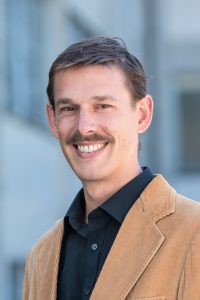
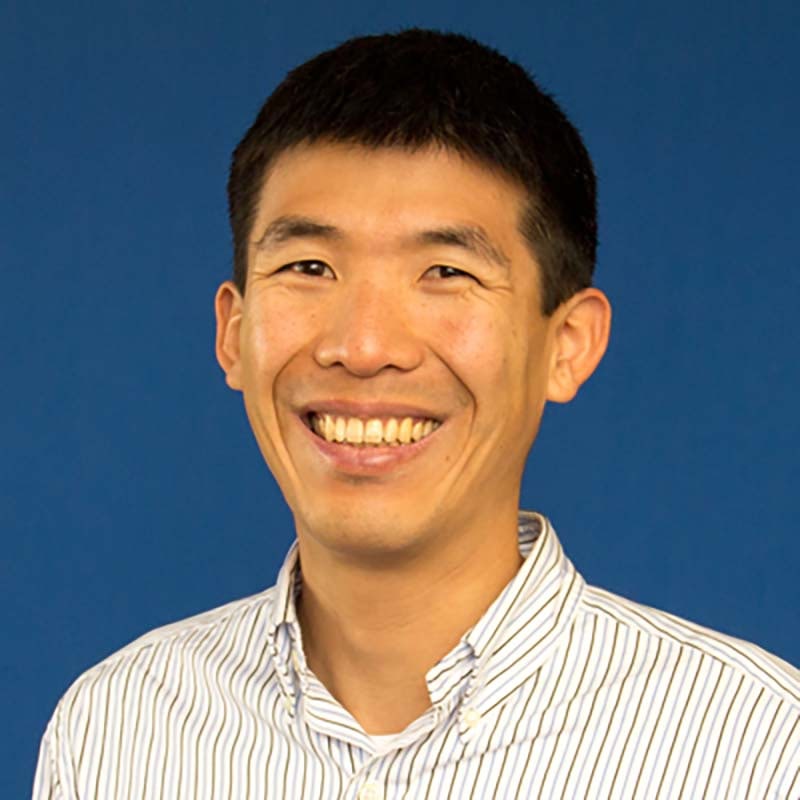
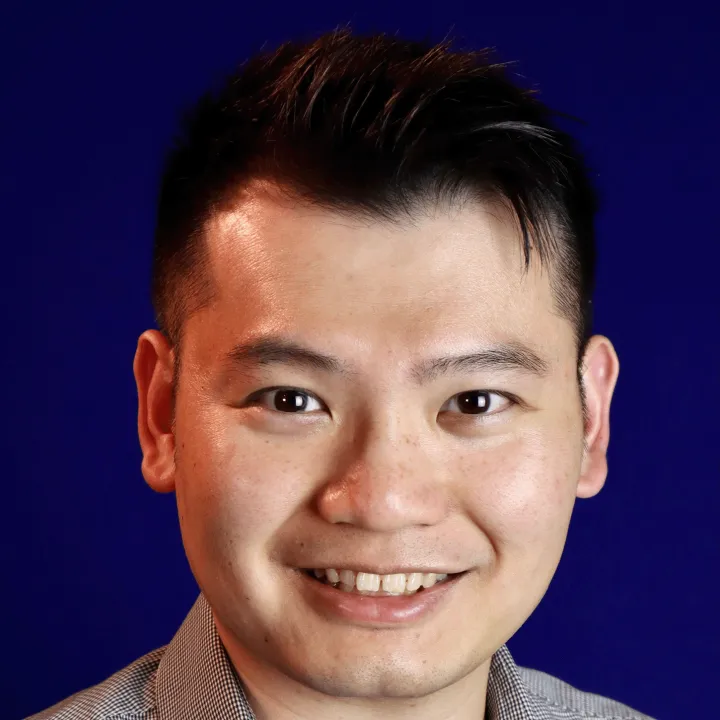
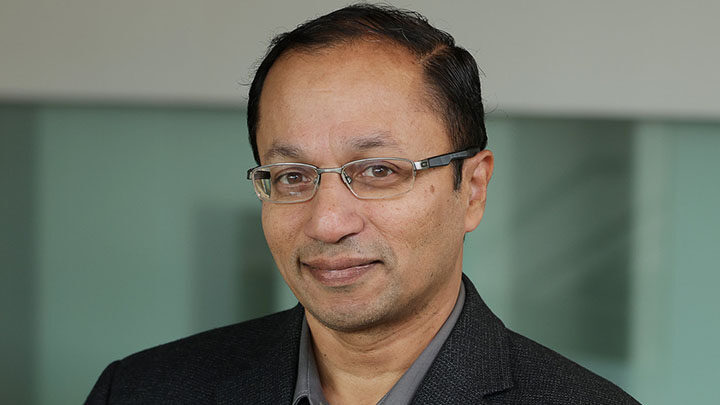
Dr. Alex Bigazzi is an Associate Professor and Associate Head (Undergraduate Program) in the Department of Civil Engineering at the University of British Columbia (UBC), with a joint appointment in the School of Community and Regional Planning. He leads the REACT Lab, focusing on active transportation, micromobility, and sustainable infrastructure design. His research emphasizes the intersection of physics, physiology, and behavior in active travel, particularly for pedestrians and cyclists, and addresses emissions reduction and equitable urban mobility. Bigazzi holds a B.M. in Jazz Saxophone from the University of Miami and a Ph.D. in Civil Engineering from Portland State University. His career includes academic and practical contributions, such as founding the REACT Lab and leading projects on e-bike incentives, air pollution exposure, and infrastructure design. His work has earned awards like the 2024 Wall Legacy Award for inclusive transport design and the 2023 Climate Action Award. He teaches courses on pedestrian/bicycle facility design and capstone projects, mentoring students through UBC’s Civil Engineering programs.
Byron Yu is a Professor in Electrical & Computer Engineering and Biomedical Engineering at Carnegie Mellon University, with affiliations to the Neuroscience Institute and Robotics Institute. He is a core faculty member of the Center for the Neural Basis of Cognition. Research focuses on computational neuroscience , neural dynamics , and brain-machine interfaces . Key contributions include dimensionality reduction techniques and neural population activity analysis. Recent publications explore topics such as neural dynamics during motor imagery, BCI optimization, and attentional processing. His work has appeared in Nature Neuroscience , Neuron , and eLife , often as cover articles. Awardees include the Gerard G. Elia Career Development Professorship and AIMBE Fellowship . His lab has mentored numerous PhD and postdoctoral researchers, many now in academic and industry leadership roles.
Raul Vicente Zafra is a Professor of Data Science at the University of Tartu, Faculty of Science and Technology, Institute of Computer Science, where he has been working since 2013. His research spans computational neuroscience, artificial intelligence, and data science, with a particular focus on bridging biological and artificial models of intelligence. Education: PhD in Physics (2001-2006), University of the Balearic Islands BSc in Physics (1997-2001) Professor Zafra's research interests center on computational neuroscience and artificial intelligence, with specific expertise in brain-computer interfaces, reinforcement learning, neural modeling, and explainable AI. His work bridges the gap between biological and artificial intelligence systems, exploring how neural principles can inform machine learning algorithms and vice versa. He has made significant contributions to understanding neural coherence, time interval learning in neural systems, and the application of information theory to brain-computer interfaces. His research often involves interdisciplinary collaboration between computer science, neuroscience, and medicine. Analysis of Zafra's recent publications reveals a strong focus on the intersection of artificial intelligence and neuroscience. His work spans explainable AI methods, brain-computer interfaces, reinforcement learning models that mimic cognitive processes, and neurophysiological studies of brain activity. A notable trend is his exploration of how biological principles of neural computation can inform and improve artificial intelligence systems, particularly in areas like time-based learning, consciousness modeling, and neural coherence. Scientific Awards: 2012: Attendee at the 62nd Lindau Nobel Laureate Meeting 2007: Quantum Electronics and Optics Division Prize of the European Physical Society for the best PhD Thesis in Applied Optics in Europe 2006: PhD Extraordinary Award of the Physics Department of the University of the Balearic Islands 2001: Physics Degree Extraordinary Award (First Class Honors, best GPA) 1997: Bronze Medal in the "8th Spanish Physics Olympiad" Professor Zafra has been principal investigator on numerous significant research projects including the Estonian Centre of Excellence in Artificial Intelligence, Cardiovascular Stress Impacts On Neuronal Function, and Bridging biological and artificial models of vision. His grant portfolio demonstrates strong funding support from the Estonian Research Council, European Commission, and other major funding bodies. He has supervised multiple PhD students and mentored early-career researchers in computational neuroscience and AI. His laboratory work focuses on developing computational models of neural systems and applying these insights to artificial intelligence. Current research directions include explainable AI methods, brain-computer interfaces, modeling of consciousness and cognitive processes, and the application of AI to healthcare challenges.
Alex Wong is an Assistant Professor of Computer Science at Yale University, specializing in computer vision, robotics, and medical imaging. His research focuses on sensor fusion, unsupervised learning, 3D vision, robust perception under adverse conditions, and medical image analysis. He holds degrees from the University of California, Los Angeles (UCLA), including a B.S., M.S., and Ph.D. in Computer Science. Wong’s work bridges theoretical advances with practical applications, particularly in depth estimation, autonomous systems, and medical diagnostics. He has received prestigious awards such as the NeurIPS Outstanding Student Paper Award (2011) and the ICRA Best Paper Award in Robot Vision (2019). His research often addresses challenges in unstructured environments, emphasizing robustness and adaptability. Recent projects include developing novel frameworks for unsupervised depth completion, adversarial robustness in vision systems, and multimodal fusion techniques. His contributions span conferences like CVPR, ICCV, and ICRA, with a strong focus on advancing AI for real-world applications in healthcare and robotics. Education: B.S., Computer Science, UCLA M.S., Computer Science, UCLA Ph.D., Computer Science, UCLA Awards: NeurIPS Outstanding Student Paper Award (2011) ICRA Best Paper Award in Robot Vision (2019) His lab at Yale Engineering focuses on AI-driven solutions for perception challenges, collaborating across disciplines to advance medical imaging and autonomous systems. Current efforts explore generative models, continual learning, and vision-language integration for robust scene understanding.
Dr. Krishnan Mahesh is a Professor at the University of Michigan with joint appointments in Mechanical Engineering and Naval Architecture and Marine Engineering. He serves as Director of the Center for Naval Research and Education and leads the Computational Fluids Laboratory, where he develops advanced numerical methods for simulating multi-physics turbulent flows. Education: Ph.D. (1996), M.S. (1990) from Stanford University, B.Tech (1989) from IIT Bombay Leadership: Director, Center for Naval Research and Education (2022-present) His research focuses on high-fidelity simulations of turbulent flows with applications in marine propulsors, multiphase systems, cavitation, hydroacoustics, superhydrophobic surfaces, biofouling, fluid-structure interaction, and flow stability. His group develops the MPCUGLES software for unstructured grid simulations on parallel computing platforms. Recent work examines cavitation dynamics , tip vortex flows , and roughness-induced transition in complex marine and aerospace systems. His 15 most recent articles demonstrate expertise in LES/DNS of multi-physics flows, with emphasis on marine propulsion, bubble collapse, and turbulent noise prediction. Scientific Honors: 2021 AIAA Best Paper Award 2018 Fulbright Scholar 2017 Marine Propulsors Symposium Best Paper 2011 APS Fellow 2010 Taylor Award for Distinguished Research He mentors numerous graduate students and postdoctoral fellows, with collaborative projects spanning jet in crossflow analysis, gas turbine simulations, and shock-turbulence interactions. His research receives funding from ONR, NSF, and international naval programs.
Kenneth Pomeranz is the University Professor of Modern Chinese History at the University of Chicago in the Department of East Asian Languages and Civilizations (EALC). Previously taught at the University of California, Irvine , his research spans late Imperial and twentieth-century China , comparative world history , and global economic systems . Research Focus: Reciprocal influences between state, society, and economy; origins of the world economy through mutual regional influences; comparative studies of labor, family organization, and economic history. Current Projects: A history of Chinese political economy from the seventeenth century to the present; a book titled Why Is China So Big? exploring China's political unity despite its vast size. Scientific Awards and Fellowships: John K. Fairbank Prize (twice) World History Association Book Prize (shared) Guggenheim Fellowship American Academy of Arts and Sciences Fellow Publications: Key works include The Great Divergence , The Making of a Hinterland , and The World that Trade Created . His articles address topics such as labor-intensive industrialization, global environmental history, and Qing state-building.
Angjoo Kanazawa is an Assistant Professor in the Department of Electrical Engineering and Computer Sciences (EECS) at the University of California, Berkeley. She leads the Kanazawa AI Research (KAIR) lab under the Berkeley Artificial Intelligence Research (BAIR) umbrella and serves on the advisory board of Wonder Dynamics. Her research focuses on the intersection of computer vision, computer graphics, and machine learning, with a particular emphasis on 4D reconstruction of dynamic scenes, neural radiance fields (NeRF), and systems that model human-environment interactions from 2D visual data. Education : Ph.D., Computer Science (2017), University of Maryland, College Park BA, Mathematics and Computer Science (2012), New York University (NYU) Her work aims to build systems that can capture, perceive, and understand complex 3D/4D worlds from photographs and videos, enabling applications in scene reconstruction, motion analysis, and generative modeling. She has pioneered techniques for scaling NeRFs across GPUs (NeRF-XL), developing open-source tools like nerfstudio and gsplat. Her recent publications focus on topics like self-occluded avatar recovery (SOAR), decentralized diffusion models, and 4D reconstruction of articulated objects for robotics. Kanazawa's research has been recognized with prestigious awards including the IEEE CS TCPAMI Young Researcher Award (2024) , Sloan Research Fellowship (2023) , and Google Faculty Research Award (2021) . Her lab has trained numerous students who now hold positions at leading institutions and companies like Anthropic, Meta Reality Labs, and Luma AI. Key Scientific Awards : IEEE CS TCPAMI Young Researcher Award (2024) Sloan Research Fellow (2023) Hellman Fellow (2022) Bakar Fellows Spark Award (2022) Google Faculty Research Award (2021) Her KAIR lab collaborates extensively with industry partners and academic institutions, including the Max Planck Institute and Google Research. She has served as an advisor for PhD students and postdocs who now lead teams at UC Berkeley, MIT, Stanford, and Luma AI, while her teaching includes graduate courses like CS 280A (Computer Vision) and CS 294-173 (Learning for 3D Vision).
Karen I. Winey serves as the Harold Pender Professor in the Department of Chemical and Biomolecular Engineering and Materials Science and Engineering at the University of Pennsylvania's School of Engineering and Applied Science. Her research group employs experimental and computational tools to investigate advanced polymers for energy applications, particularly focusing on proton and ion conductivity for fuel cells and batteries within the Laboratory for Research on the Structure of Matter (LRSM). Dr. Winey's research encompasses: Designing functional polymers to improve proton, hydroxide, and ion conductivity Studying polymer nanocomposites and nanoparticle dynamics in electrochemical devices Developing polymer-to-polymer upcycling methods to convert waste polyolefins to higher value polymers Revolutionizing understanding of ionomer morphologies beyond traditional spherical aggregate models Her recent publications reveal significant advances in sustainable energy materials, particularly fluorine-free alternatives to conventional polymer electrolytes. The research spans fundamental studies of ion transport mechanisms in precisely engineered polymers to practical applications in energy devices. A critical focus is understanding how nanoscale morphology affects macroscopic properties, with particular attention to structure-property relationships in ion-conducting polymers for fuel cells and batteries. Scientific recognition includes: 2025 Turner J. Alfrey Visiting Professor Harold Pender Professorship (endowed chair) NSF DMR Polymers grant awarded July 2025 Dr. Winey actively mentors a diverse research group including PhD students, postdoctoral researchers, and undergraduates. Her lab recently welcomed six summer undergraduates and has celebrated numerous student achievements including qualifying exam successes and award-winning presentations. Current major projects include the Port5 collaboration and the PolyUp project focused on polymer upcycling through dehydrogenation and functionalization strategies. The Winey Group operates within Penn's state-of-the-art Vagelos Laboratory for Energy Science and Technology (VLEST), maintaining active collaborations with institutions including the University of Konstanz in Germany, Florida State University, and Michigan State University. The group regularly hosts international visitors and participates in major conferences including the APS Global Physics Summit.
Karl Gustafsson is a Professor at Stockholm University within the Department of Economic History and International Relations. His work bridges security studies , collective memory , and digital research methods in international relations. Current Role: Professor of International Relations, Stockholm University Previous Positions: Post-Doc at Lund University, Researcher at Swedish Institute of International Affairs Visiting Appointments: University of Tokyo, Osaka University, Keio University, Academia Sinica, Nordic Institute of Asian Studies Research Focus: Karl specializes in memory politics , ontological security , and anxiety-driven international dynamics , particularly in Sino-Japanese relations and digital platforms . His studies explore how historical narratives and online memory construction influence state identity and policy. Awards & Grants: Recipient of the Wang Gungwu Prize (2014) and Stockholm University Association’s award (2011). Holds Swedish Research Council and Marianne & Marcus Wallenberg Foundation grants for projects on apologies in international politics and digital memory in East Asia . Publications: His work appears in journals such as International Studies Quarterly , European Journal of International Relations , and Memory Studies , addressing topics like narrative power in East Asia, anxiety’s role in policy change , and digital humanities applications in IR.
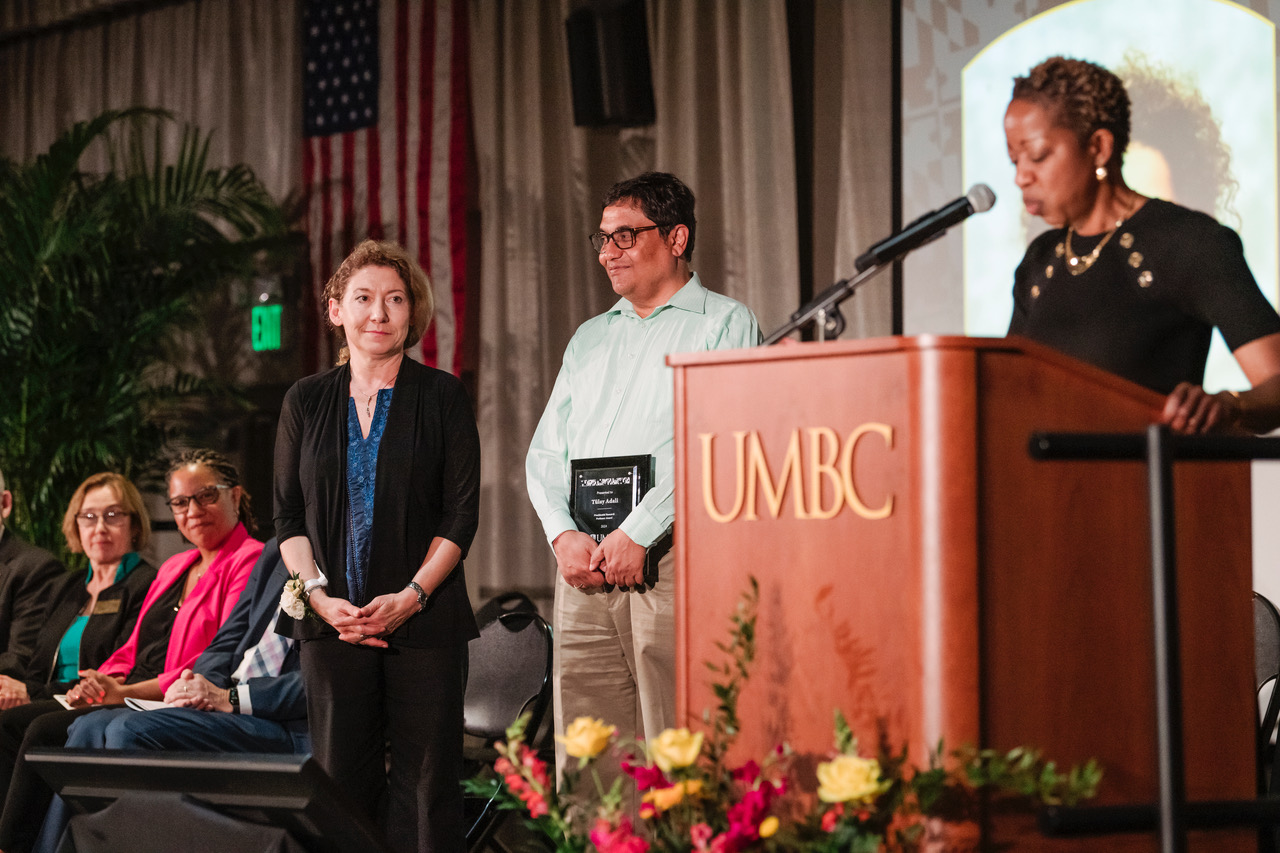
Tülay Adali is a Professor in the Department of Computer Science and Electrical Engineering at the University of Maryland, Baltimore County (UMBC). She has held this position since 1992 and was named a Distinguished University Professor in 2015 for her contributions to statistical signal processing and machine learning. Currently serving as Editor-in-Chief of the IEEE Signal Processing Magazine, she has also held leadership roles in IEEE committees and conferences. Her research focuses on statistical signal processing, machine learning, and their applications in medical imaging and data fusion. Dr. Adali earned her Ph.D. in Electrical Engineering from North Carolina State University in 1992. Her work integrates foundational signal processing techniques with biomedical applications, addressing challenges in neuroimaging analysis. She leads the Machine Learning for Signal Processing laboratory, supported by grants from NSF and NIH. Her lab develops algorithms for analyzing complex signals in medical contexts, emphasizing reproducibility and interdisciplinary collaboration. Recognition includes IEEE Fellow, AIMBE Fellow, AAIA Fellow, Humboldt Research Award, and NSF CAREER Award. She has authored numerous papers on fMRI analysis, independent component analysis, and multimodal data fusion. Her editorial leadership and service to technical communities reflect her commitment to advancing signal processing and education. Education: Ph.D. in Electrical Engineering, North Carolina State University (1992) Grants: NSF, NIH-funded projects on medical imaging and signal processing Awards: SPS Meritorious Service Award, SPIE Pioneer Award
Jenna Wise DiVincenzo is an Assistant Professor at the Elmore Family School of Electrical and Computer Engineering at Purdue University. She specializes in research areas such as software verification, formal methods, and programming languages, with a focus on gradual verification techniques that combine static and dynamic analysis. Her work emphasizes usability and scalability in verification tools, and she has contributed to projects like Gradual C0 and gradual null-pointer analysis. Dr. DiVincenzo earned her PhD in Software Engineering from Carnegie Mellon University (2023) and a BS in Mathematics and Computer Science from Youngstown State University (2017). She has interned at IBM Research, MIT Lincoln Laboratory, and the Software Engineering Research and Empirical Studies Lab at YSU. Her awards include the Google PhD Fellowship, NSF GRFP Fellowship, and 2022 Rising Star in EECS. Her research projects span theoretical advancements in gradual verification, empirical studies on usability, and practical tool development. She advises PhD students (e.g., Craig Liu, Conrad Zimmerman) and collaborates on initiatives like gradual verification for Rust and educational tools to teach verification concepts. Her work also explores leveraging large language models for specification generation and enhancing verification tool soundness through formal proofs.
Marlon Dumas is a Professor of Information Systems at the University of Tartu's Faculty of Science and Technology, with a 20-year academic career spanning Estonia and Australia. He holds a PhD in Computer Science from the University of Grenoble 1, France, and has served as Head of Chair and Programme Director in Software Engineering programs. Specializes in Business Process Management (BPM) and Process Mining Current research focuses on prescriptive process monitoring, simulation modeling, and data privacy Recipient of 25+ scientific awards, including multiple Test of Time Awards and the Estonian National Research Award in Technical Sciences Editorial leadership: Area Editor for Information Systems (Elsevier) and ERC Starting Grant Panel Chair His work bridges theoretical advancements in BPM with practical applications in financial services and anti-money laundering. He has developed tools like SIMOD, Kronos, and Kairos for process optimization and analysis. His research integrates AI/ML techniques (reinforcement learning, causal inference) with traditional process modeling. Key trends in his recent publications include: Prescriptive monitoring systems combining causal inference and machine learning Privacy-preserving process mining techniques (differential privacy, anonymization) Resource availability modeling and multi-objective process optimization LLM applications for process analysis and intervention policies Scientific honors include: 2024 BPM Best Paper & Prototype Awards 2023 ICPM Best Prototype Award 2019 ERC Advanced Grantee 2017 Estonian National Research Award in Technical Sciences 2019 MODELS Test of Time Award 2017 BPM Best Prototype Award He has mentored PhD candidates as thesis examiner and contributed to 30+ conference program committees, including General Co-Chair roles at ESEC-FSE 2019 and CAiSE 2018. His work has been supported by European Research Council grants and Estonian Science Foundation projects.
Professor Maarten Prak is a distinguished scholar of Economic and Social History at Utrecht University, where he has been a faculty member since 1992. He is affiliated with the Faculty of Humanities and the Department of History and Art History. Prak serves on the governing board of the Royal Netherlands Academy of Arts and Sciences (KNAW) and All European Academies (ALLEA), having previously chaired the Humanities Board of the Netherlands Organisation for Scientific Research (NWO) from 2014-2016. Prak's research spans social history, urban history, guild systems, citizenship, global history, and early modern European history, with particular focus on the Dutch Golden Age. His scholarly trajectory evolved from local Dutch social history to national history, then to comparative European history, and finally to global historical perspectives. His work demonstrates how urban citizenship, guild structures, and social organization shaped political development across Europe. His publication record reveals consistent engagement with long-term historical processes, particularly examining how citizenship evolved from urban contexts to national frameworks. His research connects economic structures with political institutions, showing how guilds, urban governance, and social hierarchies influenced the development of modern political systems across Europe. Member Royal Netherlands Academy of Arts and Sciences (2008) Teacher of the Year, Universiteit Utrecht (2014) Winner of the 2015 book award of the American Ceramic Circle Winner of the 2019 Prix Dix-Septième Siècle Prak has maintained an active teaching career alongside his research, earning recognition as Teacher of the Year in 2014. His academic governance responsibilities have included serving as research director for his department and faculty, chairing the Humanities Board of NWO (2014-2016), and participating in the governing boards of KNAW and ALLEA. He has organized numerous international workshops and conferences and has been a visiting scholar at prestigious institutions including the University of Cambridge, London School of Economics, and École des Hautes Études in Paris.
A. Michael Knemeyer is a Professor of Logistics at The Ohio State University's Max M. Fisher College of Business, where he contributes to research and teaching in supply chain management. His work focuses on supply chain relationships, risk and resilience, vendor relations, and sustainability integration. Educational Background: PhD from the University of Maryland, BSBA from John Carroll University Research Areas: Supply chain relationships, international logistics, sustainability, vendor relations, risk management Key Awards: 2013 IJPDLM Outstanding Paper Award, 2013 Bernard J. La Londe Best Paper Award Knemeyer's publications in journals like Harvard Business Review and Journal of Business Logistics explore critical themes in logistics outsourcing relationships, supply chain integration, and sustainable practices. His work often examines cross-cultural dynamics and institutional factors affecting supply chain performance. Selected Courses: Strategic Supply Chain Management, Contemporary Issues in Supply Chain Management, Logistics and Supply Chain Decision Making
Alexandra Livada is a Professor at the Department of Statistics within the School of Information Sciences and Technology at Athens University of Economics and Business (AUEB). She holds office at two locations: 12 Codringtonos Street, 2nd Floor and 76 Patision Street, Antoniadou Wing, 3rd Floor in Athens, Greece. Her contact information includes email livada@aueb.gr and phone number +30 210-8203521. Dr. Livada earned her BA and MA in Economics from Athens School of Economics and Business followed by a PhD in Economics from Essex University, UK in 1988. Her academic career has spanned several decades with extensive teaching experience at both undergraduate and postgraduate levels. Her research interests encompass a diverse range of quantitative fields: Quantitative economics and applied econometrics Time series analysis and forecasting techniques Income distribution and inequality measurement Applied financial econometrics Business cycles analysis Medical statistics Index numbers and official statistics Professor Livada's publication record demonstrates consistent scholarly productivity across multiple disciplines, with a noticeable trend toward interdisciplinary work connecting economics with healthcare and social policy. Her recent research shows increasing focus on income inequality across different geographic regions, economic sentiment during crises, and the intersection of medical conditions with statistical analysis. Her scholarly contributions have been recognized through numerous citations in leading journals and books. She has served as a referee for prestigious journals including the European Journal of Political Economy, Journal of Public Economics, and Journal of Insurance, Mathematics and Economics. Professional service highlights include: Member of multiple project teams Marie-Curie project supervisor External evaluator for the Greek State Scholarship Foundation (IKY) External evaluator for the Social Sciences and Humanities Research Council of Canada Co-author of the book "Index Numbers and Official Statistics" Professor Livada maintains an active research agenda with collaborations spanning economics, statistics, and medical fields, demonstrating the interdisciplinary nature of contemporary quantitative research.