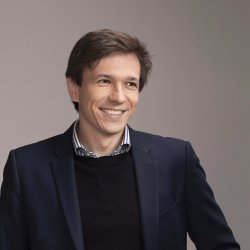
Dr. Daniel Read is a Senior Lecturer at the Institute for Sport Business , Loughborough University London. His interdisciplinary research addresses critical integrity issues in sport through qualitative and quantitative methodologies, focusing on athlete welfare, governance, sponsorship, fan behavior, and digital media. PhD in Sport Business (Loughborough University London) MRes in Psychology BSc in Sports Science and Physiology Dan's current projects examine: Athlete welfare (care-seeking behavior, medicine misuse, education) Commercial innovation vs. sporting tradition Digital divide impacts on sport access 21st-century sport governance He collaborates with organizations such as the World Anti-Doping Agency , FIFA , World Rugby , and the Professional Footballers’ Association . His teaching expertise spans research methods, data analytics, sport integrity, and digital media, alongside PhD supervision.
Gareth Hall is a Senior Lecturer in Psychology at Aberystwyth University's Department of Psychology, where he has been an established member since the department's founding in 2007. He holds a PhD from Glamorgan University and is a Chartered Member of the British Psychological Society (BPS) and a Fellow of the Higher Education Academy (FHEA). His academic career includes significant administrative roles such as Examinations Officer (2007-2014, 2016), Senior Tutor (2014), and Acting Director of Admissions and Recruitment (2009, 2011). Dr. Hall's research focuses on social psychology with particular expertise in social identity theory applied to real-world contexts. His work spans sport psychology, examining sport for development programs, intergroup behavior in fandom, and well-being in physical culture communities like CrossFit. He has pioneered research testing laboratory theories in real-world settings, challenging traditional experimental paradigms through creative methodologies that incorporate digital technologies and interdisciplinary approaches. His publication record shows consistent output since 2006, with significant contributions in 2019-2023 focusing on sport psychology applications in Brazil, forensic psychology, and educational technology. His work demonstrates a clear trajectory toward interdisciplinary collaboration, particularly in sport for development contexts and the application of social identity theory to complex social issues. Scientific Awards and Recognition: Teaching and Learning Improvement Award from Aberystwyth University (2011) Active editorial roles including for Frontiers in Sports and Active Living (2021) and Bulletin of Latin American Research (2019) Dr. Hall has secured research funding from prestigious organizations including the Economic and Social Research Council (2018) and British Council (2015). His external engagements include committee membership with the British Psychological Society's Undergraduate Education Committee (2015-present), AQU Catalunya (2022-2023), and visiting researcher positions at the University of Padua (2017-2018). His work contributes to multiple UN Sustainable Development Goals, particularly those related to social development and inclusion.
Dr. Davies Banda is a Lecturer in Sport Policy and Deputy Director of the Academy of Sport at the Moray House School of Education and Sport, University of Edinburgh. He holds a PhD in Sport Policy and Political Science Analysis from Loughborough University, alongside certifications in academic practice and teaching methodologies. His research focuses on sport-for-development interventions, youth social inclusion, and legacy strategies from sport mega-events. Notable projects include his role as Academic Advisor to FIFA's Generation Amazing Foundation during the 2022 World Cup and leadership in curriculum development partnerships with Zambian universities. He has secured significant grants, including £298,000 from Comic Relief for child miner education projects in Burkina Faso and £60,000 via the British Council's DelPHE initiative. Banda supervises PhD students exploring topics such as SDP in South Africa, Paralympic governance, and sport policy in Indonesia. His teaching spans sport management, policy analysis, and advanced research methods at both undergraduate and postgraduate levels.
John Kelly is a Lecturer in the Sociology of Sport at the Moray House School of Education and Sport, University of Edinburgh. He is part of the Institute for Sport, Physical Education & Health Sciences (ISPEHS) and a joint convenor of the Edinburgh Critical Studies in Sport (ECSS) research group. His research focuses on intersections between sport, society, and power dynamics, including topics like militarism, sectarianism, ethnicity, and gender. He has advised governmental bodies in Europe and media organizations globally, and his work spans international journals and book publications. John holds a PhD in Sociology of Sport from Loughborough University (2003–2007), following MA (University of Brighton) and BA (University of Wales Institute, Cardiff) degrees. His teaching includes undergraduate and postgraduate courses on sport sociology, media, and research methods. He actively supervises PhD students exploring topics like sport and social integration, national identity, and body image in China. His research interests emphasize sociological theory, civil-military relations, and the role of sport in shaping identities. Current projects include studies on power in sport research, commemorations in sport, and Irish diaspora communities. John is also a joint editor of the Asia Pacific Journal of Sport and Social Science , reflecting his commitment to advancing critical academic discourse in sport studies.
Dr Leon Davis is a Senior Lecturer in Marketing and Events Management at Teesside University International Business School. He holds a PhD in Sports Event Sociology from Teesside University (2020), an MA in Sport, Culture and Community from Sheffield Hallam University (2012), and a Bachelor’s in Sports Sociology (2007). His research focuses on fandom, sports marketing, live event management, and prosumption. Notable projects include critical analysis of fan roles at PDC darts events and the impact of digital technologies on live spectacles. He has also explored EDI provisions at events and accessibility in sports venues. Recent publications (2023-2025) examine topics like fan engagement policy reforms, sportswashing in elite sports, and accessibility innovations at live events. His work has been published in journals like Managing Sport and Leisure and Cultural Trends . Leon is a Senior Fellow of the Higher Education Academy (SFHEA) and has extensive teaching experience across modules including Strategic Marketing and Research Methods. He supervises PhD, DBA, and postgraduate research projects.
Andy Stevens is a Senior Lecturer in Sport Management at the University of Winchester. His career includes roles as a consultant to the Football Association (FA), focusing on five-a-side football and futsal development, including strategies for the FA Futsal League and facility strategies. He has authored numerous reports for the SportBusiness Group and contributed to Sport Business magazine, specializing in venue and event management. His research explores sport industry strategy, management, and performance, with notable work on sport governance and facility development. His publications span academic journals, industry reports, and conference presentations, addressing topics like sport venue optimization, sustainability, and global sport events as soft power tools. He has advised organizations such as the Anschutz Entertainment Group and Disability Sport England (now Activity Alliance), contributing to event calendars including the London Wheelchair Marathon. His work bridges academic research and practical industry challenges, emphasizing adaptability and innovation in sport management.
Dr. Michael Sinclair is a Lecturer in Urban Analytics at the University of Glasgow , affiliated with the Division of Urban Studies and Social Policy and the Urban Big Data Centre . He convenes the MSc in Urban Analytics and co-leads the Socio-Environmental Action research cluster . His research focuses on leveraging novel data sources (e.g., mobile apps, social media) to address societal and environmental challenges, particularly human-nature interactions and greenspace valuation. Sinclair leads projects funded by the UK Government’s Department for Culture, Media and Sport and the Economic and Social Research Council (ESRC). His work emphasizes ethical use and representativeness of big data, with applications in urban policy, ecosystem services, and environmental sustainability. Sinclair has secured grants totaling over £1M, including projects on greenspace accessibility and urban data dashboards. He supervises students on GIS and urban analytics topics and contributes to policy-relevant datasets like Tamoco Open Spaces . Notable achievements include developing methodologies for valuing nature-based recreation and advancing spatial interaction models for urban green spaces. His research bridges Human Geography and Environmental Science, with publications in journals like Ecosystem Services and Global Environmental Change .
Mikolaj Firlej is a Lecturer in AI Law and Regulation at the University of Surrey's Surrey Institute for People-Centred Artificial Intelligence (PAI). He holds a D.Phil. and M.Phil. from the University of Oxford's Faculty of Law, an MPP from the Oxford School of Government, and degrees from the University of Warsaw. His research focuses on AI ethics, human control over autonomous systems, and defense sector innovation. He co-founded the Expeditions Fund, a dual-use venture capital firm, and serves as Director of the Law and Tech Hub. Research interests include AI security, global policy challenges for emerging technologies, and the intersection of AI with defense and intelligence sectors. His work emphasizes practical legal frameworks for regulating autonomous systems while fostering innovation. Firlej teaches AI and Law, Intellectual Property Law, and Law, AI & Technology courses. He supervises PhD students in AI security at Surrey's PAI. His publications span AI governance in defense, ethical frameworks for autonomous weapons, and regulatory approaches to complex adaptive systems. He actively engages with policy through expert testimony on UK AI defense capacity and international AI weaponization debates. Outside academia, he co-leads a family investment firm and explores geopolitics, literature, and sport.
Patrick J. Vernon is a Lecturer in Gender and War Studies at King's College London's Department of War Studies. Their research specializes in queer and feminist approaches to international relations, with a focus on the intersection of coloniality, political violence, and identity politics. Employing critical theoretical frameworks Analysing humanitarian intervention through queer/decolonial lenses Contributing to debates on post-truth politics and bordering processes Key research areas include the racialized and gendered dimensions of colonial violence, LGBTQ+ inclusion in security studies, and the epistemicide of marginalized knowledge systems in global politics. Their 2024 monograph The Coloniality of Humanitarian Intervention examines how colonial temporalities shape contemporary interventionist practices through heteronormative and racist epistemologies. Recent publications demonstrate thematic clusters in: (1) queer critiques of sovereignty and security frameworks; (2) decolonial analysis of humanitarian intervention; (3) post-truth politics as discursive violence; (4) civilizational discourse in international events; and (5) LGBTQ+ inclusion in UN peacebuilding initiatives. This work consistently challenges Western-centric narratives in international relations while centering trans*, indigenous, and Palestinian lived experiences. As co-curator of The Healing Gardens of Bab and producer of community engagement projects like immersion: a celebration of community and belonging , Vernon bridges academic research with creative activism focused on minoritized communities. Their interdisciplinary methodology combines discourse analysis with queer phenomenology to interrogate the violent reproduction of international hierarchies.
Professor Toby Miller holds the Stuart Hall Professorship in Cultural Studies at Universidad Autónoma Metropolitana—Cuajimalpa, and is a Research Professor at the University of California, Riverside. He also serves as Sir Walter Murdoch Distinguished Collaborator at Murdoch University. His work spans cultural studies, environmental media, and global cultural policy. Miller has authored or edited over 40 books, including recent titles like How Green is Your Cell Phone? (2020), Greenwashing Culture (2018), and Global Media Studies (2015). His research interrogates the intersections of culture, technology, and ecology, with a focus on sustainability narratives in media and sport. Research interests include cultural labor, greenwashing in corporate and governmental practices, global media systems, and the future of the humanities. Miller’s interdisciplinary approach bridges sociology, media studies, and environmental ethics. He currently chairs the Cultural Studies Association (US). Awards: Cultural Studies Association Presidency, Sir Walter Murdoch Distinguished Collaborator Publications: Over 300 peer-reviewed papers and 40+ authored/edited books Miller advises on cultural policy at international levels and collaborates with institutions globally. His work is translated into 11 languages, reflecting its broad academic and public impact.
Professor Heather Wardle is a distinguished social scientist at the University of Glasgow's School of Social and Political Sciences, holding dual appointments in Urban Studies & Social Policy and the School of Health & Wellbeing. With nearly twenty years of experience, she specializes in gambling research, policy, and practice, serving as co-director of Gambling Research Glasgow and leading the prestigious Lancet Public Health Commission on Gambling. Her work is supported by major funding bodies including the ESRC, Wellcome Trust, and NIHR. Professor Wardle's research explores the evolving relationship between gambling and gaming behaviors, particularly how technological changes create new risks and opportunities. She investigates how policy evidence is framed and developed, with a strong emphasis on incorporating lived experience into decision-making processes. Her work bridges academic research, public health policy, and practical interventions, focusing on understanding gambling's impact on individuals' lives and developing effective solutions. Her extensive publication record demonstrates significant contributions to understanding gambling consumption patterns, gambling harms, sports betting culture, and the intersection between gaming and gambling. Recent work shows increasing attention to mental health impacts, policy development, and evidence-based interventions, particularly regarding vulnerable populations and specific contexts like football fan culture. Professor Wardle has played leadership roles in major research initiatives including the Health Survey for England and the British Gambling Prevalence Survey. She has developed innovative approaches to measuring gambling harms and has contributed significantly to shaping gambling policy through her evidence-based recommendations. Her work extends to developing practical tools like the 'Words Matter' language guide for respectful reporting on gambling. She leads Gambling Research Glasgow and has established significant collaborations across academic, policy, and practice domains. Her research team has conducted important studies on gambling harms in social care settings, esports betting, and the relationship between gambling marketing and unplanned gambling spend. Current projects include longitudinal studies of gambling careers during the pandemic and interventions targeting at-risk male sports bettors.
Dr Jung Woo Lee is a Senior Lecturer in Sport and Leisure Policy at Moray House School of Education and Sport, University of Edinburgh. He serves as Deputy Director of Research, Engagement and Impact at Moray House (2025–present), Research Director of the Scottish Centre for Olympic Research and Education (SCORE), and Guest Module Leader at the German Sport University Cologne’s MA Olympic Studies Programme. His roles include editorial board memberships for journals like International Journal of Sport Communication and Palgrave’s Sport in Asia series. Lee’s research focuses on sport diplomacy, mega-events, nationalism, media, and cultural studies, with particular attention to Korean Peninsula dynamics and East Asian geopolitics. His research interests span sport mega-events’ socio-political impacts, Olympic diplomacy, intercultural connections via sport (e.g., Gaelic games in East Asia), and sport nationalism. He leads projects funded by the British Academy, University of Edinburgh, and Korean/Taiwanese governments. Lee is affiliated with Edinburgh Critical Studies in Sport (ECSS) and actively engages in international conferences, addressing topics like North Korean women’s football, Sino-US-Qatari dynamics in the 2027 FIBA World Cup, and post-colonial sport cultures in Taiwan/South Korea. Lee has received prestigious fellowships from the Academy of Korean Studies (2022) and Taiwan’s Ministry of Foreign Affairs (2018). His work bridges academia and policy, emphasizing sport’s role in diplomacy, identity formation, and global cultural politics.
Dr. Fiona Morrison is a Lecturer in Childhood Studies and Programme Director of the BA Childhood Practice at the University of Edinburgh's Moray House School of Education and Sport. She holds a PhD in Social Policy and MSc in Childhood Studies from the University of Edinburgh and a BA in Community Learning and Development from the University of Dundee. Dr. Morrison specializes in children’s human rights with a socio-legal focus, particularly addressing domestic abuse and participatory methodologies. Her research bridges academia and policy, influencing national and international frameworks. She leads projects funded by the Royal Society of Edinburgh and ESRC, collaborating with organizations like Children’s Parliament and the Children and Young People’s Commissioner Scotland. Dr. Morrison co-leads the CAHSS Childhood and Youth research theme and chairs ethics leadership for the Children and Young People Thematic Hub. Her work emphasizes ethical research practices, policy advocacy, and child participation in legal and social contexts. Education: PhD Social Policy, University of Edinburgh MSc Childhood Studies, University of Edinburgh BA Community Learning and Development, University of Dundee Research Interests: Children’s rights accountability, domestic abuse, participatory research methods, socio-legal frameworks, and policy implementation. Key Roles: Member, Children and Young People Thematic Hub Leadership Group Co-lead, CAHSS Childhood and Youth Research Theme Core member, Observatory of Children’s Human Rights Scotland Grants: Includes RSE Personal Fellowship, ESRC grants, and Legal Empowerment Fund projects. Her teaching focuses on the BA Childhood Practice program, and she supervises PhD students exploring children’s rights in domestic abuse and policy contexts. Dr. Morrison’s publications span children’s rights under pandemic conditions, legal frameworks, and participatory methodologies, reflecting her commitment to translating research into tangible societal impact.
Dr. Ben Williamson is a Senior Lecturer in Digital Education at the University of Edinburgh's Moray House School of Education and Sport, affiliated with the Institute for Education, Community & Society (IECS) and the Centre for Research in Digital Education. His work critically examines how digital technologies, data infrastructures, and biometric/neurotechnological practices shape educational futures. Key areas of focus include the role of venture capital in education, algorithmic governance, and the privatization of educational systems. His research has been funded by the Leverhulme Trust and the Economic and Social Research Council (ESRC). Notable publications include Big Data in Education: The Digital Future of Learning, Policy, and Practice (2017). He maintains the Code Acts in Education blog and is active on Twitter as @BenPatrickWill. Williamson’s research explores intersections between biology and education (e.g., educational genomics), financial markets in schooling, and the governance of educational data by tech corporations. He critiques how platforms like Google Classroom and investors such as Amazon reshape educational practices and policies. His work emphasizes sociotechnical and infrastructural analyses of educational change. He supervises PhD students focusing on data-centric education policies, digital technology in education governance, and emerging biometric sciences in learning contexts. His articles analyze global EdTech dynamics, pandemic-driven privatization, and the ethical implications of biosocial education. Williamson’s affiliations include the Edinburgh Futures Institute, where he collaborates on future-oriented educational research. He has contributed to policy innovation labs and studies the impact of corporate actors like Pearson and the Chan Zuckerberg Initiative on educational systems.
Professor Sonia Falconieri holds a faculty position in Corporate Finance at the Bayes Business School, City St George's, University of London. She previously held roles at institutions including the Einaudi Institute for Economic and Finance (Rome), the University of Amsterdam, Tilburg University, and Brunel University (London). Her research focuses on corporate finance, IPO design, gender diversity, and corporate governance. She contributed to the 2019 Hampton-Alexander review and has been featured in Forbes and People Management. Education: BSc/MSc in Economics from Bocconi University (Milan, Italy), PhD in Economics from the University of Toulouse (France). Research interests include IPO underpricing, gender quotas in corporate boards, and the role of information theory in corporate finance. She has supervised multiple PhD students, including 1st supervisions of Chiara De Amicis and Chen Xu. Professional activities include serving as Associate Editor of the European Journal of Finance , organizing conferences, and media engagements on IPOs and corporate governance. Notable awards include the Senior Fellow of the Higher Education Academy.