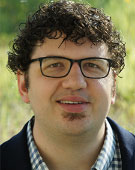
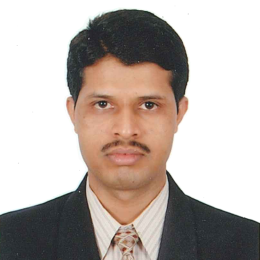
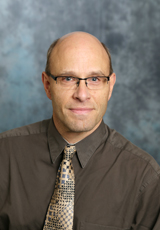
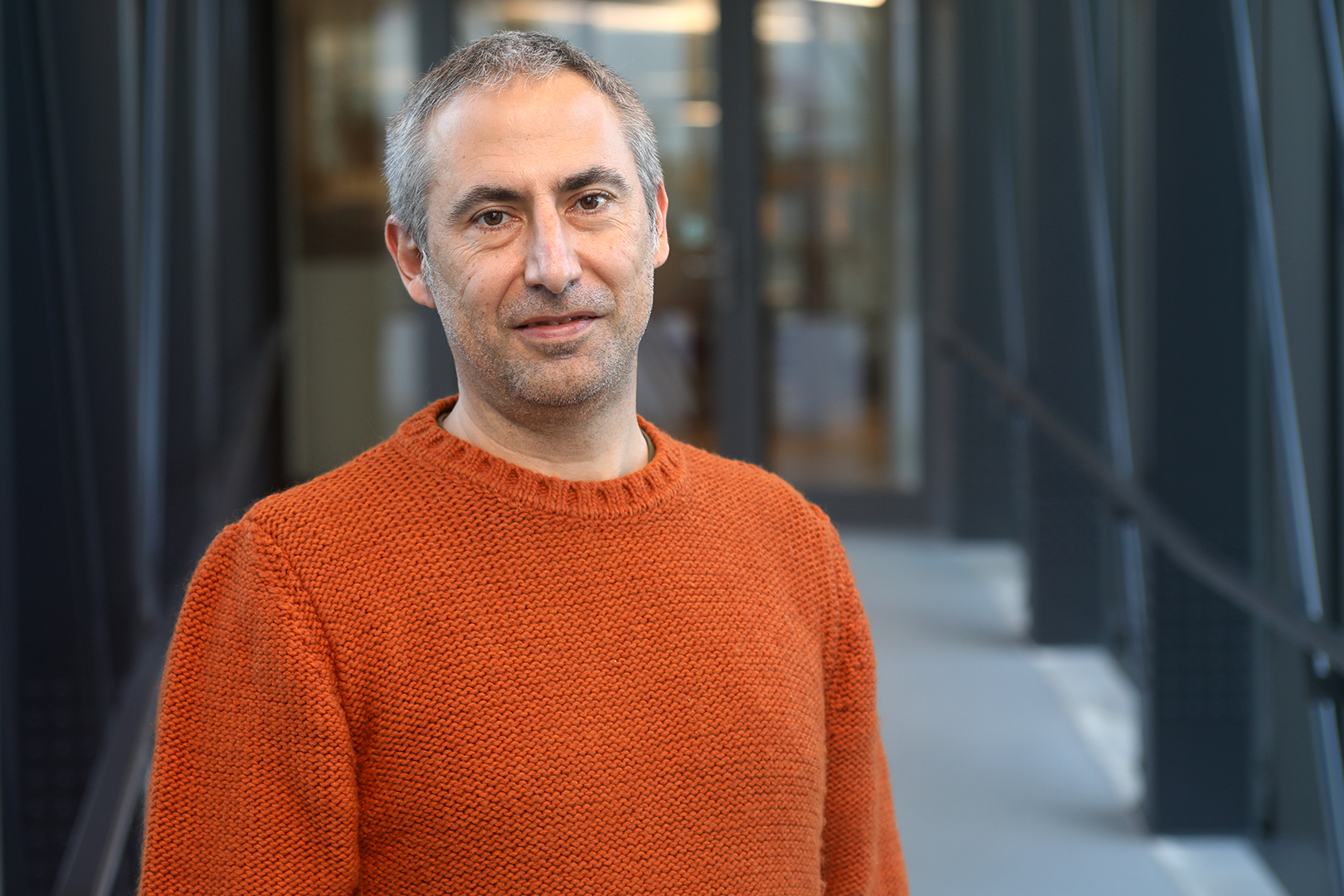
Ruchika Ojha is a Vice Chancellor's Research Fellow at RMIT University's School of Science, Australia. Her research focuses on the intersection of inorganic chemistry, electrochemistry, and biomedical/nanoenergy applications. Affiliation: RMIT University, School of Science Academic Rank: Research Fellow Email: ruchika.ojha@rmit.edu.au Her research interests include: Gold-based anticancer drugs and their delivery mechanisms Electrochemical hydrogen storage in carbon materials Metal-organic frameworks for energy conversion Proton battery technology development Nanozymes for biomedical applications Recent publications highlight her work on: Gold-sulfur complexes for ovarian cancer treatment Redox flow battery materials Platinum-based anticancer agents Morphology-controlled nanocatalysts Carbon dots for live cell imaging
Jake M. Yang is a Lecturer in Physical Chemistry at the School of Chemistry, University of Leicester, where he leads an interdisciplinary research group focused on electrochemistry and sustainable material processing. He holds a DPhil and MChem from the University of Oxford and was awarded an EPSRC Doctoral Prize in 2020 for developing electrochemical sensors to monitor oceanic 'blue carbon'. His research integrates operando electrochemistry with spectroscopic and fluorescent imaging to investigate chemical reactions at electrode interfaces and their environmental applications. He is particularly known for pioneering green recycling methods for lithium-ion batteries and fuel cell membranes. Electroanalysis and Sensor Instrumentation Operando opto/spectro-electrochemical instrumentation Recycling of Technological Critical Materials Monitoring Microplastics and Ocean Ecosystems Fundamental electrochemistry Finite difference simulations The recent publications highlight a strong trend toward sustainability-driven electrochemistry, with a focus on recycling technologies using ultrasound and vegetable oil nanoemulsions. These works bridge fundamental science with industrial applications, particularly in the circular economy of electronics and energy systems. Award Highlights: EPSRC Doctoral Prize Award RSC Horizon Prize 2024 (Faraday Institute ReLIB project) University of Leicester Chemistry Image of Research Competition, 1st Prize Jake actively mentors students and offers funded PhD opportunities. His work is supported by institutional and industry-aligned grants, particularly in sustainable battery and fuel cell recycling. He collaborates across disciplines, including Earth Sciences and engineering, and promotes knowledge transfer through public engagement and media outreach. He is a key member of the Centre for Sustainable Material Processing and leads research on techno-economic analysis of recycling processes, ensuring scientific innovation meets real-world industrial and environmental needs.
Professor Deanna D'Alessandro is a Professor in the School of Chemical & Biomolecular Engineering and Director of The Net Zero Institute at The University of Sydney. Her research focuses on advanced materials such as Metal-Organic Frameworks (MOFs) for energy efficiency, sustainability, and carbon capture. She holds a BSc (Hons I & Medal) and PhD from James Cook University (2001, 2006), followed by postdoctoral research at the University of Sydney and UC Berkeley. She has been recognized with prestigious fellowships, including the L'Oreal Australia for Women in Science Fellow (2010), Australian Research Council Future Fellow (2018–2022), and Young Tall Poppy Science Award (2011). Her research explores MOFs for carbon capture, electrochemical systems, and photonics, with applications in energy transition and environmental sustainability. She leads projects on Direct Air Capture, 3D printing of nanomaterials, and solid-state spectroelectrochemistry. Notable collaborations include work with Prof. Ben Powell (UQ) and Prof. Adam Micolich (UNSW) on superconductivity and photonic devices. She directs The Net Zero Institute, focusing on multidisciplinary solutions for decarbonization. Education: BSc (Hons I & Medal) and PhD from James Cook University. Awards: Includes ARC Fellowships, L'Oreal Women in Science, and Young Tall Poppy. Grants: Over $6M for CO2 capture materials and collaborations with industry partners like Southern Green Gas Ltd. Labs/Teams: Leads the D'Alessandro Research Group and collaborates with Sydney Nanoscience Hub, Sydney Policy Lab, and international partners. Her work bridges fundamental science and applied technologies, with over 150 publications and patents on CO2 capture and MOF applications.
John Swierk is an Associate Professor of Chemistry at Binghamton University's Department of Chemistry within Harpur College. His research focuses on radical reactions initiated by single-electron transfer via photo- and electrochemistry, with emphasis on photoredox catalysis, electrochemical synthesis, and tattoo ink photochemistry. He received his PhD from Pennsylvania State University and dual undergraduate degrees in Chemistry and Materials Science from the University of Pennsylvania. Research interests include: Spectroscopy, Organometallic Chemistry, Materials Chemistry, Analytical Chemistry, Photochemistry, and Photoredox Catalysis. His work on tattoo ink safety and photodegradation, funded by an NIH grant, employs transdisciplinary methods combining analytical chemistry, materials science, and cell biology. Key Awards: NSF CAREER Award (2021), Inter-American Photochemical Society Young Investigator (2023) Lab Activities: Swierk Group studies photoredox mechanisms, electrochemical reactions, and tattoo ink composition Teaching: Harpur College Teaching Award Honorable Mention (2020) Recent research trends show focus on: 1) Photoredox reaction mechanisms with kinetic modeling, 2) Electrochemical synthesis of functional materials, and 3) Tattoo ink safety and photochemical behavior. Over 30 publications since 2012 span topics from water-splitting photoelectrochemical cells to advanced catalytic systems. Lab members have received numerous awards including SUNY GREAT (Bernie, 2021), Beck Summer Fellowships, and Summer Scholars grants. Collaborations include Prof. Laura Rhoads (SUNY Potsdam) for biological studies of tattoo ink effects.
Prof. Markus Valtiner is a Professor at TU Wien's Department of Applied Interface Physics, focusing on interfacial processes, corrosion science, and electrochemistry. His research combines experimental and theoretical approaches to study solid-liquid interfaces, surface chemistry, and material degradation mechanisms. He leads a team investigating high entropy alloys, passive film structures, and biomimetic membrane systems. Education: Dipl.-Ing. (Diplom-Ingenieur) in Engineering, Dr.techn. (Doctor of Engineering) from TU Wien. Research Interests: Corrosion mechanisms, electrochemical analysis, surface modification, and thin film characterization. His work spans applications in automotive materials, protective coatings, and biomedical systems. Recent Trends: Articles emphasize real-time visualization of ion dynamics, advanced surface analysis via LEIS and AFM, and sustainable material treatments. Studies on hydration layers and superlubrication highlight innovative solutions for friction reduction in confined spaces. Awards: None explicitly mentioned. Advising & Grants: Advised 19 thesis students (2018–2023) on topics like electrochemical functionalization, corrosion protection, and nanophotonic materials. Grant activities focus on interdisciplinary collaborations between physics, chemistry, and engineering. Labs & Teams: Leads the Network Lab at TU Wien, specializing in interfacial physics and advanced materials characterization using cutting-edge microscopy and spectroscopy techniques.
James Durrant serves as Professor of Photochemistry at Imperial College London since 2005 and holds a part-time Sêr Cymru Solar Professorship at Swansea University since 2013. His research focuses on photochemical processes in solar energy conversion devices, utilizing transient spectroscopy to analyze electron transfer dynamics in next-generation photovoltaic and photocatalytic systems. His academic foundation includes a B.A. in Natural Sciences (Physics) from the University of Cambridge (1984-1987) and a PhD in Biochemistry from Imperial College London (1987-1991) under Lord Porter and James Barber. Prior appointments include BBSRC Advanced Research Fellow (1994-1999) and progressive academic roles in Imperial's Chemistry Department (1999-2005). Durrant's research centers on solar energy conversion mechanisms, with current emphasis on polymer/fullerene and perovskite solar cells alongside water-splitting photocatalysts. His experimental approach combines transient laser spectroscopies with device engineering to establish design principles for efficient solar materials. Key focus areas include charge carrier dynamics, interface engineering, and stability optimization for practical solar technologies. Recent publications reveal consistent advancement in understanding charge transfer processes across diverse materials systems, with growing emphasis on stability challenges and interfacial phenomena in both photovoltaic and solar fuel generation applications. The work bridges fundamental photochemistry with device-level performance optimization. His distinguished recognition includes: Meldola Medal of the RSC (1995) Imperial College Research Excellence Award (2006) Environment Prize of the RSC (2009) ERC Advanced Grant (2012-2017) Tilden Prize of the RSC (2012) Elected Fellow of the Royal Society (2017) Hughes Medal of the Royal Society (2018) Durrant directs a substantial research enterprise comprising 6 postdoctoral researchers, 8 PhD students, and 2 technicians at Imperial College, supported by EPSRC, ERC, CEC, and Solvay SA grants. He concurrently leads the Centre for Plastic Electronics (since 2015) and the Welsh government-funded Sêr Solar programme at Swansea's SPECIFIC IKC, accelerating printed photovoltaic technology demonstration through industry-academic collaboration.
Indian Institute of Technology Hyderabad (IITH)India
Somnath Maji is an Associate Professor in the Department of Chemistry at the Indian Institute of Technology Hyderabad . He holds a Ph.D. from IIT Bombay (2009) and has held postdoctoral positions at the Institute of Chemical Research of Catalonia (ICIQ) (2009-2013) and the Swedish Consortium for Artificial Photosynthesis (2013-2015). His research bridges synthetic coordination chemistry, bio-inorganic applications, and catalysis for energy conversion. Ph.D.: Indian Institute of Technology, Bombay (2009) M.Sc.: Burdwan University, West Bengal (Specialization: Inorganic Chemistry) B.Sc.: Raghunathpur College, Burdwan University His research focuses on synthetic coordination chemistry and organometallic catalysts for critical applications. Key areas include metal-catalyzed water splitting , CO2 reduction , and hydrogen generation . He explores bio-inorganic systems like Ru(II) arene complexes for anticancer activity, DNA binding/cleavage with transition metal polypyridyl complexes, and photoactive ruthenium nitrosyls for controlled nitric oxide delivery. His work also integrates molecular catalysts into functional devices to produce solar fuels . Recent publications highlight advancements in Ru/Cu/Co-based complexes for electrocatalytic CO2 reduction , DNA-targeting agents , and biomimetic models for enzymatic activities. Collaborations span Swedish Consortium for Artificial Photosynthesis and ICIQ , with a focus on redox-sensitive ligands and mechanistic catalysis . Scientific Awards: Torres Quevedo del Ministerio de Ciencia e Innovación Fellowship Swedish Consortium for Artificial Photosynthesis Fellowship ICIQ Post Doctoral Fellowship Teaching: He instructs undergraduates, postgraduates, and Ph.D. students in courses like Coordination Chemistry , Metals in Biological Systems , and Bio-Inspired Catalysis . His lab, the Bio-Inspired Catalysis Lab , trains students in synthetic methods, structural characterization, and energy-related catalysis.
Altuğ Mert Sevim is an Associate Professor in the Department of Chemistry at Istanbul Technical University. His research focuses on phthalocyanine chemistry, dye-sensitized solar cells (DSSCs), photodynamic therapy, and photocatalytic materials. He leads the active project Development of Phthalocyanine-Based Capacitors and Smart Clothing Application (2024–2026). His work spans over 37 publications from 2006–2025, with notable contributions to solar cell efficiency, cancer therapy, and organic-inorganic hybrid materials. Key research interests include: Design of phthalocyanine-based dyes for DSSCs Photophysical properties of novel metallophthalocyanines Applications of photosensitizers in photodynamic therapy Development of visible-light-driven photocatalysts Recent projects emphasize smart clothing applications leveraging phthalocyanine-based capacitors. Collaborations span multiple disciplines, integrating chemistry, materials science, and biomedical engineering.
Andreas Decken is an Associate Professor in the Department of Chemistry at the University of New Brunswick. His laboratory specializes in X-ray crystallography for molecular structure determination of organic and inorganic compounds, with research spanning anti-cancer drug candidates and materials for organic batteries. Key research areas: Molecular packing and material properties prediction Structural analysis of small organic/inorganic molecules Functional materials development His recent publications focus on synthetic organic chemistry, catalysis, and materials design, with significant contributions to heterocyclic chemistry and coordination complexes. He maintains office Toole Hall 131 at the Fredericton campus and can be reached at adecken@unb.ca or 1-506-261-2923.
Katherine (Kallie) Willets is a Professor in the Department of Chemistry at Temple University's College of Science and Technology. Her research investigates nanoscale heterogeneity in materials using plasmonic nanoparticles, spectroscopy, and microscopy techniques including super-resolution imaging, single-molecule fluorescence, and surface-enhanced Raman scattering (SERS). The Willets Lab studies how nanoscale variations impact optical, electronic, and chemical properties of materials. Her research interests focus on developing advanced microscopy techniques to probe interactions between light, nanomaterials, and molecules. Current projects examine plasmon-mediated processes, single-entity electrochemistry, and nanoscale chemical imaging. The lab combines optical spectroscopy with structural characterization methods like atomic force microscopy and electron microscopy. Dr. Willets received her B.A. in Chemistry from Dartmouth College (1999), Ph.D. from Stanford University (2005), and conducted postdoctoral research at Northwestern University (2005-2007). She has received numerous awards including the Department of Energy Early Career Award, Robert L. Smith Early Career Professorship, and Air Force Office of Scientific Research Young Investigator Award. She currently serves as Associate Editor for ACS Nano. Her educational outreach includes Buckets & Beakers (combining science with basketball), Adventures in Silver (high school chemistry workshops), and mentoring science fair projects. The lab maintains active collaborations and develops tools for nanoscale characterization.
Professor Ifan Stephens is a faculty member in the Department of Materials at Imperial College London, part of the Faculty of Engineering. He leads the Interfacial Electrochemistry Group and serves as Research Area Lead at the Henry Royce Institute. His research focuses on electrochemical energy conversion, particularly catalyst design for renewable energy applications, including fuel cells, batteries, and electrochemical synthesis of fuels and chemicals. Stephens previously held roles at DTU (Denmark) and was a visiting associate professor at MIT. Affiliations: Imperial College London (2017–present), Technical University of Denmark (2010–2017), MIT (2015 visiting). Research Interests: Electrochemical catalysts for renewable energy storage, fuel cells, and green chemical synthesis. Key Projects: Founded spinout HPNow, advancing hydrogen peroxide production via electrocatalysis. His work bridges fundamental electrochemistry with industrial applications, emphasizing sustainable energy solutions. He actively mentors PhD students and collaborates globally on battery degradation mechanisms and novel catalyst development.
Max Planck Institute for Chemical Energy ConversionGermany
Dr. Olaf Rüdiger is a Group Leader at the Max Planck Institute for Chemical Energy Conversion (MPI CEC), leading the Spectroelectrochemistry group within the Department of Inorganic Spectroscopy. His research focuses on understanding and designing bio-inspired catalysts for hydrogen production/oxidation and energy conversion systems, particularly using hydrogenases and earth-abundant metal complexes. He earned his B.Sc. from the University of Valencia (2003), M.Sc. from Universidad Autónoma de Madrid (2006), and Ph.D. from Universidad Autónoma de Madrid and CSIC (2009). His work combines electrochemistry with advanced spectroscopic techniques to study catalyst dynamics under operational conditions. Key research areas include: Development of redox hydrogels to protect oxygen-sensitive hydrogenases Electrochemical and spectroscopic analysis of OER catalysts (e.g., cobalt oxides) Immobilization strategies for bio-inspired and enzymatic catalysts on electrodes His group has pioneered methods to stabilize hydrogenases in harsh environments using redox polymers, enabling their application in fuel cells. Recent studies emphasize operando characterization of catalysts during turnover, revealing insights into active site structures and reaction mechanisms. Laboratory collaborations include partnerships with Ruhr University Bochum (W. Schuhmann, N. Plumeré) and the Savitsky/Cox groups for in situ EPR/XAS studies. Current projects explore single-atom catalysts for water oxidation and light-responsive spin-state switches in iron complexes.
Ernest Pastor is a CNRS Researcher at the Institute of Physics of Rennes (Materials and Light Department), University of Rennes. His work focuses on understanding electronic and structural dynamics in functional solids, particularly for photocatalytic and phase-change applications. He employs ultrafast optical and X-ray methods under in situ conditions to study defect interactions, polaron formation, and light-controlled charge transport. B.Sc. in Chemistry, University of Valencia Ph.D. in Photochemistry, Imperial College London Research Interests: His studies bridge ultrafast dynamics in solids, defect engineering, and optical control of electrochemical interfaces. Key areas include: Tracking reactive intermediates on disordered surfaces Understanding polaron formation timescales Manipulating defects with laser pulses Probing light-induced phase transitions Optimizing charge carrier lifetimes in oxides Scientific Awards: Recipient of the ERC Starting Grant (2022) for light-controlled defect dynamics in energy materials.
Professor Kylie Vincent is a Professor of Inorganic Chemistry at the University of Oxford and Fellow and Tutor in Chemistry at Jesus College. She holds the role of Associate Head of Department (People) in the Department of Chemistry. Her academic journey includes a BA in English Literature and BSc (Hons) in Chemistry/Biochemistry from the University of Melbourne (2000), followed by a PhD in Chemistry from the same institution (2003). She has held prestigious fellowships, including the Royal Society University Research Fellowship and RJP Williams Junior Research Fellowship. She co-founded HydRegen, a spin-out company focused on sustainable biocatalysis technologies, in 2021. Education: University of Melbourne (BA English, BSc Chemistry, PhD Chemistry) Roles: Professor of Inorganic Chemistry, Associate Head of Department (People), and Fellow at Jesus College Her research focuses on understanding and applying catalytic mechanisms of metalloenzymes, particularly hydrogenases, to develop sustainable chemical synthesis methods. Key areas include biocatalytic hydrogenation (via the HydRegen system), spectroscopic studies of enzyme active sites, and translating biocatalysis into industrial applications. Recent work highlights H₂-driven cofactor recycling, continuous flow biocatalysis, and structural studies of enzyme intermediates. Publications span over 15 years, with contributions to Nature Communications , JACS , and Chemical Science , emphasizing mechanistic insights and applied biocatalysis. Awards include the RSC Emerging Technology Competition 2013 and grants from EPSRC, BBSRC, and ERC. Teaching includes undergraduate Transition Metals lectures and leadership of the Inorganic Materials for Advanced Manufacturing (IMAT) CDT. Supervision of ~30+ students (DPhil/MChem) and postdoctoral researchers reflects her mentorship focus. Her HydRegen spin-out demonstrates successful academic-industry collaboration, with applications in pharmaceutical and fine chemical sectors.
Geremia Silvano is an Associate Professor of General and Inorganic Chemistry at the Department of Chemistry and Pharmaceutical Sciences, University of Trieste. He serves as Head of the Department and coordinates the Center of Excellence in Biocrystallography (CEB). As a member of multiple doctoral boards (Cycles XXIX through XXXIX), he plays a significant role in graduate education at the university. His educational background includes a Degree in Chemistry from Trieste (1988) and a PhD in Chemical Sciences (1992). His academic career progressed from Assistant Professor positions in Ancona (1994) and Trieste (1996) to Associate Professor (2002), with research experience at Oxford's Laboratory of Molecular Biophysics. Professor Silvano's research focuses on structural studies of supramolecular and protein systems using crystallographic techniques. His work spans several key areas: Biocrystallography of natural and artificial proteins Structural analysis of redox proteins Host-guest chemistry in supramolecular systems Vitamin B-12 chemotherapeutic agents and bioconjugates His publication record includes approximately 180 works in high-impact journals (H-index = 37), with research utilizing synchrotron radiation facilities worldwide including SRS (UK), LURE (France), ESRF (France), HASYLAB (Germany), and Elettra (Italy). Professor Silvano has supervised 6 PhD theses and numerous Bachelor's and Master's theses. He serves as a referee for international journals and as a valuator of research projects. His administrative roles include membership in the Commission for drafting the UniTS Statute (2011), the Administrative Council of the University College for Sciences 'L. Fonda' (2012), and the Academic Senate of UniTS (2012).