Aysegul Liman-Kaban serves as an Assistant Professor in ICT/Digital Learning STEM Education at Maynooth University. Her work focuses on integrating immersive technologies like augmented reality, gamification, and AI into educational practices. She actively supervises PhD students and leads international research projects such as MIXAP-EU and From AI Anxiety to Empowerment. Education: Not explicitly stated in provided text Her research interests span: Immersive learning technologies (AR/XR, digital escape games) AI in education and generative AI applications Teacher digital competencies and professional development Flipped learning and multimedia pedagogy Ethical challenges in AI research Blended learning practices Recent publications demonstrate a focus on gamification, mixed reality, and AI applications in education, with methodological expertise in structural equation modeling, mixed methods research, and task-based learning analysis. She contributes to journals like Smart Learning Environments and Higher Education Quarterly . Key activities include: Organizing international conferences on STEAM education Leading EU-funded research on immersive learning tools Developing open-source educational technologies Pioneering generative AI integration frameworks
Dr John Pill is a Lecturer in Language Testing at Lancaster University’s School of Social Sciences, holding the Trinity College London Lectureship in Language Testing . His research focuses on testing language for specific purposes, speaking assessment, language assessment literacy, and test impact across academic and healthcare domains. He actively collaborates with Trinity College London on research and development projects. Current Teaching (2025-26): MA in Language Testing by distance (LING504, LING506) PhD Supervision: All aspects of language testing, particularly test constructs and stakeholder perspectives Research Groups: Language Testing Research Group (LTRG) Research Interests span technical and social dimensions of language testing. Technically, he examines test development for domain-specific language use (e.g., medical contexts) and construct validity. Socially, he investigates test impact through stakeholder views, including professional registration bodies and multilingual faculty at the American University of Beirut. His work bridges discourse community analysis with practical testing frameworks. Recent publications (2025) address societal implications of language testing, comparative judgment methodologies in EFL writing assessment, and fairness in testing legacy. Earlier work (2016-2024) includes healthcare communication standards, academic-to-workplace writing transitions, and Trinity College London Graded Examinations alignment with China’s English standards.
Dr. Dustin Crowther is an Associate Professor in the Department of Second Language Studies at the University of Hawaii at Manoa. He holds a PhD from Michigan State University and currently serves as Director of the Center for Academic Spoken English (CASE), an initiative supporting non-native English speakers in academic oral communication. His primary research focuses on second language speech comprehensibility, global Englishes pedagogy, and listener perception dynamics. Dr. Crowther has held editorial roles for TESOL Quarterly (2019-2024) and will become Editor of the Journal of Second Language Pronunciation in 2025. Dr. Crowther's expertise includes L2 pronunciation instruction, program development in SLA, and methodological practices in second language research. He co-authored Shaping Learners' Pronunciation: Teaching the Connected Speech of North American English (2022) and co-edited Investigating World Englishes: Research Methodology and Practical Applications (2019). His research appears in top-tier journals like Applied Linguistics , Language Learning , and TESOL Quarterly . Education: PhD, Michigan State University Professional Roles: Editor ( Journal of Second Language Pronunciation ), Director (CASE), Affiliate Faculty in Linguistics His work bridges SLA research with pedagogical applications, emphasizing global Englishes' role in multilingual academic contexts. Dr. Crowther collaborates with international scholars through the CASE initiative and has developed innovative assessment methodologies for L2 speaking tasks.
Zabitgil Gülseren, Özlem is an academic at Istanbul Sabahattin Zaim University specializing in English Language Teaching (ELT) and Second Language Acquisition . Her work focuses on integrating technology into language instruction, analyzing learner anxiety, and evaluating pedagogical methods. Research Themes : Technology-enhanced learning, vocabulary acquisition, formative assessment. Key Collaborations : Co-authored studies with Sıla Selver Akar, Enes Atay, and others. Article Trends : Recent works (2024) examine authentic video-based vocabulary instruction, while 2022–2020 studies explore online collaborative writing, digital storytelling, and formative assessment practices. Earlier works (2015–2019) analyze anxiety, gender factors in strategy use, and classical teaching methods. Advising and Grants : Supervised research on topics like digital tools in ELT and L1 usage in classrooms. No specific grant details provided in the text.
Daniel Usera is a Clinical Associate Professor in the Department of Marketing at the College of Business, University of Texas at Arlington. He teaches advanced business communication, persuasion, and public speaking to undergraduate, MBA, and PhD students. Previously, he served as Executive Assistant Professor at Texas A&M University's MBA Programs from 2020 to 2023, demonstrating a strong trajectory in business education. Education: PhD in Communication Studies, University of Iowa (2014) MA in Communication Studies, University of Iowa (2011) BA in Communication and Political Science, Washburn University (2008) Daniel's research centers on persuasion, professional presence, and public speaking. He has developed a theoretical framework on team presentations, exploring formats, Q&A management, and room dynamics. His work also investigates audience engagement techniques and digital communication, particularly on LinkedIn. He is passionate about integrating theory with practice in corporate training and academic settings. His recent publications show a strong trend in business and professional communication, particularly in team-based speaking scenarios and digital engagement. He has introduced a five-format model for team presentations and extended it to Q&A and spatial dynamics, contributing significantly to pedagogical frameworks in oral communication. Scientific Awards: Top Paper Award, Association of Business Communication - Southwest (March 20, 2025) Daniel actively advises on doctoral research, as seen in his role on Zahra Babahzehda’s comprehensive exams committee. He has secured research funding for his project "What do people post on LinkedIn? And what works?" at UTA, indicating active grant involvement. He frequently serves as a guest speaker across campus, including at the EDGE Center, Office of Undergraduate Research, and CRTLE, promoting teaching excellence and communication skills. He is involved in several key university initiatives, including chairing the Hospitality BBA Program Launch Committee and the Hospitality Director Search Committee. He also leads the Maverick Elevator Pitch & Networking Night Committee, demonstrating leadership in program development and student engagement.
David Brown is a Professor in Interactive Systems for Social Inclusion at Nottingham Trent University's School of Science & Technology, Department of Computer Science. He serves as Director of the Computing and Informatics Research Centre (CIRC) and Research Group Leader for the Interactive Systems Research Group (ISRG). Director, Computing and Informatics Research Centre Research Group Leader, Interactive Systems Research Group Governor, Oak Field School for students with severe learning disabilities Conference Chair, International Conference on Disability, Virtual Reality and Associated Technology (ICDVRAT21) Associate Editor, Frontiers: Virtual Reality in Medicine Professor Brown's research focuses on developing inclusive technologies for people with disabilities. His work spans accessibility for students with learning, physical and sensory impairments; virtual reality applications for rehabilitation; multimodal affect recognition systems; social robotics for education; accessible visual programming toolkits; and serious games for developing physical and cognitive skills. His research is characterized by strong interdisciplinary collaboration and practical application in educational and healthcare settings. His recent publications demonstrate a consistent focus on applying emerging technologies like virtual reality, machine learning, and social robotics to address real-world challenges in accessibility and inclusion. The research shows a clear trajectory toward increasingly sophisticated multimodal systems that can detect user states and adapt accordingly, with applications ranging from autism support to mental health interventions. Extensive EU-funded research projects including Horizon 2020, Erasmus+, and EPSRC grants Notable projects: DIVERSIA, MaTHiSiS, Pathway, AI-TOP, EDUROB, No One Left Behind, Real Life, RISE Professor Brown has supervised numerous PhD students and collaborates extensively with international partners across Europe and Asia. His work bridges computer science, psychology, education, and healthcare to create technologies that promote social inclusion and improve quality of life for people with disabilities.
Prof. Dr. Ralf Plattfaut is a Professor for Information Systems and Transformation Management at the University of Duisburg-Essen since 2023. He heads the Process Innovation & Automation Lab , focusing on digital transformation, business process management, and robotic process automation (RPA). Prior to this, he was Professor for Business Informatics at the South Westphalia University of Applied Sciences (2019–2023), and a management consultant at McKinsey & Company (2013–2019). Current Role: Professor (since 2023) Lab Leadership: Process Innovation & Automation Lab Consulting: Management consultant and keynote speaker Research Interests span digital transformation, IT governance, RPA adoption, and postcolonial perspectives in information systems. His work addresses organizational challenges in process automation, agile methodologies, and human-AI collaboration. Recent Publications (2024–2025) examine paradoxes in agile transformations, postcolonial IT governance in NGOs, AI adoption in healthcare, and behavioral barriers like status quo bias. These studies often employ computational grounded theory and cross-organizational case analyses. Scientific Recognition includes multiple Best Paper and Best Conference Paper nominations at ICIS, HICSS, and IFIP E-Government Conferences, as well as recognition by Wirtschaftswoche as a top German-speaking management researcher under 40.
Dr. Louise Palmour serves as a Lecturer in English for Academic Purposes within the School of Modern Foreign Languages at the University of Glasgow. Her academic profile centers on advancing oral communication assessment and intercultural dynamics in global higher education contexts through teaching and research initiatives. Her educational foundation includes: PhD in Applied Linguistics from the University of Southampton (2020) Masters in Applied Linguistics for Language Teaching from the University of Southampton (2013) BA in Russian Studies from the University of Nottingham (2010) Research focuses intensely on oracy development and oral assessment practices within English Medium Instruction environments, with pioneering work examining sociolinguistic fairness in presentation evaluations. She integrates English as a Lingua Franca frameworks to address equity issues while employing qualitative methodologies to investigate classroom dynamics. Her scholarship challenges conventional assessment constructs through multimodal analysis and intercultural perspectives. Publication trends (2019-2024) reveal consistent contributions to oral assessment validity, particularly regarding construct representation in EAP contexts. She demonstrates increasing emphasis on sociolinguistic justice and ELF-aware practices, with methodological rigor spanning journal articles in Language Testing and conference presentations at BALEAP/BAAL events. Her British Council report provides practical frameworks for oral skills development in academic settings. Key recognition includes: ESRC Postdoctoral Fellowship (2021) at the Centre for Global Englishes, University of Southampton Current teaching encompasses Teaching English for Academic Purposes, Developing Professional Practice in TESOL, and Advanced English for Business Students. Previous instruction includes Language Testing and Assessment in Society, English as Medium of Instruction, and Dissertation Skills for Applied Linguistics/TESOL. As an active BAAL and BALEAP member, she bridges research and practice through conference leadership and practitioner resources.
Assoc. Prof. Hana Vančová, PhD., is a dedicated academic at Trnava University's Faculty of Education, where she has served as an Associate Professor in the Department of English Language and Literature since 2013 (promoted from Assistant Professor following her 2022 habilitation). Currently Deputy Head of Department for Education, she oversees curriculum development and serves as study advisor for single-subject and combined English language teacher education programs at bachelor's, master's, and doctoral levels. Her institutional commitment spans over a decade with full-time employment since 2013. Education: 2004–2009: Master of Arts (Mgr.) in English Language and Literature – Slovak Language and Literature, Faculty of Education, Trnava University 2009–2012: Doctor of Philosophy (PhD.) in Pedagogy, Faculty of Education, Trnava University 2019: Professional Development: "Teaching languages in the digital era: the best apps, web platforms and ICT solutions for learning languages", Institute for Training, Employability and Mobile Learning Hana Vančová's scholarly work centers on English pronunciation pedagogy , with pioneering research in technology-enhanced instruction . Her primary domains include phonetics and phonology , lexicology , and digital language learning tools , investigating how AI, mobile applications, and multimedia resources optimize pronunciation acquisition. She bridges theoretical linguistics with practical classroom applications through ergonomic educational design, emphasizing learner-centered methodologies that address sociolinguistic factors like accent identity and intelligibility. Her habilitation thesis established her as a key innovator in pronunciation technology. Analysis of Vančová's publication trajectory (2014-2024) reveals a decisive shift from foundational studies on Slovak learners' pronunciation errors toward cutting-edge research on AI-driven pronunciation training. Her recent work explores karaoke-based methods and ethical AI implementation in CALL (Computer-Assisted Language Learning), highlighting human-AI interaction dynamics. The consistent thread is her commitment to making pronunciation instruction accessible through technological innovation, with publications increasingly addressing inclusivity, ethical considerations, and ergonomic design in digital language learning environments. While no specific scientific awards are documented beyond her academic promotion, Vančová's habilitation procedure—evaluated by an international committee including scholars from Poland, Czech Republic, and Slovakia—represents significant scholarly recognition. Her work has received 36 citations (14 foreign, 22 domestic) as of 2021. As study advisor for English language teacher training programs, Vančová mentors students across bachelor's, master's, and doctoral studies, guiding curriculum development for profile subjects in phonetics, lexicology, and digital language education. She maintains structured consultation hours (Wednesdays 10:00-11:30, study advising 11:30-13:00 via MS Teams) and demonstrates sustained research productivity through monographs, textbooks, and peer-reviewed articles. Though specific grant funding isn't detailed, her habilitation thesis exemplifies capacity for substantial scholarly projects with practical pedagogical impact. No dedicated laboratories or formal research teams are documented; Vančová's academic activities operate within the Department of English Language and Literature framework, focusing on individual research initiatives and departmental leadership in educational technology integration.
Ronan Gruenbaum serves as Dean of International Affairs & Program Development at Hult International Business School, leading global partnerships and academic innovation. Previously, he directed the award-winning Bachelor of Business Administration program as Global Director of Undergraduate Learning and Development, and served as Dean of Hult's London undergraduate campus (2016-2022) after joining the institution in 2011 as a full-time professor of marketing technology. His expertise centers on digital transformation in business education, with core research areas including: E-commerce strategy and implementation Social technologies for organizational innovation Hybrid and online learning methodologies Future of work competencies development Business school evolution in digital age Digital marketing ecosystems Analysis of his publications reveals consistent focus on technology's disruptive impact across educational and business landscapes, particularly examining how social media, AI, and Web 2.0 tools necessitate fundamental shifts in teaching methodologies and organizational structures. His work emphasizes practical frameworks for implementing digital solutions while addressing associated risks and measurement challenges. No scientific awards were documented in the source materials. Professional engagement includes extensive conference speaking on educational innovation topics, though specific student advisement records and research grants remain undisclosed. His leadership in developing Hult's undergraduate programs demonstrates applied focus on preparing students for technological disruption in global business environments. Current initiatives indicate strong emphasis on AI integration challenges for business education and strategies for maintaining institutional relevance amid rapid technological change.
Ulrikke Rindal is an Associate Professor at the Institute for Teacher Education and School Research, Faculty of Educational Sciences, University of Oslo. Her work focuses on English didactics, particularly oral communication, language identity, and perceptions of language learning in the Norwegian context. She conducts qualitative research using interviews and video observation to understand how English is used and perceived among students in and outside schools. PhD in English Didactics, University of Oslo (2013) Master in Applied Linguistics, University of York (2006) Bachelor in English Literature, University of Oslo (2004) Her research interests include sociolinguistics, language attitudes, English teaching practices, and sociolinguistic variation in Norway. She explores how media, identity, and classroom dynamics influence language use and learning. Her instructional roles include courses on English phonetics, language attitudes, and didactic research methods. The 15 most recent publications reflect a consistent focus on English in Norway, classroom language use, pronunciation, and teacher education. These works appear in journals such as The Modern Language Journal , TESOL Quarterly , and Journal of Sociolinguistics , as well as in edited volumes on English didactics and teacher education. They emphasize qualitative analysis, identity construction, and pedagogical implications. Ulrikke Rindal has supervised multiple PhD and Master’s students, contributing significantly to the next generation of educational researchers. She is involved in key research projects such as Linking Instruction and Student Experiences (LISE) and STAGE (STArtAlder and extramural ENGLISH), which examine language learning in and beyond school settings. Research Group: Studies of Instruction across Subjects and Competences (SISCO) Projects: LISE, STAGE
Associate Professor Susy Macqueen is an applied linguist at ANU's School of Literature, Languages and Linguistics specializing in language assessment fairness and healthcare communication. As Co-President of ALTAANZ, she advances ethical language testing standards. Her research examines how language assessments impact high-stakes decisions in migration, healthcare, and education. Current projects focus on telehealth communication safety and Indigenous language education programs. Recent publications analyze laughter in emergency departments, fatigue intervention accessibility, and multicultural policy frameworks. Research consistently addresses equity issues in language proficiency evaluation. Awarded the ILTA/SAGE Best Book Award (2020) for her work on professional language assessment. Leads evaluations of Australia's English Language Learning for Indigenous Children program and develops emergency communication resources.
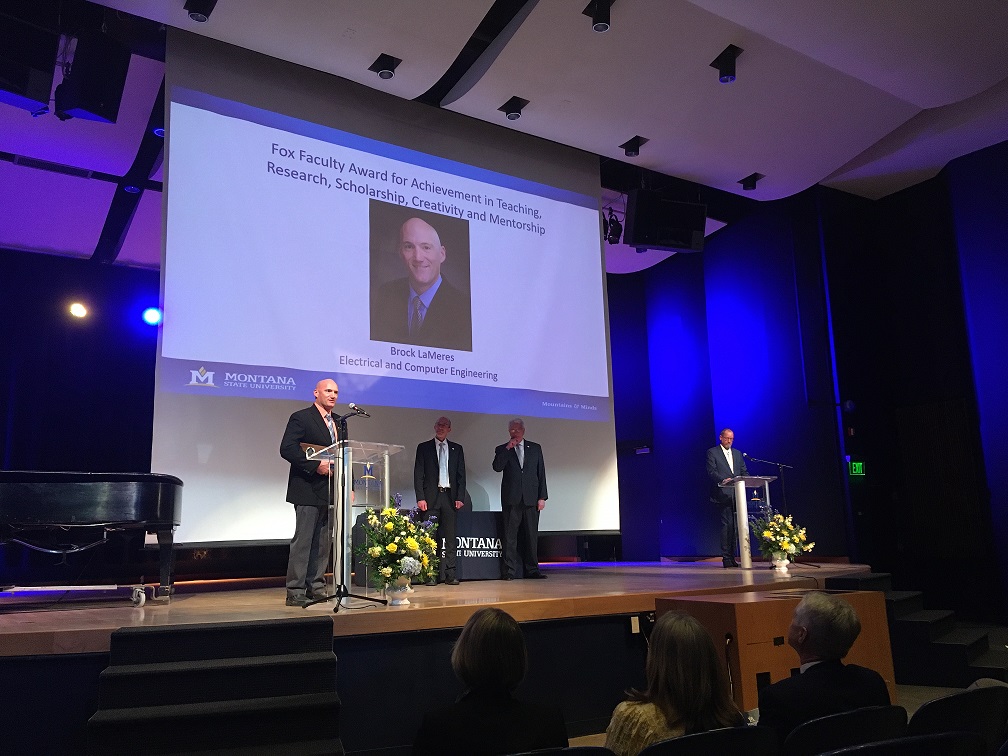
Brock J. LaMeres is a Professor and Director of the Montana Engineering Education Research Center (MEERC) at Montana State University. With joint appointments in Electrical & Computer Engineering and engineering education leadership, he has pioneered radiation-tolerant computer systems and reconfigurable computing technologies for space applications while reforming engineering pedagogy through innovative teaching methods. Ph.D., Electrical Engineering, University of Colorado-Boulder (2005) M.S., Electrical Engineering, University of Colorado-Colorado Springs (2001) B.S., Electrical Engineering, Montana State University (1998) His research interests span radiation-hardened computer architectures, space radiation effects on electronics, and engineering education reform. Notably, he developed the RadPC technology for NASA lunar missions and created the MEERC to align engineering graduates with workforce needs. His work integrates unconventional teaching tools like Minecraft for spatial skill development and created the STEM Storytellers program to enhance graduate students' communication skills. Key article trends demonstrate dual focus areas: (1) radiation-tolerant computing for space missions with subfields like FPGA-based design, memory protection algorithms, and AI processing in radiation environments, and (2) engineering education innovations including e-learning platforms, spatial reasoning training, and oral communication development. 2023: MSU VPR Meritorious Technology/Science Award 2022: NACOE Excellence in Outreach Award 2020: Fox Faculty Award for multidisciplinary excellence 2018: ASEE Distinguished Educator Award As director of MEERC, he has secured $20M+ in grants from NASA, NSF, and national labs. His lab has deployed multiple CubeSats to the International Space Station and developed 15+ U.S. patents in digital signal propagation and radiation-hardened computing. He mentors graduate students in both technical and educational research areas.
Jochen Schweitzer is an Associate Professor of Strategy, Innovation, and Entrepreneurship at the University of Technology Sydney (UTS) Business School, and Director of UTS's Executive MBA program. He co-founded the UTS Innovation & Entrepreneurship Collaborative (IEC) to unite researchers in innovation policy. Prior to academia, he worked as a Principal at PricewaterhouseCoopers' Strategy practice, advising on innovation and strategic performance. His research focuses on entrepreneurship, design thinking, innovation ecosystems, and strategy, with publications in top journals like Journal of Product Innovation Management and Long Range Planning . He has received awards including the Best Paper Award at the Academy of Management and the Vice-Chancellor's Teaching Excellence Award. Jochen teaches courses such as Strategic Design Studio and Venture Launch, and supervises PhD candidates. His funded research projects include studies on future-oriented capabilities and innovation metrics in collaboration with government and industry partners. He actively engages with the entrepreneurship community through advisory roles and speaking engagements. Key roles include Director of Entrepreneurship (2018–2021) and Research Director for Strategy at UTS's Centre for Management and Organizational Studies (2011–2015). He holds a PhD in Strategic Management from UTS and is a sought-after consultant on strategy and innovation.
Gaia Marchisio is a Senior Lecturer in the Discipline of Management and Faculty Director of the Global Family Enterprise Program at Columbia Business School. She holds a BBA from Bocconi University and a PhD in General Management from Università Degli Studi di Pavia. Her work focuses on leadership, organizational behavior, and strategic management within family enterprises. Previously, she served as Executive Director of the Cox Family Enterprise Center and Aronoff Professor of Family Business at Kennesaw State University, and has collaborated globally with institutions like the World Bank’s IFC and the Family Business Network Asia. Her research explores work-family integration in family businesses, burnout mitigation, succession planning, and multi-generational ownership development. She co-authored the book Own It!: How to Develop a Family Enterprise Owner’s Mindset at Every Age , emphasizing mindset cultivation across life stages. Marchisio founded the Family Enterprise Clinic (2014), offering consulting services for family firms on governance and transition challenges. She speaks English, Italian, and Spanish, and her teaching includes courses on family business management, conflict dynamics, and global consulting strategies. Her academic contributions span over 25 years, addressing themes like corporate venturing in family firms, strategic planning as a training tool, and the strategic role of going public. She has advised diverse organizations including McKinsey, Egon Zehnder, and Grant Thornton, while maintaining faculty roles in Canada’s FEA designation program.